What Is Corning Ware?
Simply put, CorningWare is any kitchenware item made by the Corning Glass Works company. But the production actually started with an accident, when Dr. S. Donald Stookey mistakenly heated glass at 900°F instead of 600°F; it turned milky white.
Seeing its durability, Corning released CorningWare in 1958. To make the items attractive, they started adding colored patterns; the first one was Wheat.
From 1958 to 2000, Corning made over 750 million Pyroceram pieces at factories in West Virginia, Pennsylvania, and Indiana. Their cookware took over everything —freezer to oven to stovetop to table without breaking.
How to Tell If Old Corning Ware Is Valuable?
No doubt vintage CorningWare holds a special place among collectors, but not every piece holds the same value. To determine if your older Corning pieces have any value or not, examine the following factors:
1. Check the Age & Material
Both of these factors have a huge impact on vintage Corning Ware’s value, and both of them go hand in hand. Why? Because the company primarily used two materials (in different periods) for making kitchenware.
Real Pyroceram (1958-2000):
From 1958 until 2000, Corning made Pyroceram items. So, anything made before 2000 used original Pyroceram and counts as vintage.
You can identify it by holding the piece against a strong light. If you see a slight glow through the piece, it’s Pyroceram. Or, if you hear a clear ring like a bell on a gentle tap, Pyroceram.
Other features are a smooth, almost glass-like surface, with a specific sheen. And finally, the backstamps, like “Pyroceram” or “For Range & Microwave,” are authenticity signs.
Only real Pyroceram CorningWare dishes are considered vintage and valuable, with actual price varying with other factors.
Stoneware (Post-2000):
After 2000, Corning shifted toward making stoneware. These pieces are hard, heavy, and opaque. So, you’ll see no light coming through or no ringing sound; it gives a dull thud.
The marking says “Not for Stovetop Use” and shows World Kitchen or Corelle Brands. To be honest, collectors don’t care much about these pieces.
2. Check the Rarity (Patterns & Colors)
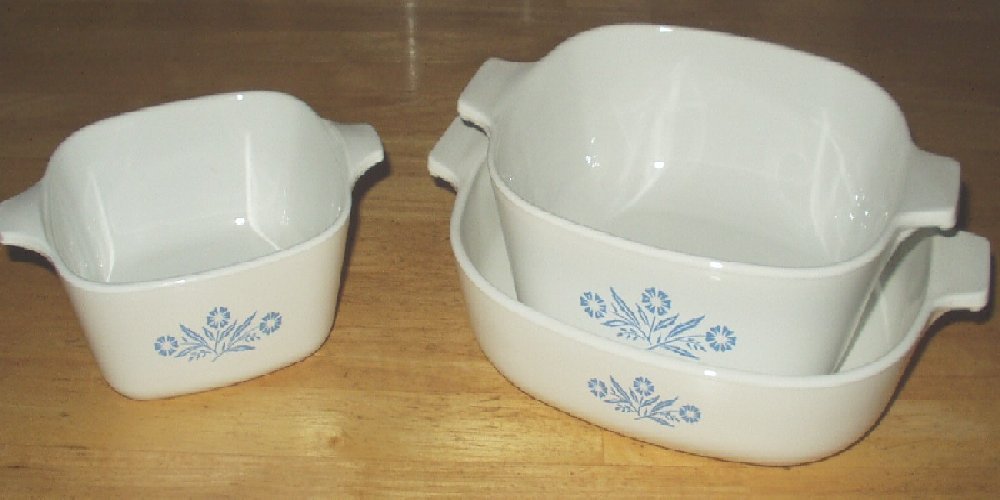
Patterns are the key to valuing old Corning items. But it’s the pattern rarity that drives the value, not popularity. For instance, while Blue Cornflower is recognizable, its long production period causes single pieces to be common.
The rarest patterns, such as those produced for very short periods (less than five years) or that were regional test runs, are the most valuable.
3. Look for Authenticity Markers
A CorningWare piece with a backstamp is always more valuable than one without any marks. That’s because these markings not only help check CorningWare’s authenticity but also date the pieces.
The company changes its stamps over the years. So, depending on what kind of marking you’re seeing, you can track which year or period your CorningWare belongs to.
Check this quick table of CorningWare’s bottom marks that will help you date your pieces.
| Years | Backstamp Characteristics | Key Features |
| 1958-1959 | Embossed stamps only, no printed marks | Very early pieces may only say “PYROCERAM” |
| 1959-1961 | Embossed stylized flame and Blurry blue ink stamps on ’60s items | may or may not have “Pyroceram” |
| 1961-1966 | Clear black ink stamps with flame logo | Shows model numbers (P-1-B, A-series) |
| 1966-1969 | New cornflower design in backstamp in black ink | Model numbers with trademark symbols |
| 1969-1972 | “For Range & Microwave” text added to the stamp | More additional details |
| 1972-1979 | Hologram stamps (hard to see) | Shift to A-series model numbers, copyright info |
| 1979-1985/86 | Block Stamp w/ “Range-Oven-Microwave” | Copyright, location + other details |
| 1985 – 1999 | 2nd Embossed Stamp | Block mark used on Roasting Pans until 1987 |
| Post-1998 | World Kitchen/Corelle Brands markings | Stoneware versions (not vintage Pyroceram), minimal collector value |
Along with the logo, some backstamps also show the model numbers, which are also excellent dating clues.
- P-series: Original CorningWare (1962-1971) pieces.
- A-series: Post-1972 pieces with updated designs, though some pieces like Menuettes and Petites kept P-numbers through 1999.
- W-series: Wheat pattern (1962-1970)
- N-series: Rangetoppers with aluminum-clad bottoms
- PP-series: Cookmates Petite Pans with flat ground bottoms
Make sure to spot these markings to know you have a genuine CorningWare item. Reproductions may have varied markings, like “Made in China” instead of USA or no markings at all.
4. Look for Specialty Items & Sets
Standard CorningWare casserole dishes are everywhere. The real value often lies in unique shapes and specialized items, which generally have a smaller production.
Some of the highly sought-after pieces are stovetop coffee percolators, especially 6-cup or 9-cup sizes. The Electromatic versions with built-in heating elements are even rarer.
Likewise, individual long-handled saucepans and square or round skillets designed for direct stovetop use are also rare and highly collectible.
5. Assess Condition & Completeness
No matter how rare or popular a pattern, if your Corningware casserole or percolator is damaged, it will lose its value.
This means pieces with mint interiors are most valuable. Look for deep scratching, pitting, or the dark gray/black metal marks (caused by steel wool or metal utensils) on the bright white cooking surface. These damages show severe wear and significantly reduce the value.
Also, having matching accessories matters a lot. Original lids made of Pyrex glass must be present, clear, and chip-free. A full set of original plastic storage lids, handles, or cradles (trivets) can add $10% or more to a Corning Ware piece.
13 Top Vintage CorningWare Patterns Worth Money
Vintage Corning Ware dishes usually fall in the range of $10 to $300, depending on all the factors we discussed above. But the one factor that plays the biggest role in valuation is pattern.
Let’s take a look at some of the most popular, rare, and renowned Corning Ware patterns that actually hold considerable value.
1. Wheat Pattern (1958)
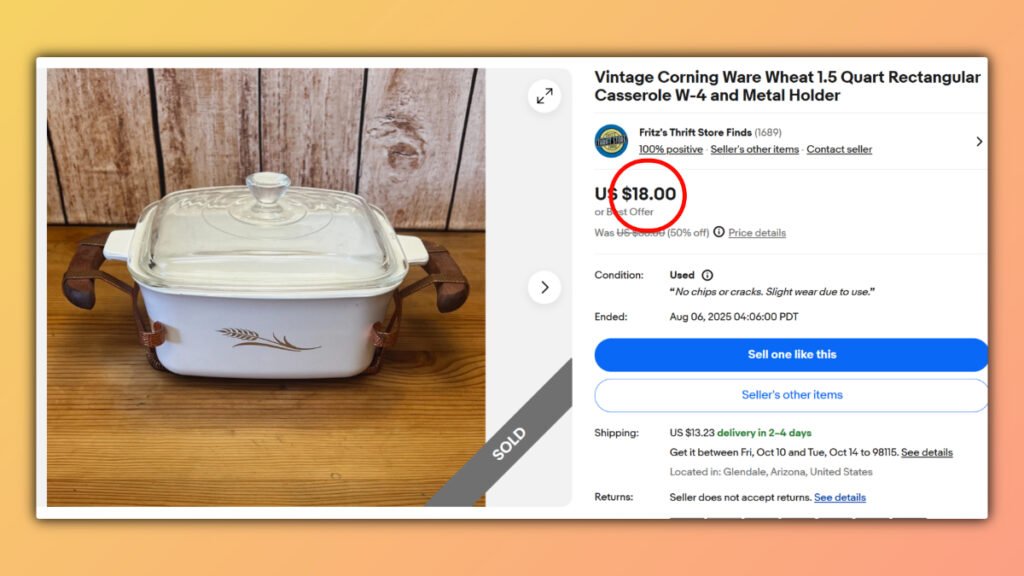
Design: A simple, single stylized sheaf of wheat
This was the very first pattern produced on Pyroceram that Corning test-marketed briefly. Production was so brief, immediately replaced by Blue Cornflower, that it’s now one of the rarest patterns to find.
Its extreme rarity and a nostalgic design make authentic pieces valuable.
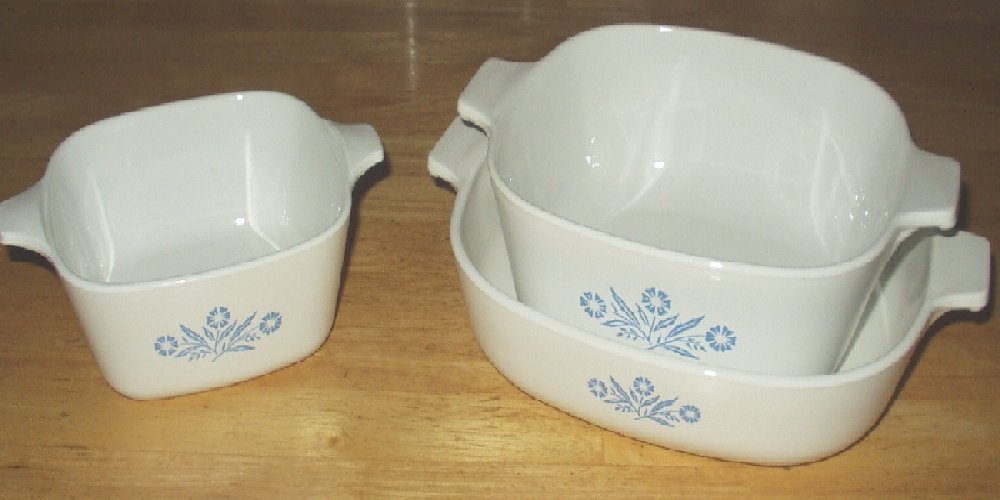
2. Blue Cornflower (1958 – 1988)
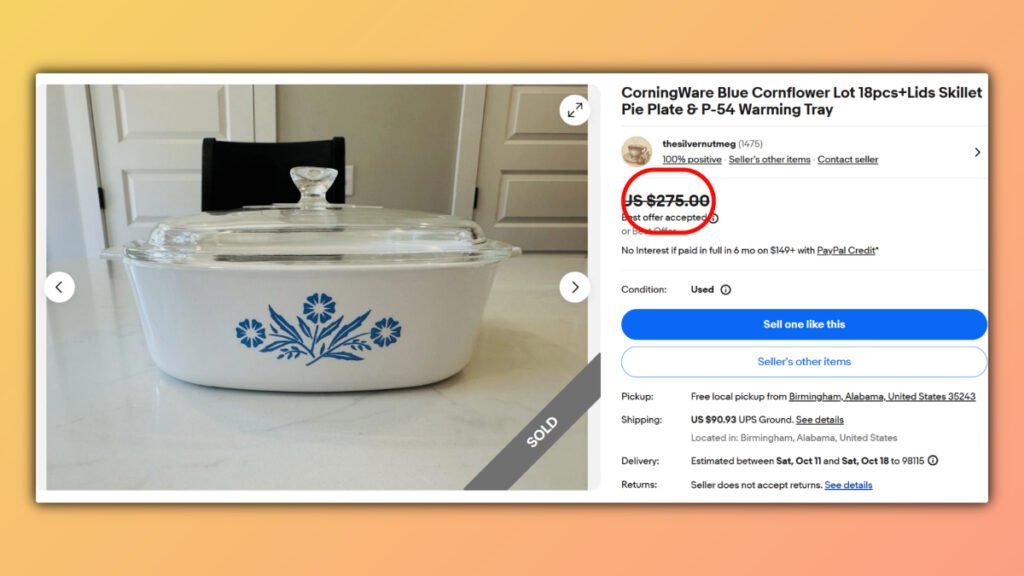
Design: Simple blue cornflower design
One of the longest-running patterns, the Blue Cornflower ruled kitchenware for three decades. But that also makes it a common pattern. That’s why the oldest pieces from before 1965 are the only ones that hold decent value.
You can spot these pieces by their smaller, more squared-off handles than later models. Novelty items like stovetop coffee percolators or small Petite pans in mint condition are always collectible.
3. Atomic Starburst (Early 1960s)
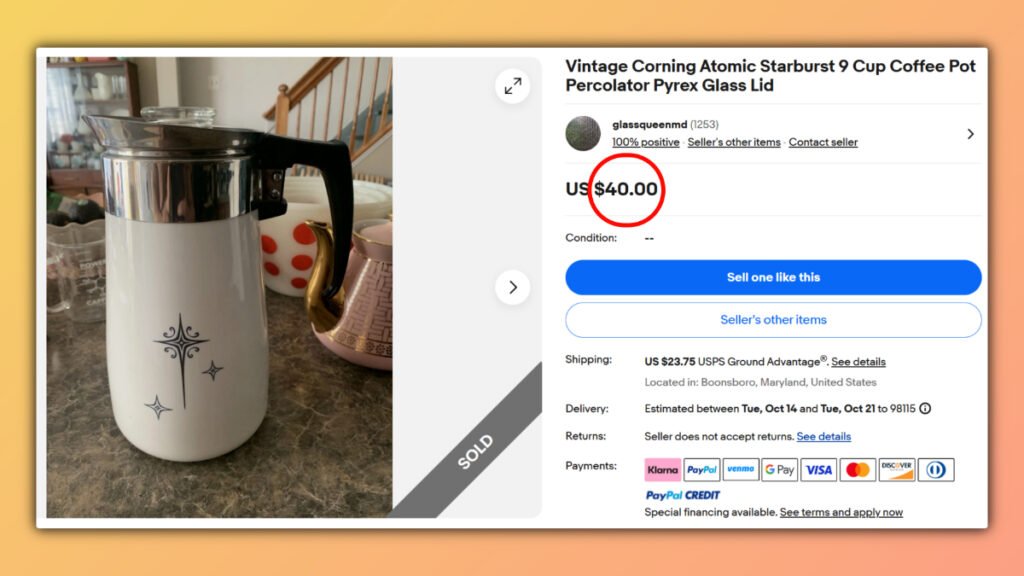
Design: Single atomic starburst design in black.
The Atomic Starburst (also called Black Star or Black Tulip) is a rare mid-century modern design on Pyroceram. The sharp contrast of black on white and the abstract design give a pure 1950s space-age aesthetic. Collectors love unique or specialized items in this pattern.
4. Platinum Filigree (1966 to 1968)
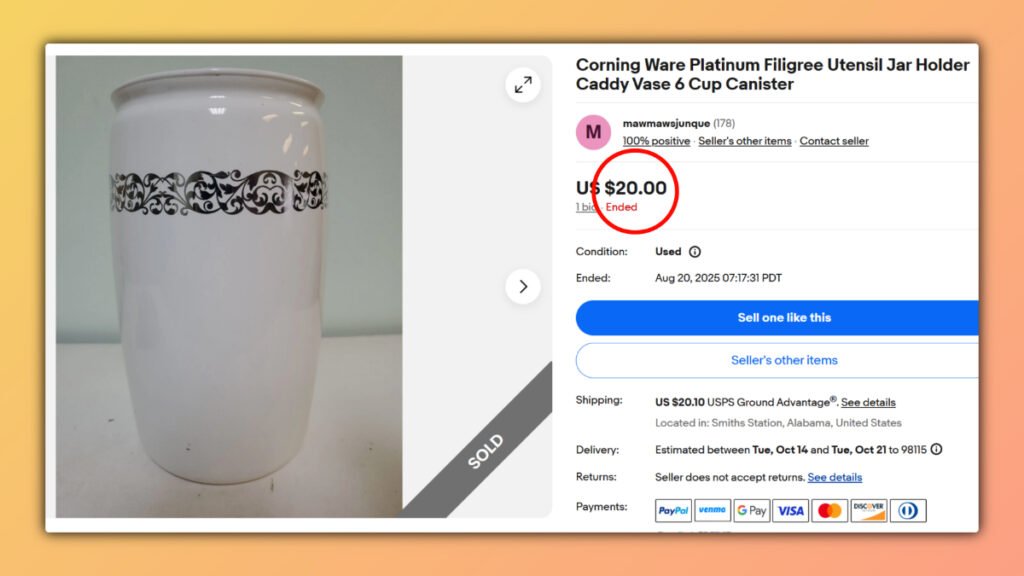
Design: Platinum filigree pattern toward the neck.
This elegant pattern was produced as a special edition for a short period in the mid-1960s. You will recognize it by its lacy, scrollwork design in metallic platinum or silver-gray, reminiscent of filigree jewelry. Its formal look and short run make it a valued Corning Ware pattern.
5. Renaissance (1970)
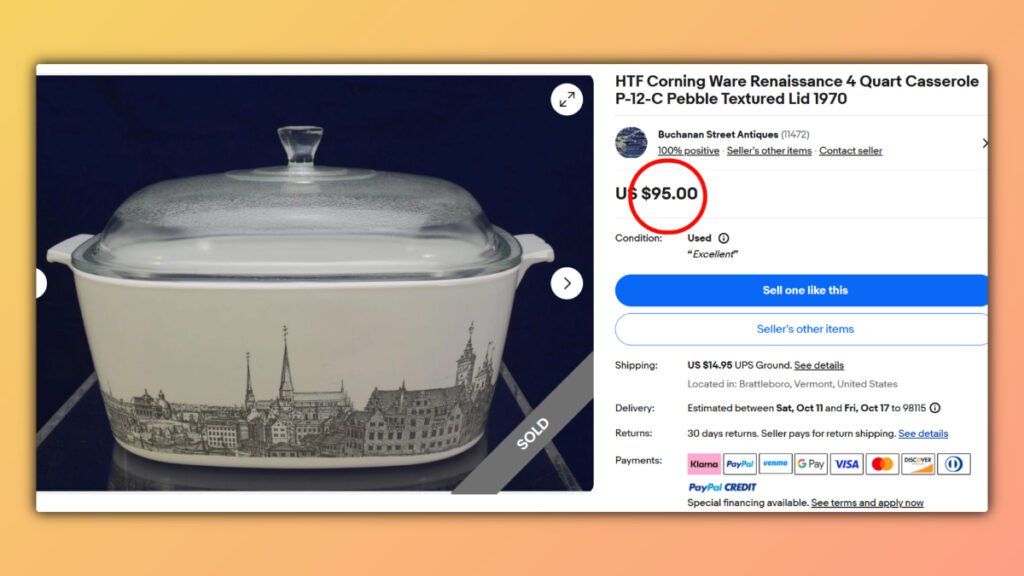
Design: A 17th-century detailed cityscape of Stockholm’s seaport in “Miniver Grey” color.
This pattern is super rare and valuable, often reaching $100, because it was made for only one year. That iconic, highly detailed 17th-century cityscape gives these pieces a more opulent, European feel than other American-looking patterns.
6. Floral Bouquet (1971 – 1975)
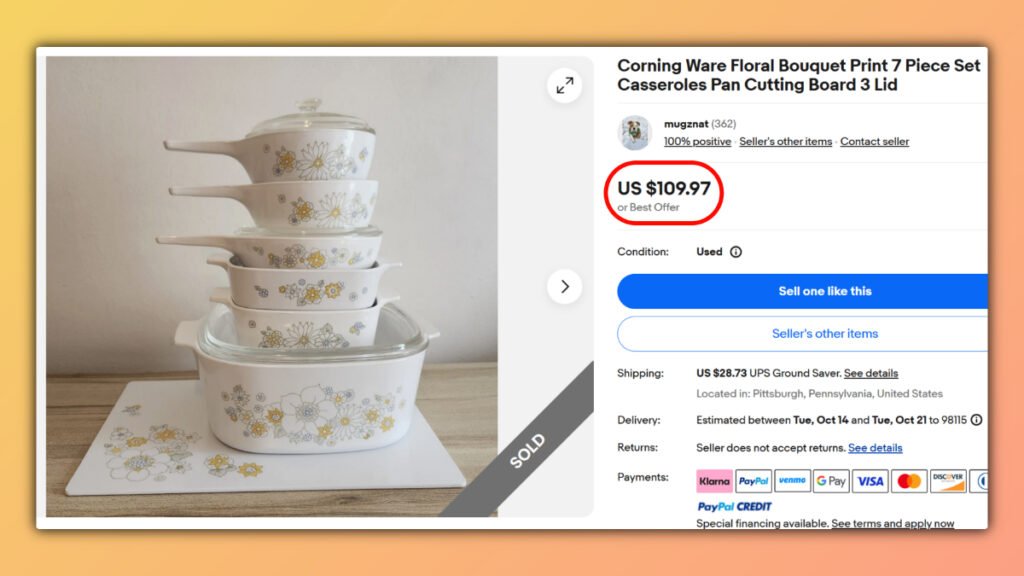
Design: Outlined flowers in orange, black, yellow, and blue.
This pattern marked a transition from the 50s and 60s abstract and streamlined designs into elaborate 1970s visuals. You’ll find outlines of stylized flowers in orange, blue, and black.
Its value comes from production being limited to just four years. You should also look out for ultra-rare limited-edition variations of this design on a yellow or gold-colored background.
7. Spice O’ Life (1972 – 1987)
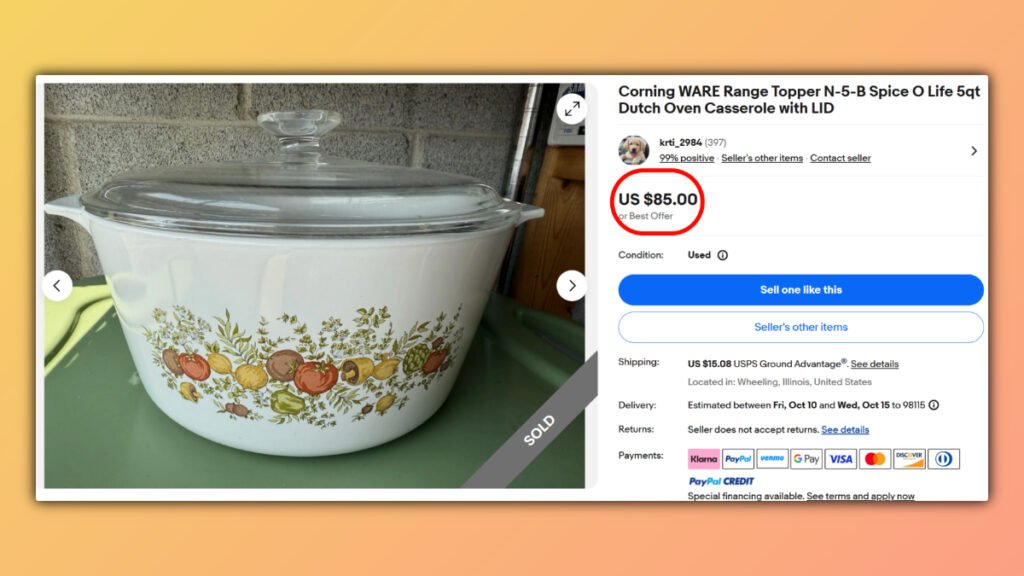
Design: Colorful vegetables and herbs (French names printed below in script on early versions)
Spice O’ Live is one of the most popular and common CorningWare patterns. It’s easily distinguished by the colorful herbs and vegetable motifs.
The most valuable pieces are those very first productions where the French name of the ingredient (like L’Echalote or La Marjolaine) is printed beneath the design!
8. Country Festival (1975 – 1976)
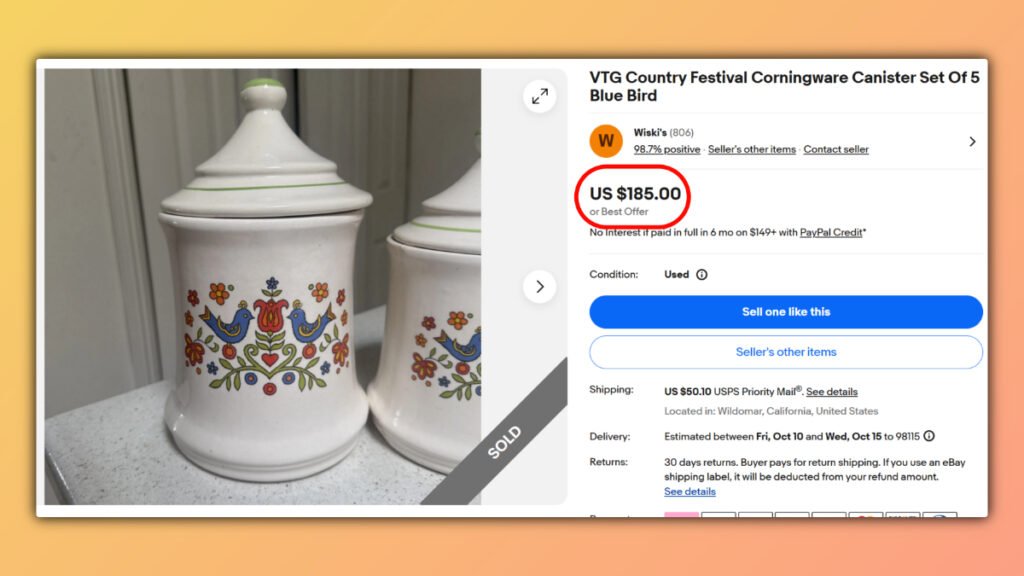
Design: Folk-art stylized blue birds, a tulip, & other floral motifs.
Also known as the Bluebird pattern, Country Festival is highly sought-after due to its exceptionally short one-to-two-year production run. Its folk-art style design makes it easily recognizable and a successful short-run collectible Corningware pattern.
9. French White (1978 – Present)
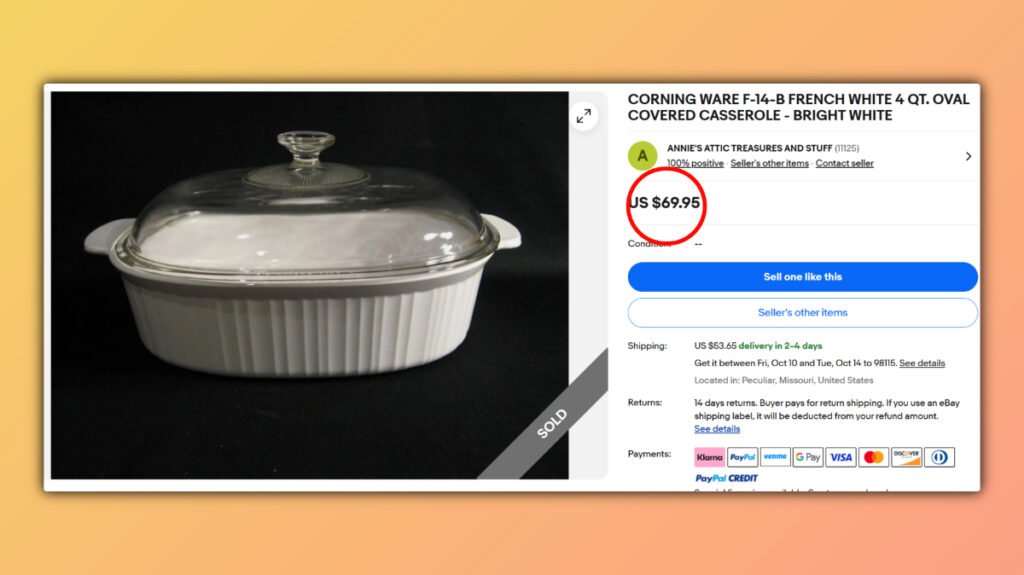
Design: Plain white surface.
French White introduced the modern look of fluted, sculptural edges. Since it doesn’t have any specific motifs, you need to identify it by checking whether it’s Pyroceram or not.
Only early Pyroceram versions are collectible today. To check authenticity, look at the bottom for a cursive logo and stovetop flame symbol. The modern, heavier stoneware versions (post-2000) aren’t considered valuable or antiques.
10. Pastel Bouquet (1971 – 1975)
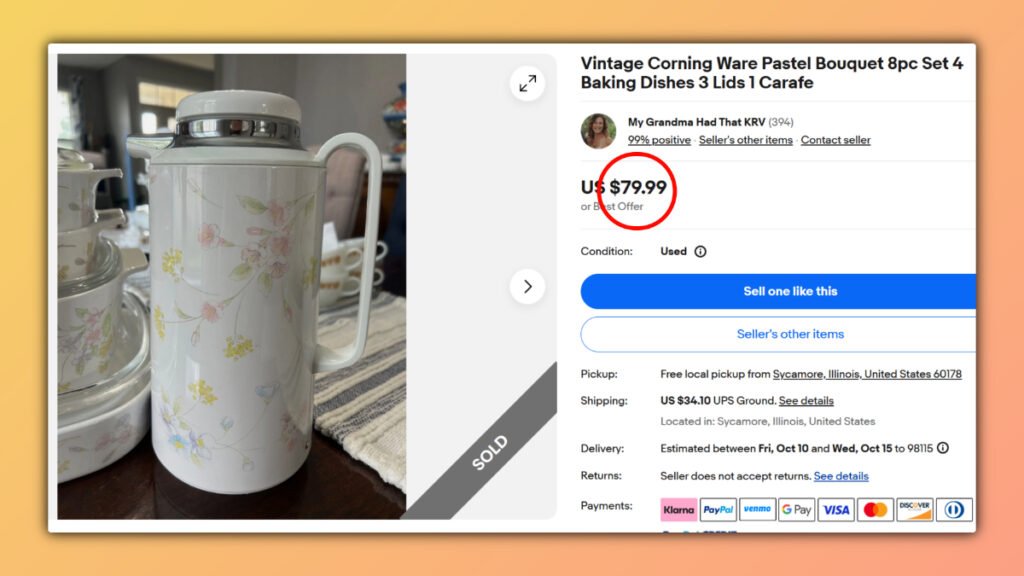
Design: Soft, watercolor-like pink and blue pastel flowers.
The Pastel Bouquet was more like a shift from some of the bolder 1970s patterns. It shows a gentle, soft arrangement of pink and blue flowers. Also, its production was limited to three years, adding to its scarcity and worth, with sets fetching $50 to $90.
11. Blue Heather (1976 to 1979)
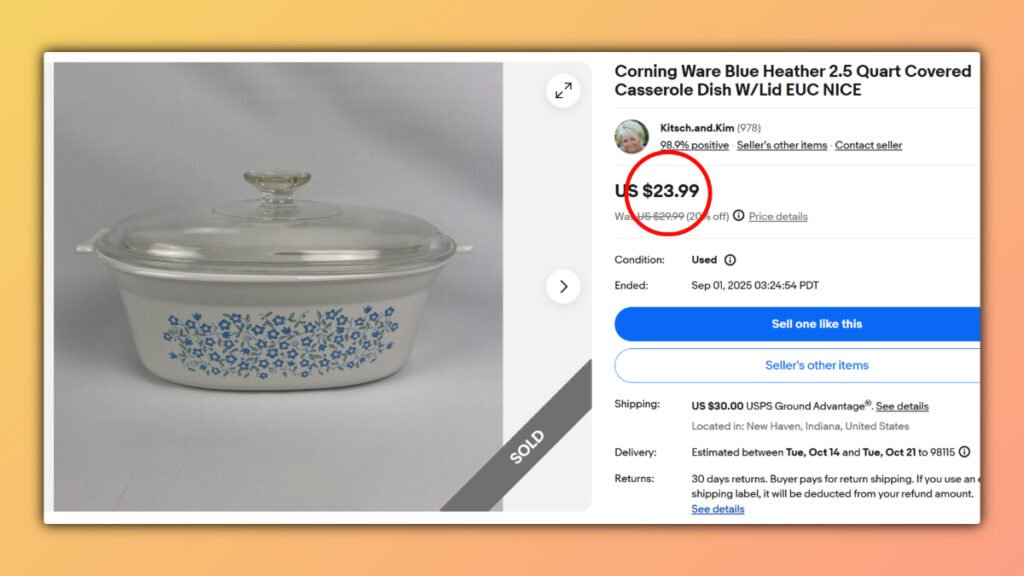
Design: Delicate cluster of blue five-petal flowers & green leaves.
The Blue Heather pattern looks clean with a Scandinavian-inspired aesthetic. You can identify it by those soft blue heather flowers. Its four-year production run makes it less common than Cornflower or Spice O’ Life patterns. But since it’s still quite common, it has a moderate collectible value.
12. Shadow Iris (1985 – 1990s)
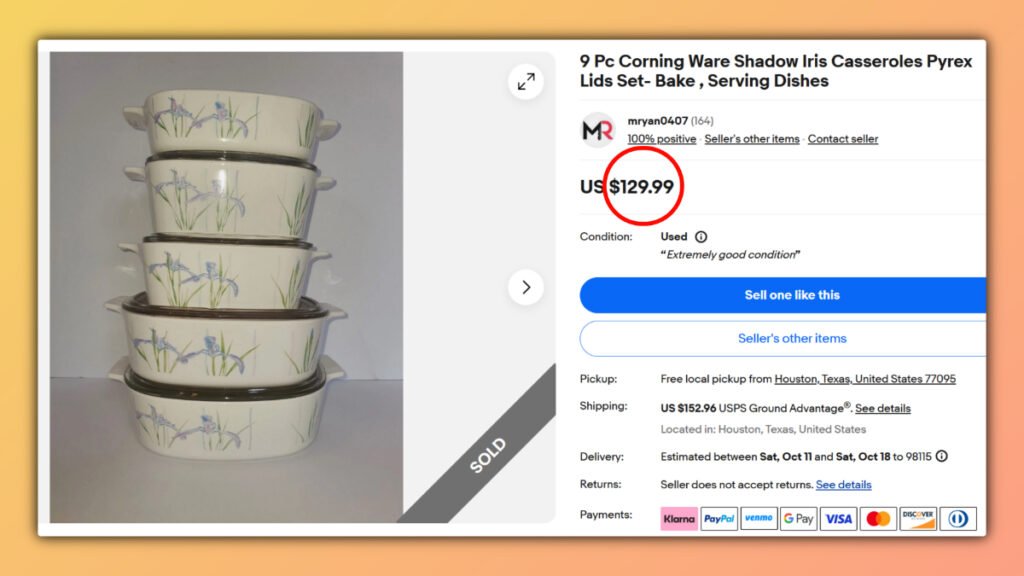
Design: Purple and blue iris flowers in a silhouette style.
This is a popular design from the late era of US Pyroceram production. Although widely sold, specialty stovetop items like saucepans or percolators and immaculate complete sets can be worth up to $150.
Another fact that makes this pattern collectible is that this was one of the last major lines before the company switched to stoneware.
13. Nature’s Bounty (1971)
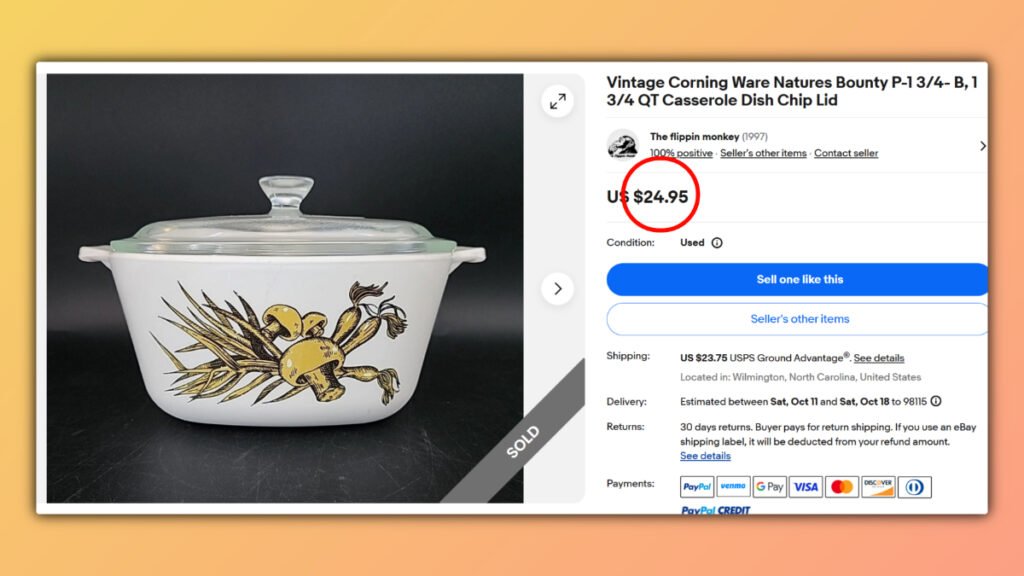
Design: Mustard-yellow vegetables like corn, mushrooms, carrots, etc (different design on each side)
Nature’s Bounty Corning Ware is loved by collectors as it is a very limited run only made in 1971. It has a cheerful folk-art look in earthy colors typical of the early 1970s. Production was so brief that finding complete pieces today is uncommon, making it valuable to collectors.
14. Bicentennial Eagle (1976)
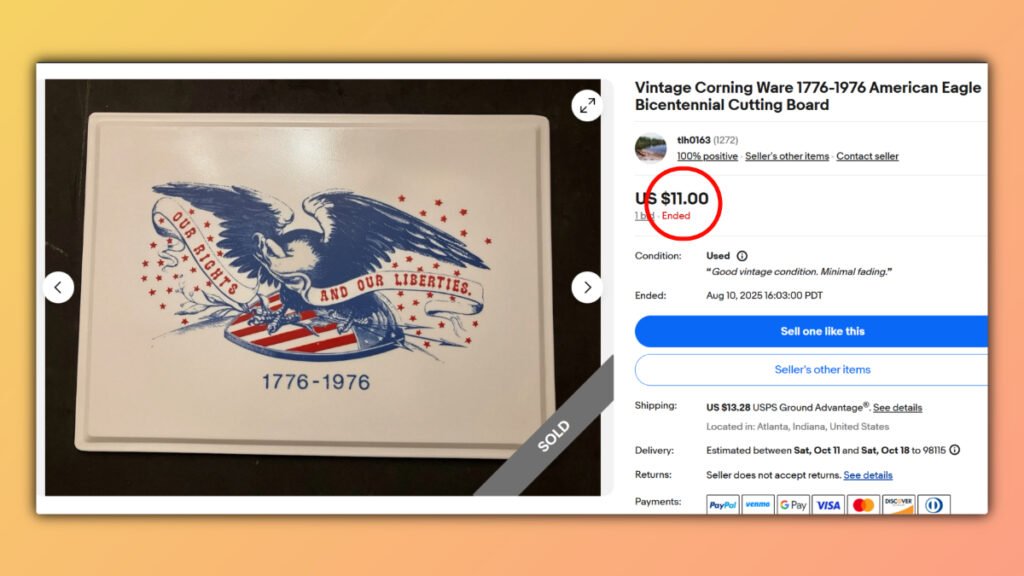
Design: An American Eagle motif, stars, and patriotic motifs in blue and red.
This is a super rare one-year commemorative pattern made to celebrate the United States Bicentennial in 1976. And since it was made for just a year, it is quite difficult to find single pieces or sets in good condition today. Look for the backstamps to spot authentic pieces.
15. Indian Summer (1977-1979)
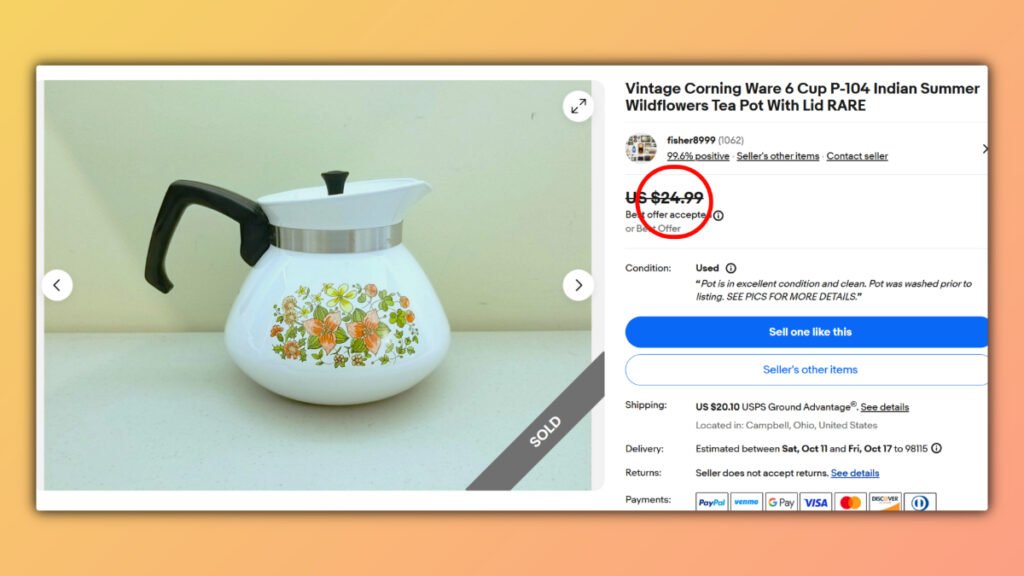
Design: Stylized flowers and leaves in warm oranges, browns, and golds.
This vibrant pattern shows the popular earth-tone aesthetic popular in the late 1970s. Its relatively short three-year run makes authentic pieces, particularly specialty items or sets, are very collectible.
Collecting or valuing vintage CorningWare is easy if you’re examining the right things, like condition, rarity, and most importantly, patterns. And don’t neglect the authenticity, examine those marks on the bottom. They can tell you so much!