Old rings were cut and set by hand, often with diamond styles nobody makes anymore. And that personal touch and scarcity are what make them way more precious as engagement rings. Whether you are hunting one for your partner or for personal collecting, this list of valuable vintage engagement rings will come in handy.
How to Identify Vintage Engagement Rings?
Spotting the rings above gets much easier once you know where to look. I still check every piece in the same order, and with a jeweler’s loupe it rarely takes more than a few minutes.
- Start with the cut: The old cuts threw big, chunky flashes, while modern diamonds provide tiny sparkles that are almost pinpoints. A tell-tale sign is the little open circle at the bottom of an authentic antique diamond.
- Read the hallmarks: Hallmarks help with dating. Stamps like “PLAT,” “IRID PLAT,” “14K,” or “18K” tell you the metal. And a maker’s mark, like Tiffany or Cartier, confirms attribution and adds value.
- Look at the material: The metal also tells the era. Georgian rings are often silver-topped gold, while Victorian rings are yellow or rose gold. Platinum ruled the Edwardian and Art Deco years, but wartime rings went back to gold.
- Check the wear: Genuine age shows subtle signs, like softening of the engraving and thinning of the shanks. Be alert if the rings look too pristine. Laser inscriptions and cast filigree generally hint at a new, vintage-styled ring.
- Check original stones and settings: Many old rings have had a stone swapped over the years. So, watch for a modern brilliant cut sitting in an old mount, or prongs that look newer than the band. Original stones and untouched settings are worth noticeably more.
11 Most Valuable and Classy Vintage Engagement Rings
1. Signed Art Deco Sapphire and Diamond Ring
- Resale Value: About $2,000 to $7,000 for unsigned rings. Signed Cartier examples can fetch $30,000.
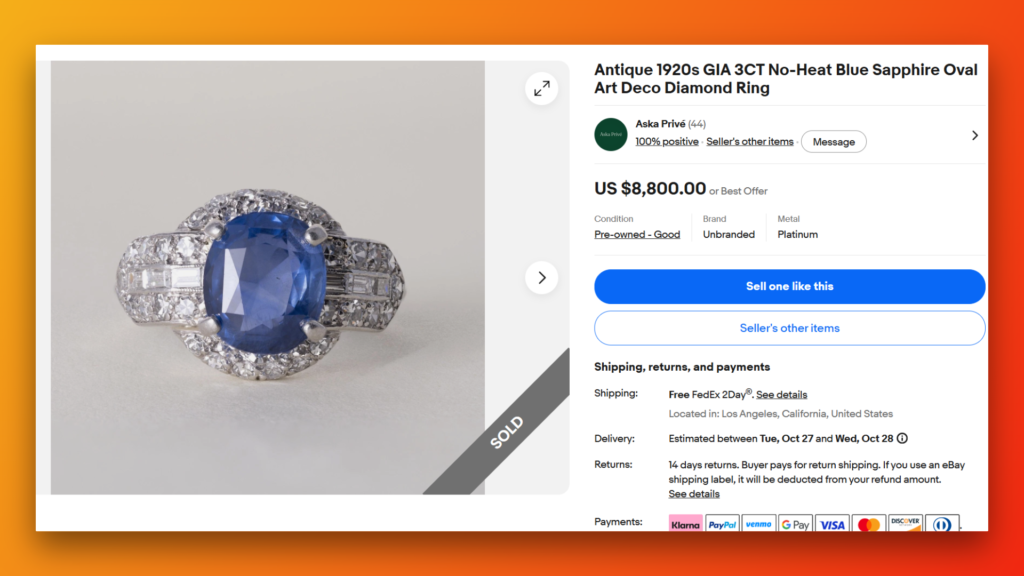
This is a top-tier item on the list. The Art Deco sapphire and diamond engagement ring shows the geometrical beauty of platinum, with small, cabochon-cut sapphires and diamonds. Each blue stone is cut to fit right into its spot.
Maker marks and signatures matter a lot for these rings. Attribution to brands like Cartier, Tiffany & Co., or Van Cleef & Arpels can multiply the value.
2. Old Mine Cut Diamond Solitaire
- Resale Value: About $1,000 to $3,500 for 0.5- to 1.5- carats stones. 2+ carats can reach over $10,000.
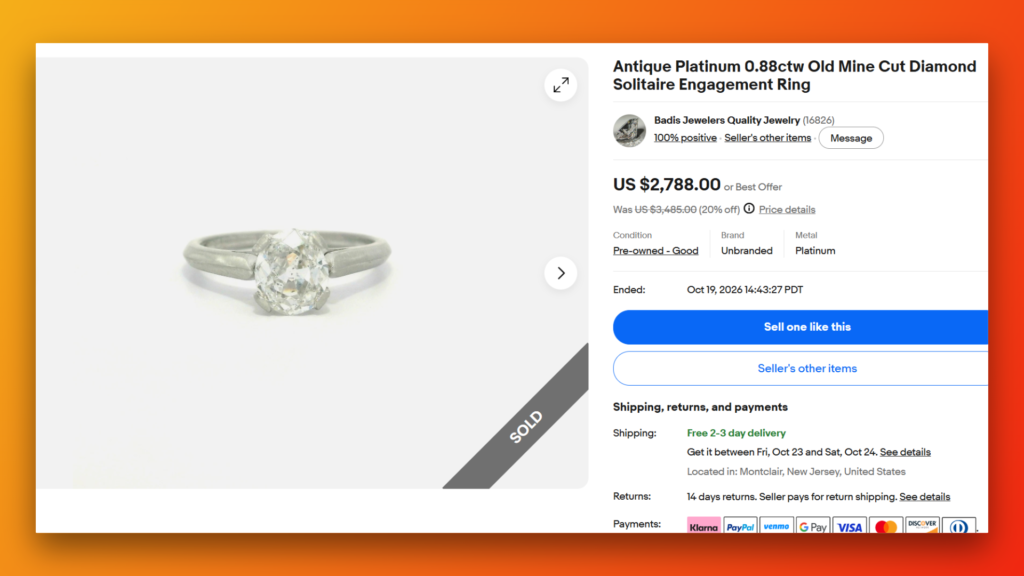
The old mine-cut diamond is the older version of today’s round brilliant. It has a soft cushion shape, a tall crown, and a small top facet. Most rings have a small open window at the bottom.
These stones were cut by hand to glow by candlelight, so they sparkle in broad, slow flashes. Pristine examples over one carat are rarer now.
3. Old European Cut Diamond Ring
- Resale Value: About $1,500 to $10,500 for 0.75 to 1.5-carat stones. 2 to 3 carats are worth $12,000 to $18,000.
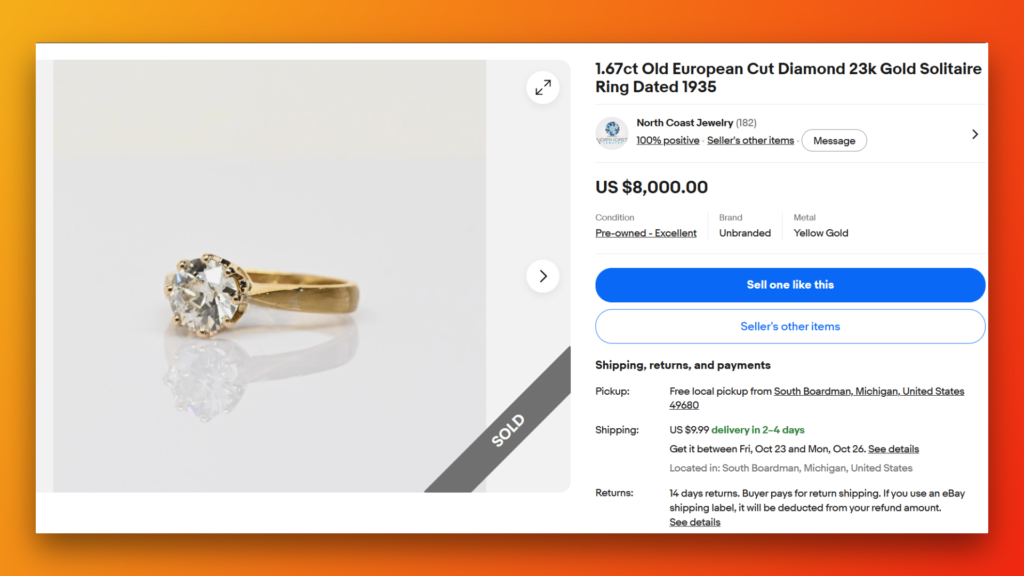
Next comes the old European cut diamond, made roughly from the 1890s to the 1930s. It’s round rather than cushion-shaped. But it keeps the high crown and chunky facets of earlier hand cutting.
You’ll find these in plenty of Edwardian and 1920s vintage engagement rings, usually set in platinum. And many buyers actually prefer their warm, broad flashes over the sharp glitter of a modern diamond.
4. Georgian Rose-Cut Diamond Ring
- Resale Value: About $1,200 to $4,000 for small cluster rings. A large single rose-cut stone can sell for more.
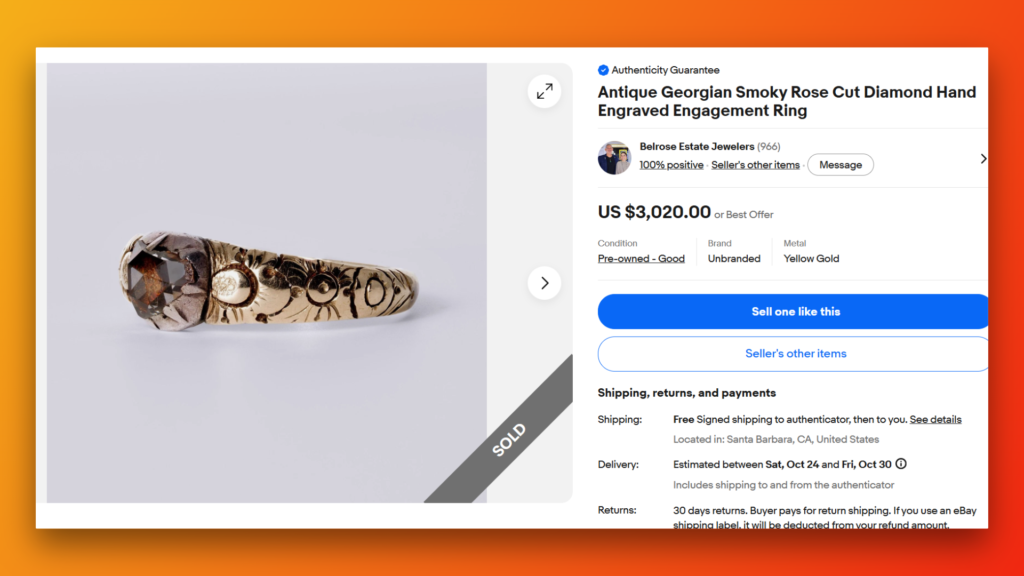
Georgian-era rings (1714 to 1837) are truly rare because very few have survived. Almost all have rose-cut diamonds with flat bottoms and rounded tops. Jewelers would seal the bottom and add foil to it.
The foil made the gems shine brighter, but it was also a drawback. If water gets inside, the foil tarnishes. So, a Georgian ring with brilliant original foil is a rare find.
5. Victorian Snake Ring
- Resale Value: About $1,000 to $3,000. Enameled or diamond-headed examples can reach $5,000.
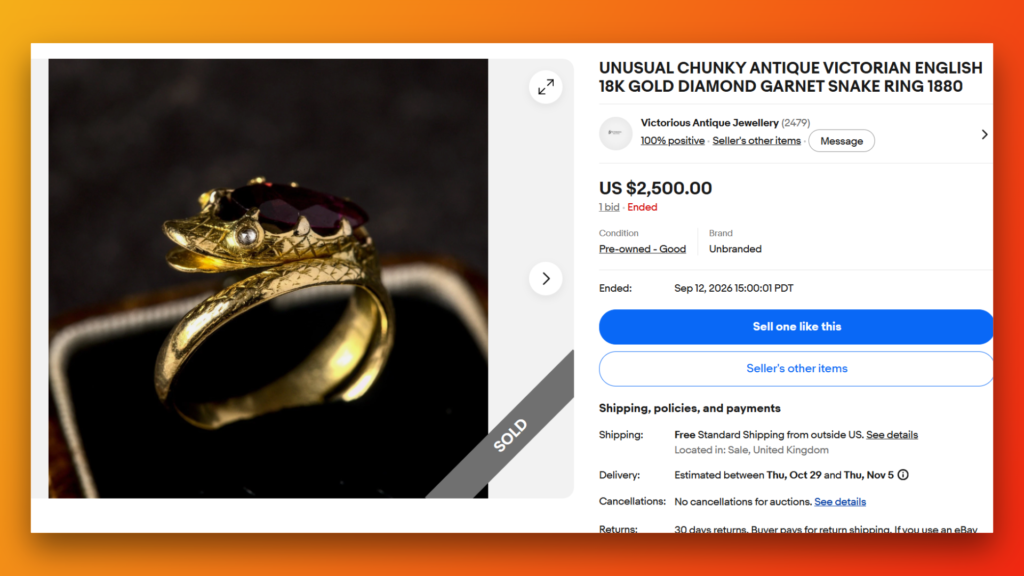
Snake rings are some of the most enchanting Victorian engagement rings. When Prince Albert proposed to Queen Victoria in 1839, he presented her with a gold snake ring with an emerald, her birthstone.
Since then, snake rings have become highly popular.
For Victorians, the meaning of a snake was eternal love rather than evil. The identifying features include scale engraving, a gemstone head, and small eyes. Double-headed snakes with all original stones are especially valuable.
6. Toi et Moi Ring
- Resale Value: About $1,500 to $5,000 for a 1- to 2-carat diamond or a pearl and diamond pair.
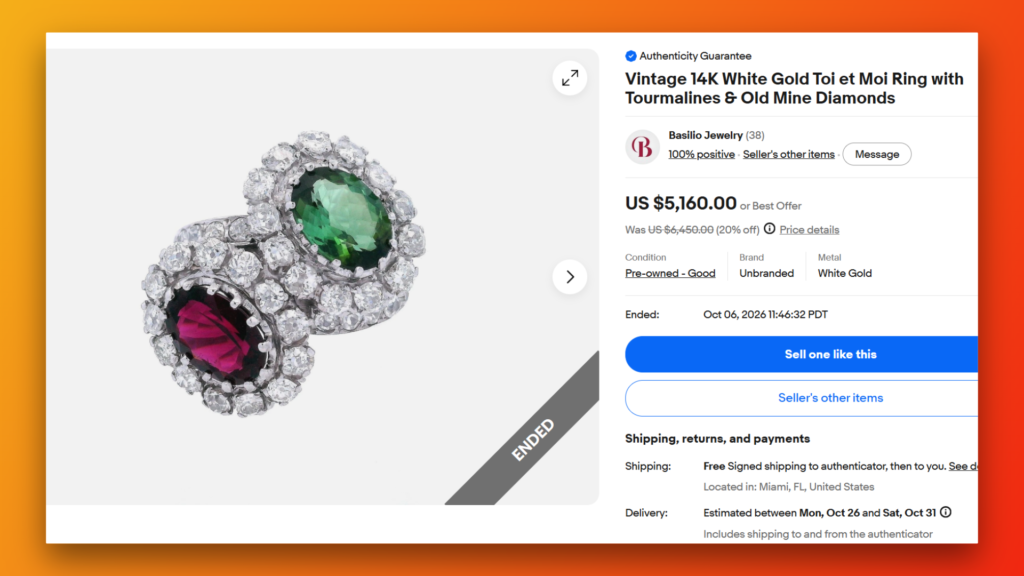
Toi et Moi is French for “you and me,” and it’s one of the most romantic designs. This ring shows two stones side by side, often a diamond beside a pearl or colored gem.
Napoleon presented Josephine with a toi et moi ring in 1796, and the design has stayed in fashion ever since.
The most sought-after examples come from the Georgian and Victorian periods, with both original gems intact.
7. Victorian Pearl Cluster Ring
- Resale Value: About $300 to $1,000 for typical half-pearl rings. Certified natural pearls can fetch over $2,000.
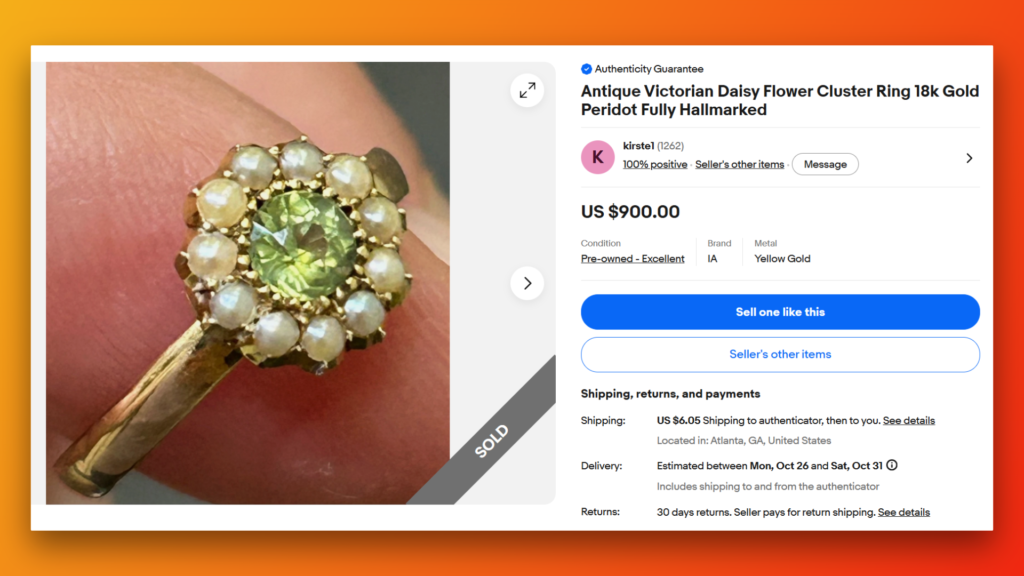
Pearls were highly fashionable during the Victorian period, and they look beautiful when used on an engagement ring. The rings usually feature a diamond or colored gemstone set in the middle, surrounded by half pearls in the golden metal.
But pearls are soft and wear out easily. So, look for cracks, flaking, and lackluster surfaces. Only examples with intact pearls are worth premiums.
8. Edwardian Navette Ring
- Resale Value: About $1,000 to $8,000 depending on carats.
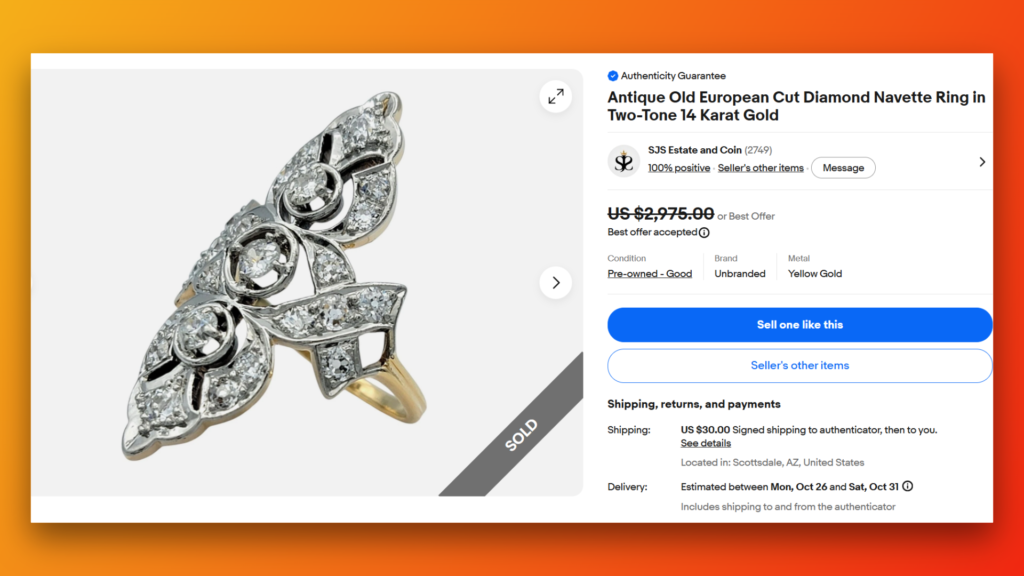
The term “navette” comes from a French word meaning small boat. Just like its name, the shape is elongated with pointed ends, resembling a marquise. It is a long design that extends across the finger, making it look slender.
Most navette rings were made between the Edwardian era and the 1920s in platinum and sometimes even in platinum-plated gold.
Because of the popularity of marquise shapes, an elegant navette ring set with old-cut diamonds receives a lot of attention.
9. Vintage Emerald Cut Diamond Ring
- Resale Value: About $2,000 to $8,000 for 0.75 to 1.5 carats; $8,000 to $20,000 for 1.5 to 2 carats stones.
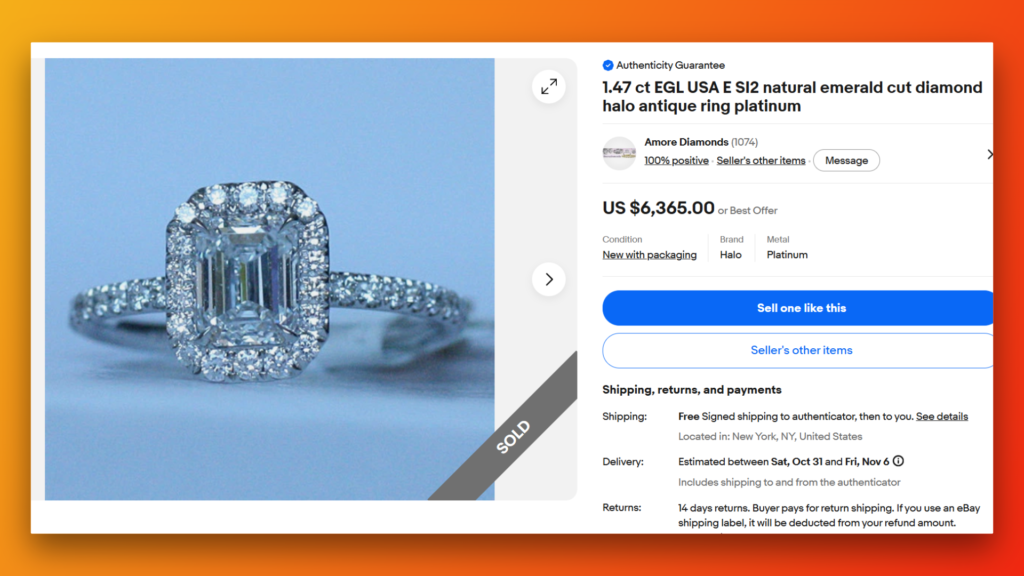
The emerald vintage cut engagement rings are very elegant and subtle in their own way. The long step-cut facets act as mirrors.
But since the step cut shows all the flaws in a stone, jewelers only used it on flawless diamonds.
It was Grace Kelly who popularized this style. In 1956, Prince Rainier gave Grace Kelly a platinum ring from Cartier, which had an emerald-cut diamond weighing 10.47 carats.
10. Traub Orange Blossom Ring
- Resale Value: About $500 to $2,000 with a small diamond; $250 to $600 for empty settings.
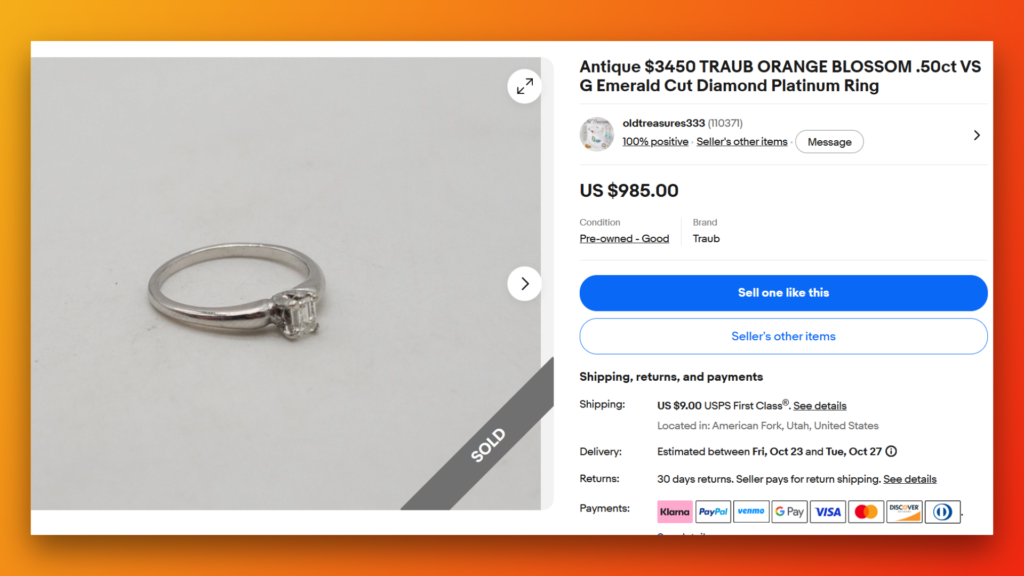
The Traub company of Detroit sold bridal rings under the Orange Blossom name. Orange blossoms were a classic bridal symbol, so these rings became quite popular in the 1920s and 1930s.
Many were made in white gold with fine filigree. To spot originals, verify crisp floral engraving, plus a Traub or Orange Blossom mark inside the band.
11. Retro Rose Gold Ring
- Resale Value: About $800 to $3,000 for most pieces. Small illusion-set rings fetch $300 to $1,200.
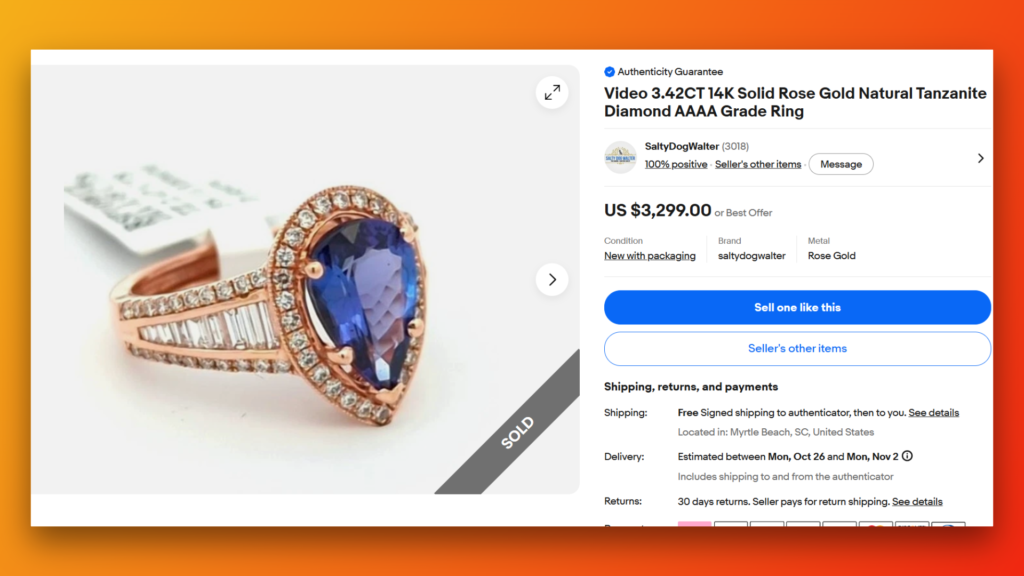
From late 1942 until 1945, Platinum was not allowed for use in jewelry by the US government, as it was more needed by the army. So, gold, particularly rose gold, rose as a popular alternative.
The rings are strong, sculpted, and have wide shoulders and curves. Some feature illusion settings, where a diamond is set in a faceted metal plate to look larger than its actual size.
It’s the unaltered pieces that are still trendy and hold decent value.