If you love vintage jewelry, you can’t miss the 1960s jewelry. It was bold, playful, and inspired by different beliefs, movements, and events, like, well, the moon landing. Makers adapted to the futuristic style, modernism, and political questioning.
And it all showed in the jewelry. This is why 60s jewelry has become an attraction for collectors.
In this guide, you’ll learn about the most popular jewelry styles from the 60s, prevalent materials and makers, and some of the most collectible types of 60s jewelry!
Popular 1960s Jewelry Styles & Influences (& How to Spot Them)
The 1960s started classy: pearl necklaces and plain gold pieces like what Jackie Kennedy used to wear. But halfway through the decade, things changed. Music, space exploration, and new art movements changed how people dressed.
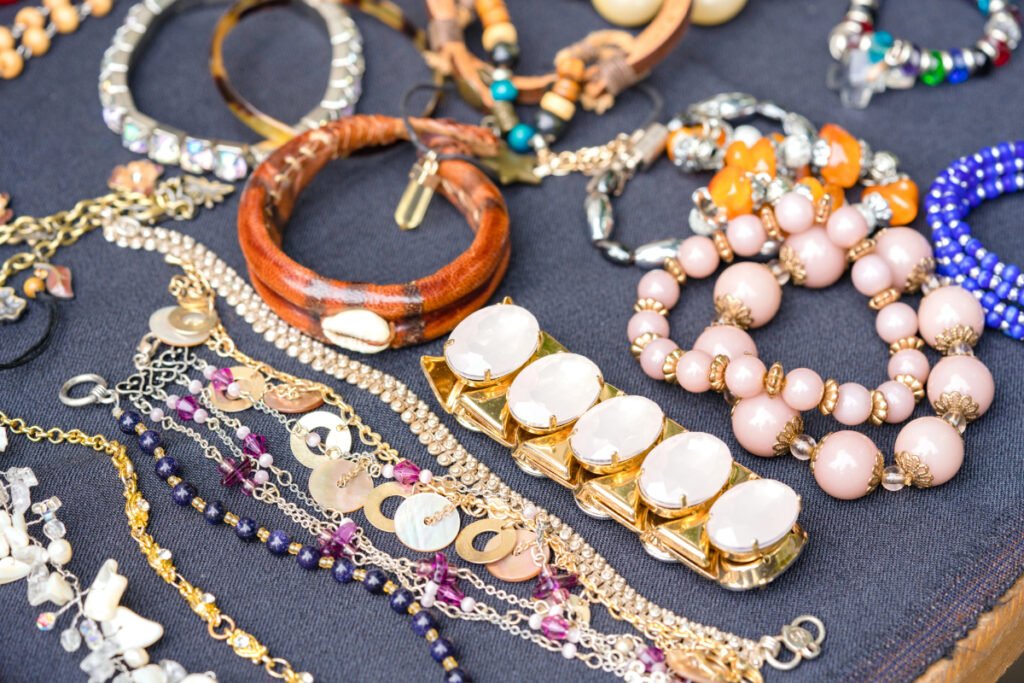
Jewelry became bold instead of quiet. Many new materials, like colorful plastic and cheap metals, became more common. From plastic or lucite bangles and bold enamel brooches to rough-textured gold jewelry, the 60s jewelry had variety.
Here are the various jewelry styles that appeared in the 1960s, their identifying features clear as day!
Mod and Pop Art Influence
It was born out of the British youth counterculture movement, the “Modernists,” and had a graphic, playful, and bold look. There were creative and daring shapes (big circles, unrepresentative forms) and high contrast color schemes, most notoriously black and white, but also pointed primaries (red, pink, yellow, green, blue).
Key elements –
- Simple, clean, and oversized geometric forms, like circles, squares, and ovals
- Flat, solid colors used in sharp, high-contrast combinations.
- New synthetic materials, like Lucite, plastic, and vibrant, painted enamel on metal.
- Look massive but are surprisingly lightweight.
Asymmetrical Designs
Asymmetrical designs became a hallmark of 1960s jewelry. You’ll see designs that appear different on both haves but with equal visual weight.
Statement asymmetrical earrings became extremely popular during this period because women liked short or tucked-back hair. This made the ear lobes a plain canvas to showcase oversized rings (hoops) or dramatic earrings.
Costume Style
The 1960s were a big decade for high-quality, signed costume jewelry. Designers played with non-precious materials and brought them to high art, capable of producing sweeping, sculptural looks that fine jewelry couldn’t compete in terms of size or cost.
Notable features –
- Heavy, quality plating (gold- or rhodium-tone)
- Traditional rhinestones and high-luster faux pearls
- A readable, legible maker’s mark (e.g., K.J.L., Crown Trifari, Monet) on the clasp or back.
- Mostly screw-back or sturdy clip-on mechanisms for earrings
Hippie and Bohemian Influence
The late 60s were against mass consumerism, and it shows in the jewelry, too, with the “Hippie” aesthetic. Jewelry was handcrafted, and it was natural and symbolic.
Peace signs and the iconic yin-yang symbols appeared on pendants, charms, and brooches as jewelry became a way to wear your politics. Also, natural materials became more popular.
This style was artisan-made rather than factory-perfect, and so it likely features unique elements, like wire-wrapped stones, simple leather cording, or macramé knotting.
Space-Age Style
With the moon landing in 1969 arrived the space-age style. It is marked by its unique blend of technology, the cosmos, and clean, futurist styling. As a result, orbital shapes, i.e., spheres, half-domes, rings, and concentric circles, began to appear on earrings and pins.
You’ll also see Sputnik Designs (bursts of prongs or rays) as well as abstract cosmic forms, flaming stars, and satellites. Pieces were mostly made of sterling Silver, chrome, or non-tarnishing Rhodium-plated base metals and plastics.
Psychedelic Style
The style became known in the late 1960s, driven by the exploration of altered states and the “Flower Power” movement and inspired by optical illusions (Op Art) and the swirling colors of light shows. It was an expressive, colorful opposite of the streamlined Space-Age look.
Large flower-shaped brooches and pendant necklaces, brightly enameled rings, and earrings with dramatic, swinging movement.
Other special features –
- Large, stylized Flowers (especially daisies), abstract swirls, paisley, organic free-form shapes
- Often shows enamel work for rainbows or natural patterns
- Mostly shows brightly painted Enamel on metal
- Colorful plastics/resins, and Glass beads in non-natural, electric hues (lime green, hot pink, electric blue, neon, etc.)
Scandinavian and Modernist Style
These influences created jewelry that’s intellectual rather than purely decorative. This style focused on abstract forms, raw texture, and the actual beauty of the metal itself.
Identifying signs –
- Mostly uses heavy gauge Sterling Silver (often with a patina)
- Highly textured surfaces, hammered, brushed, or intentionally rough (“Brutalist” style).
- Abstract, asymmetrical, and architectural designs
- Mostly have clear purity marks and the distinct stamp of the individual artist or workshop (e.g., “NE From,” Georg Jensen’s post-Jensen marks)
Ethnic-Inspired Style
The ethnic-inspired style reflected the decade’s fascination with non-Western cultures. As people grew more interested in foreign travel and Eastern philosophy, jewelry began to borrow from India, Africa, and Native American designs.
One of the many unique features is its material! It likely features raw and organic materials, like wood, bone, leather, clay, plus hammered base metals like brass and copper. Semi-precious stones like turquoise and coral were popular, often used in their natural or tumbled state.
Materials Used in 1960s Jewelry
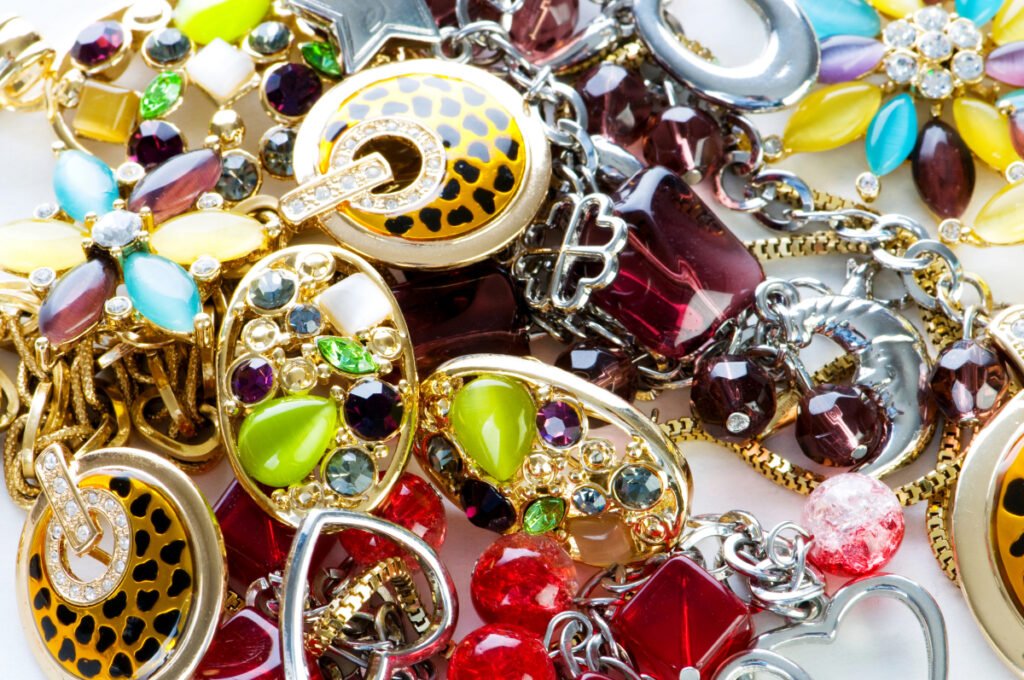
The 1960s brought major changes in jewelry materials. New synthetic options became available, and designers weren’t afraid to experiment with them alongside traditional metals and stones.
You’ll likely find:
- Plastics: Lucite is a plastic brand name. It’s lightweight, durable, and could be molded to create clear, opaque, or electric colors, which was ideal for the 60s over-the-top Mod style. Other plastics like Bakelite, Catalin, resin, vinyl, and PVC were also used extensively.
- Yellow Gold: Fine jewelry from the 60s moved away from the white metals (platinum/white gold) and preferred textured yellow gold, often hammered, brushed, or given a nugget-like finish.
- Silver: Silver was mostly used in the Scandi patterns, like the Navajo. Graphic flowers and leaves in silver looked crisp and modern. Sterling was favored by the Modernist designers as well, for their linear designs.
- Enamel: Both cold and fired enamel are used in most of the 1960s pieces. It was the best material to get that bold, saturated color palette and graphic patterns on metal, especially in Mod and Pop Art designs.
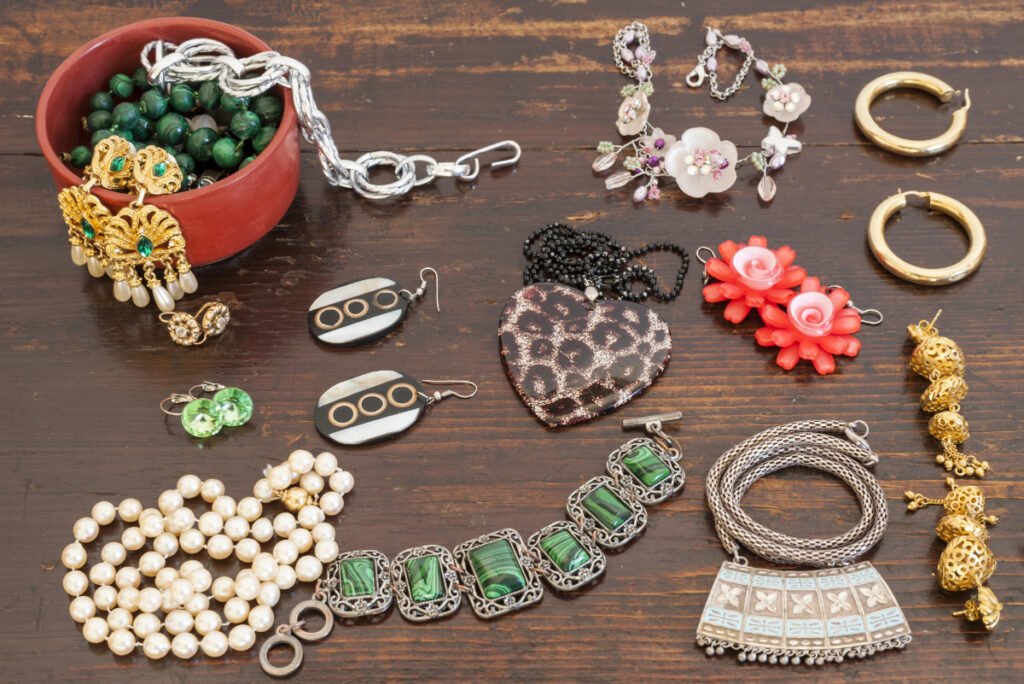
- Stones: As for stones, all the casual-looking stones like turquoise, malachite, agate, and coral are common in 1960s jewelry. And you’ll also see a lot of Austrian crystals (faux diamond) and baroque pearls (or faux pearls) along with traditional rhinestones.
The Most Popular Jewelry Houses & Brands from the 60s
Be it fine or costume jewelry, it’s always the pieces from renowned brands or jewelry houses and designers that fetch the highest returns. The biggest names from the ’60s are:
- David Webb: An American designer known for his bold, sculptural pieces, especially brooches and cuffs in textured yellow gold. Vibrant enamel and animal motifs (zebras, snakes) are his signature elements.
- Tiffany & Co.: This has always been a sought-after brand, even in the 60s, even today! Pieces designed by Jean Schlumberger, especially the ‘Bird on a Rock’ brooch, remain the most valuable. You’ll see imaginative, whimsical designs, natural motifs, colored stones, plus enamel.
- Kenneth Jay Lane (K.J.L): He was really the ‘King of Costume Jewellery!’ His opulent, oversized pieces in gold-tone metal with simulated stones were worn by the most famous women of the day. Early pieces are extremely sought after.
- Trifari: Theirs was vintage costume jewelry at its finest! Founded by Italian goldsmith Gustavo Trifari in 1910, the company created its best output with designer Alfred Philippe from 1930 to 1968. Philippe’s “Tree of Life” and “Fruit Salad” designs are now worth collector’s prices.
- Monet: They do beautiful metalwork, most often gold or silver-plated chains, necklaces, and simple, elegant clip earrings. Their mark is most likely engraved on a signature metal clasp or a label.
- Bulgari: The Italian firm that rose to global fame with its bold, colorful, architectural look, especially in large cabochon stones. Elizabeth Taylor was its glamorous patron during this time.
12 Types of Vintage 1960s Jewelry Worth Collecting!
1. Louis Giusti Brutalist Fish Skeleton Necklace
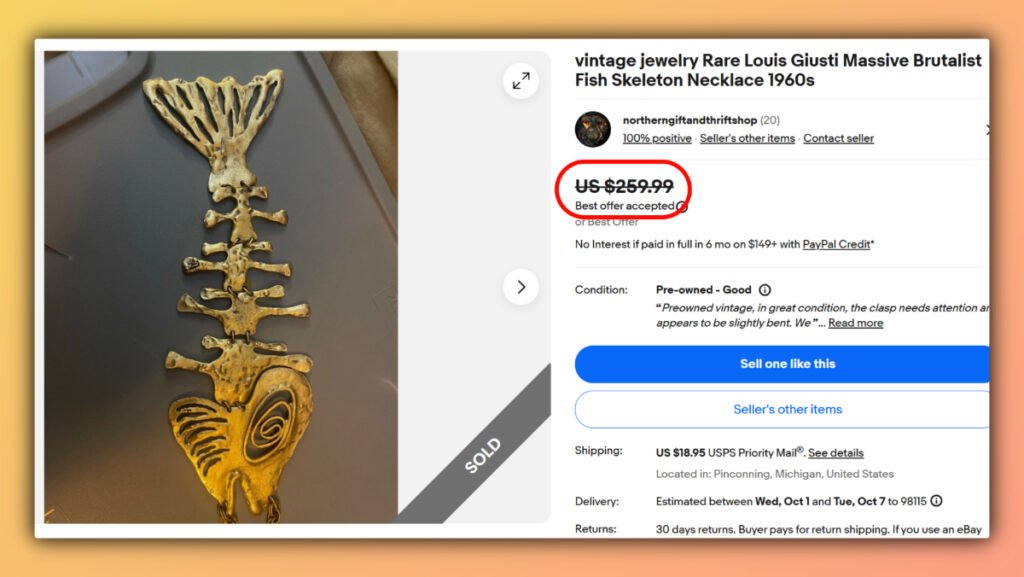
This Louis Giusti’s iconic fish skeleton necklace shows what 1960s brutalist jewelry was about. This massive Italian-made locket features an articulated bronze-tone skeleton that looks almost real due to the textured surface.
Giusti specialized in sculptural animal forms, distinctive for their hammered, oxidized metal finish and substantial weight. Authentic pieces are likely signed “LG” on the back. These vintage statement pieces can be highly valuable.
2. Kenneth Jay Lane Dangle Clip Earrings
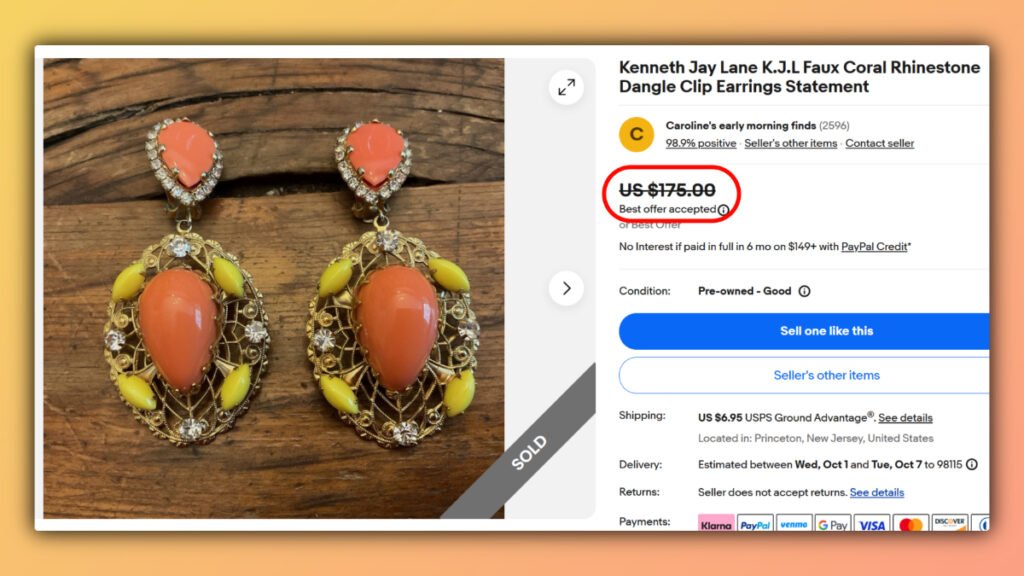
These dramatic earrings are an example of Kanneth Jay Lane’s oversized, statement-making jewelry. They show her unique way of mixing vibrant faux coral with brilliant rhinestones and intricate metalwork.
Kenneth was the designer for glamour and Hollywood style in the 1960s, and her pieces were worn by celebrities like Jackie Kennedy, Elizabeth Taylor, and Audrey Hepburn. This is what makes KJL jewelry even more collectible today.
3. Lea Stein Renard Blue Fox Brooch
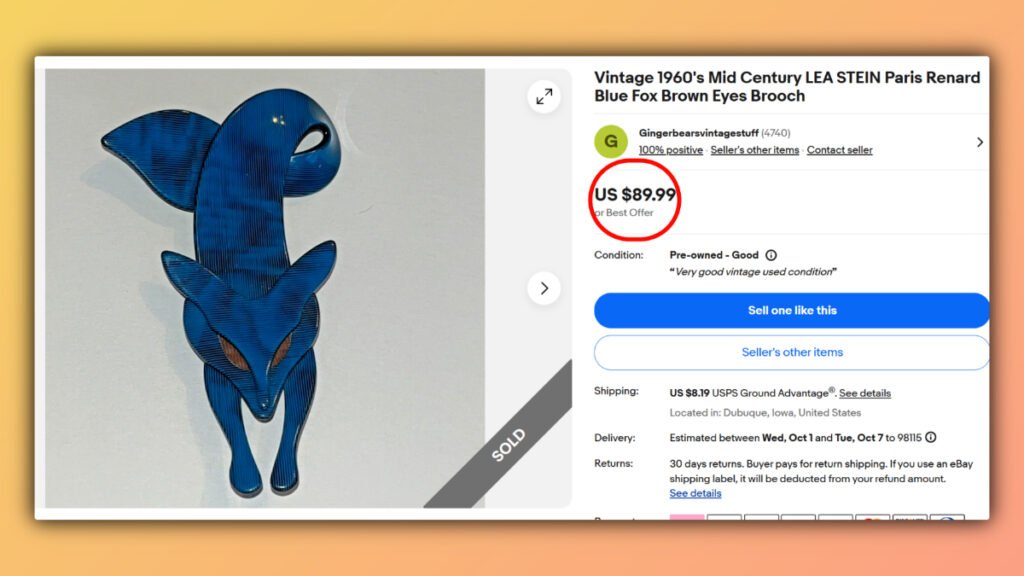
Lea Stein transformed plastic jewelry in the 1960s with her new laminated rhodoid technique. This fox brooch is a perfect example! It shows her signature process of layering thin cellulose acetate sheets with fabrics and textures, creating depth and visual interest.
The animal (fox) design reflects 1960s optimism and playful sophistication. Authentic pieces likely bear “Lea Stein Paris” signatures on V-shaped clasps. These handcrafted French pieces became cult collectibles now.
4. Chanel Gripoix Molded Glass Brooch
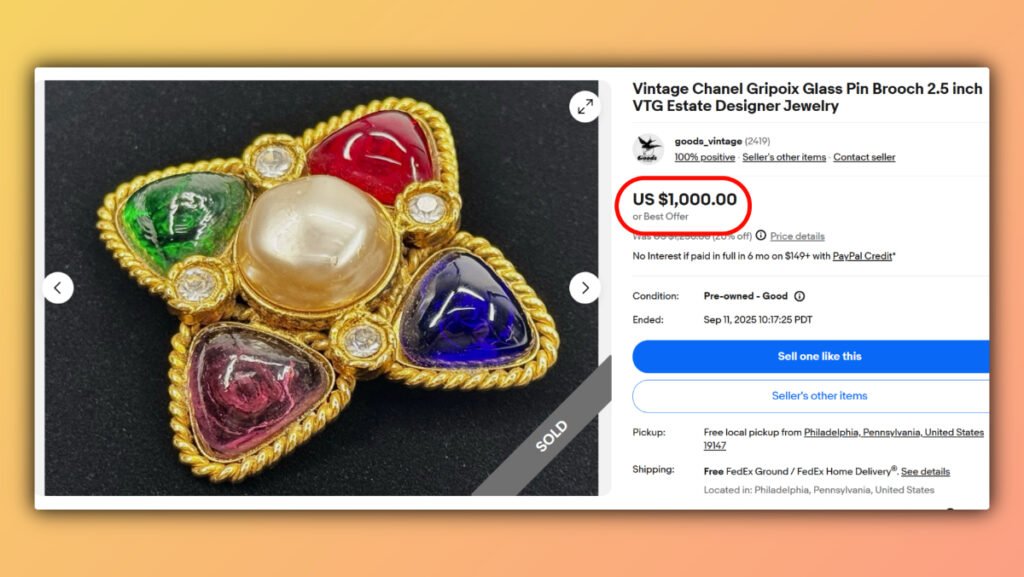
This vibrant Chanel brooch has authentic Gripoix poured glass. It’s a technique in which molten glass is torched directly into metal settings. Chanel partnered with Maison Gripoix to create Byzantine-inspired costume jewelry that became more known than the fine pieces.
Vibrant jewel-toned glass cabochons and intricate metalwork are this style’s classic features. The most coveted pieces of this luxury costume jewelry from the 60s are brooches and rings that can be worth hundreds to thousands.
5. Navajo Spiderweb Turquoise Ring
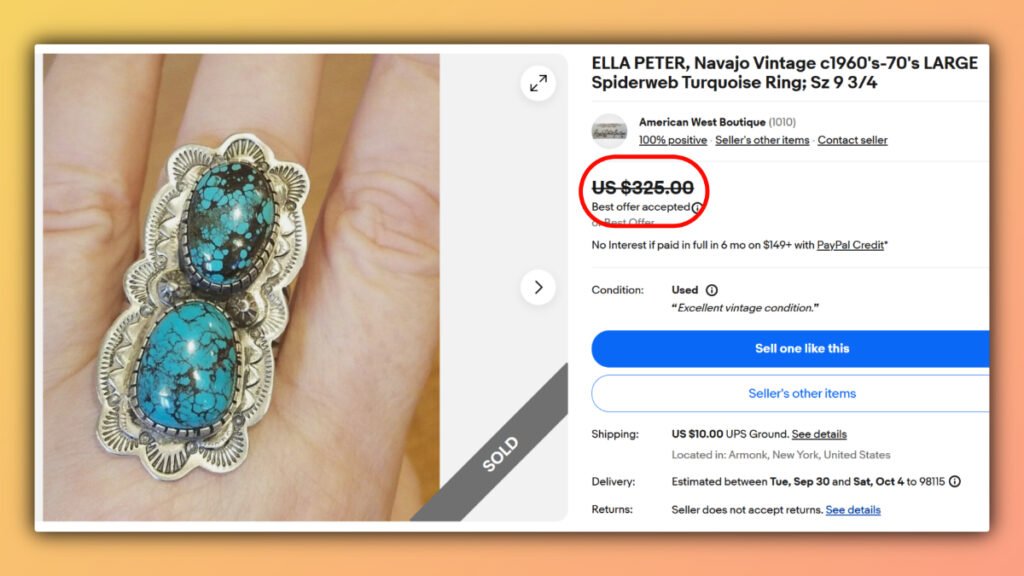
This stunning turquoise ring shows the Native American jewelry renaissance of the 1960s-70s. It’s designed by Ella Peter. She’s a renowned Navajo silversmith known for her exceptional work, especially with the spiderweb turquoise (the one with dark matrix lines throughout like a spider’s web).
The elaborate silver stampwork and scalloped bezels are classic Navajo techniques that became popular during the 60s Southwest jewelry boom.
6. Sarah Coventry Lucite Gold Tone Pendant
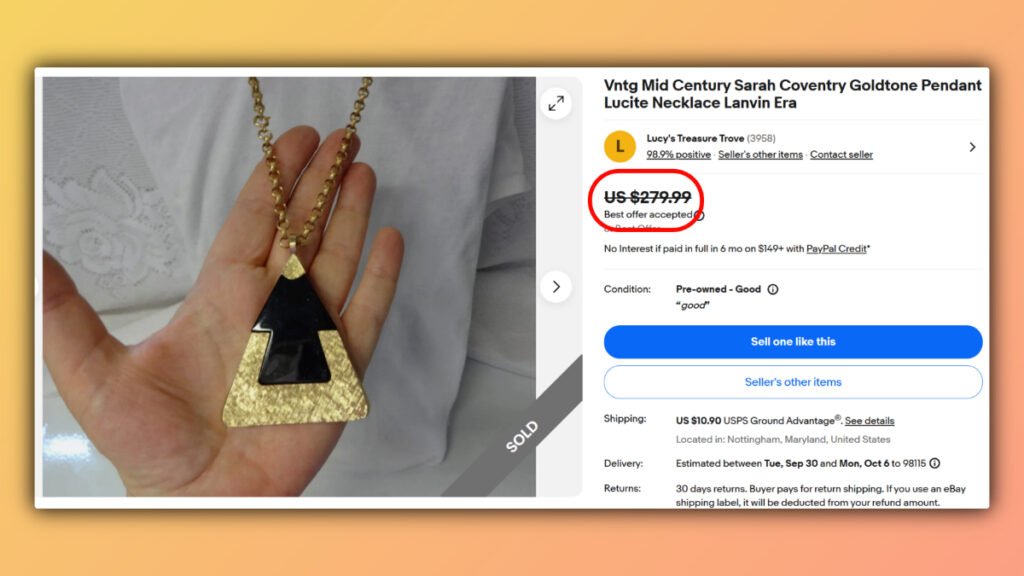
Sarah Coventry was the queen of home-party jewelry sales in the 1960s. She kind of introduced high-style costume pieces to suburban living rooms across America. This bold pendant from Coventry shows the 60s mod aesthetic with its bold lucite and gold-tone design.
The clean lines and striking contrast between materials also reflect the space-age optimism of the 60s. Note that Sarah Coventry pieces were almost always signed, so look for the marking to spot real items!
7. Miriam Haskell Beaded Necklace
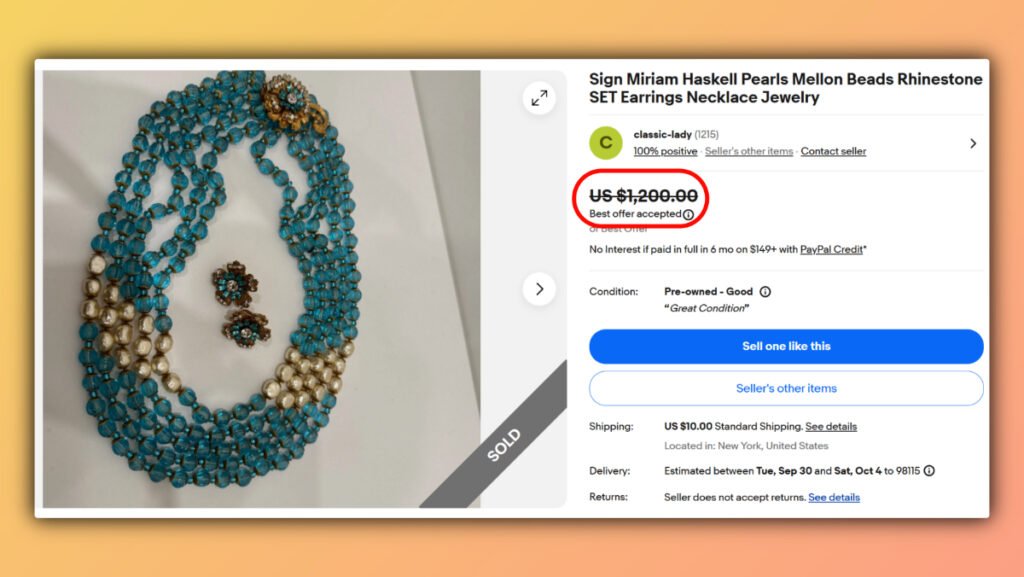
This is a popular melon beaded necklace from Miriam Haskell, the renowned luxury costume jewelry designer. She was known for hand-wiring every single bead and other parts with her signature Russian gold-plated filigree.
This stunning set layered lustrous faux pearls with textured melon beads and sparkling rhinestones for maximum glamour. Haskell pieces were totally handmade, and since never mass-produced, they are rare and valuable!
8. Trifari Egyptian Revival Emerald & Gold Necklace
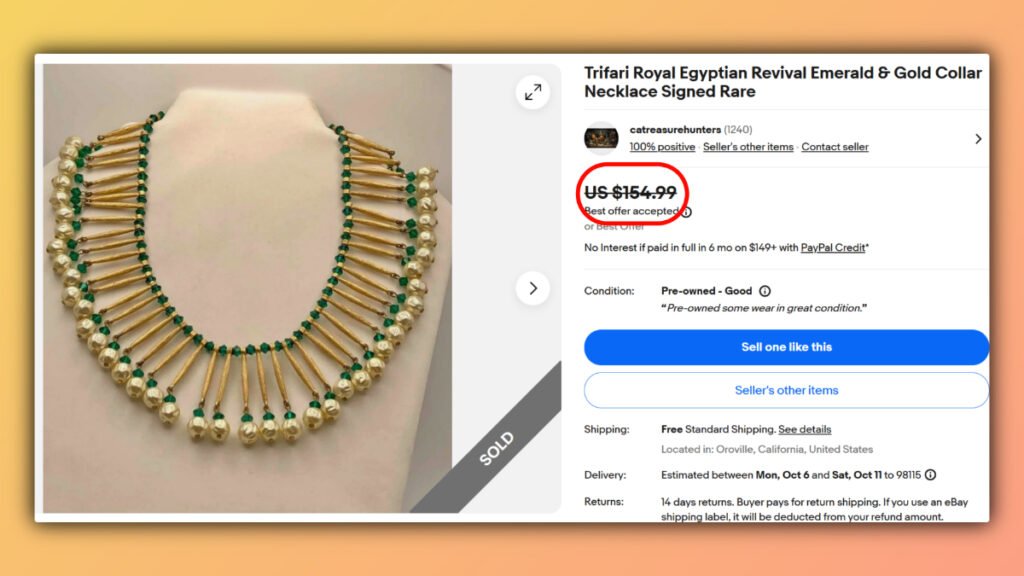
Heard of Egyptian Revival fashion in the mid-1960s? This dramatic collar necklace is its true example. Such pieces were inspired by archaeological discoveries and Hollywood glamour. Trifari’s Egyptian-inspired pieces from 60s are quite collectible.
The collar design mimics ancient Egyptian jewelry worn by pharaohs, along with the modern emerald green and gold tones. Always verify the Trifari signature to authenticate such pieces.
9. Hattie Carnegie Blue Melon Art Glass Jewelry Set
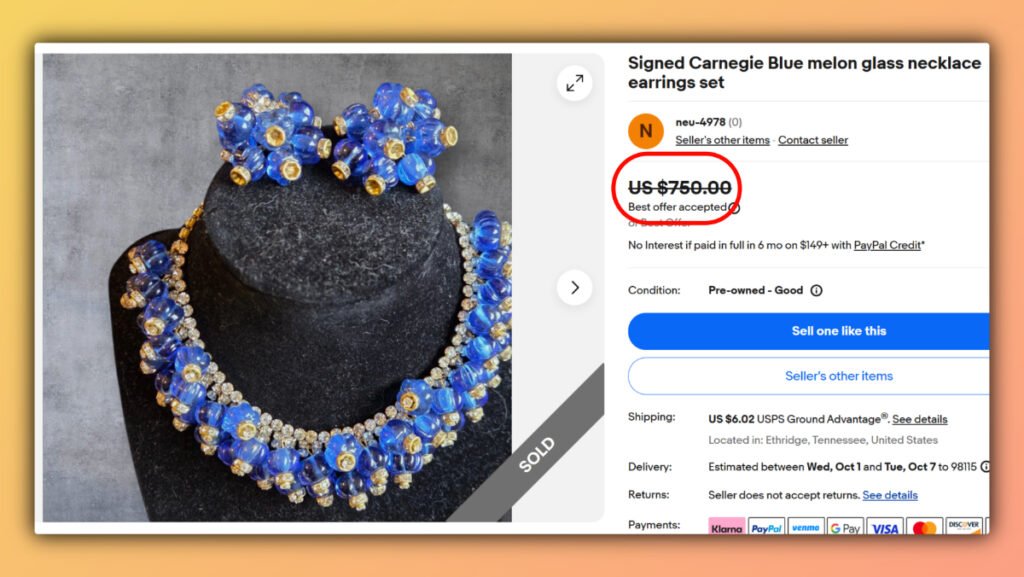
Hattie Carnegie was the queen of elegant costume jewelry, and this dramatic blue art glass set shows why. She was one of those who pioneered using high-quality art glass that looked luxurious but stayed accessible to the middle class.
This set has the popular “melon” beads, getting their name from their ribbed, curved shape like cantaloupe slices. The deep cobalt blue was a signature color for the brand during this era. These pieces often feature multiple strands and chunky beads that make bold fashion statements.
10. Lisner Enamel Pop Art Style Flower Brooch
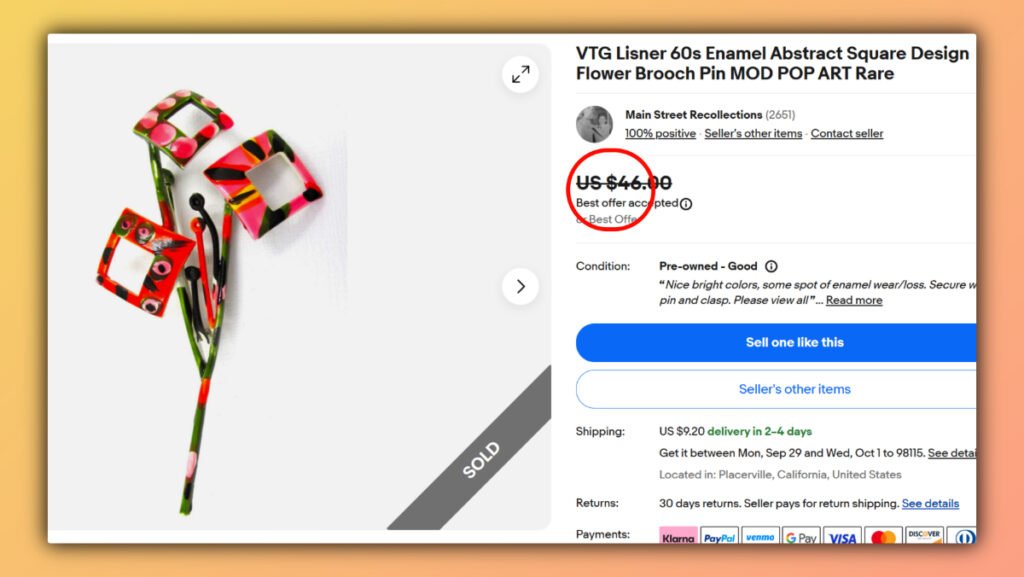
Lisner was a major costume jewelry maker who became known for their bold, colorful enamel work, like this groovy brooch. The floral design is a pretty example of the “flower power” theme of the late ’60s. Lisner perfected vibrant enamel techniques that made their pieces pop with color while being affordable.
Quick Tip: When collecting Lisner pieces, check for the company signature and look for that unchipped and bright enamel work.
11. Brutalist Space Age Dangle Earrings
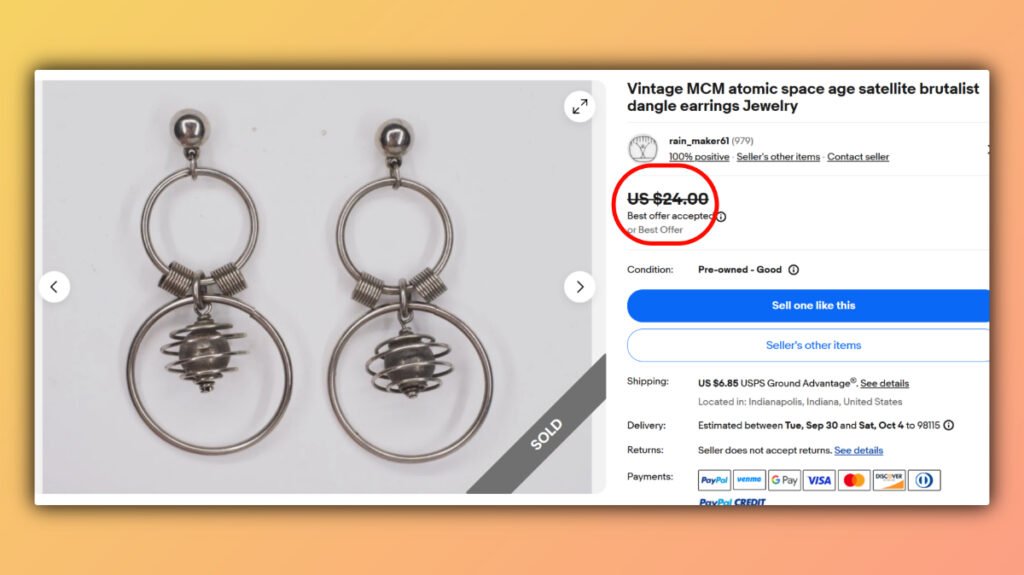
These earrings are perfect examples of the atomic space age movement of the 1960s. Those metal spheres within circular hoops are inspired by satellites and atomic structures.
This style was also brutalist, meaning it mostly shows geometric forms with industrial materials. The dangling “satellite” elements move freely, an element that was super trendy in MCM (Mid-Century Modern) jewelry.
12. Kramer Fruit Salad Necklace Set
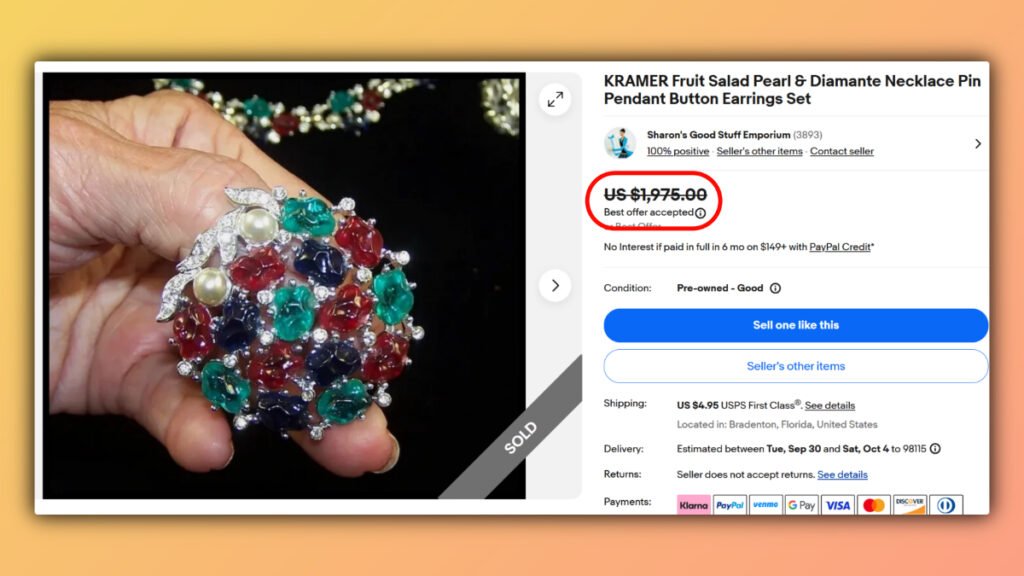
The “fruit salad” style of the 60s featured clusters of colorful beads in playful arrangements. This magnificent “fruit salad” set from Kramer shows hand-carved glass stones mimicking precious gems, combined with faux pearls and Austrian rhinestones in rhodium-plated settings.
Kramer of New York made some of the best costume jewelry from 1943 to the 1970s, peaking in the 1950s-60s. Look for “Kramer,” “Kramer of New York” signatures for authenticity.
The sixties made jewelry fun with different new materials and taking inspiration from new movements. If you’re interested in vintage jewelry, find these pieces now; they’re not just pretty, but bring you a small fortune, too.