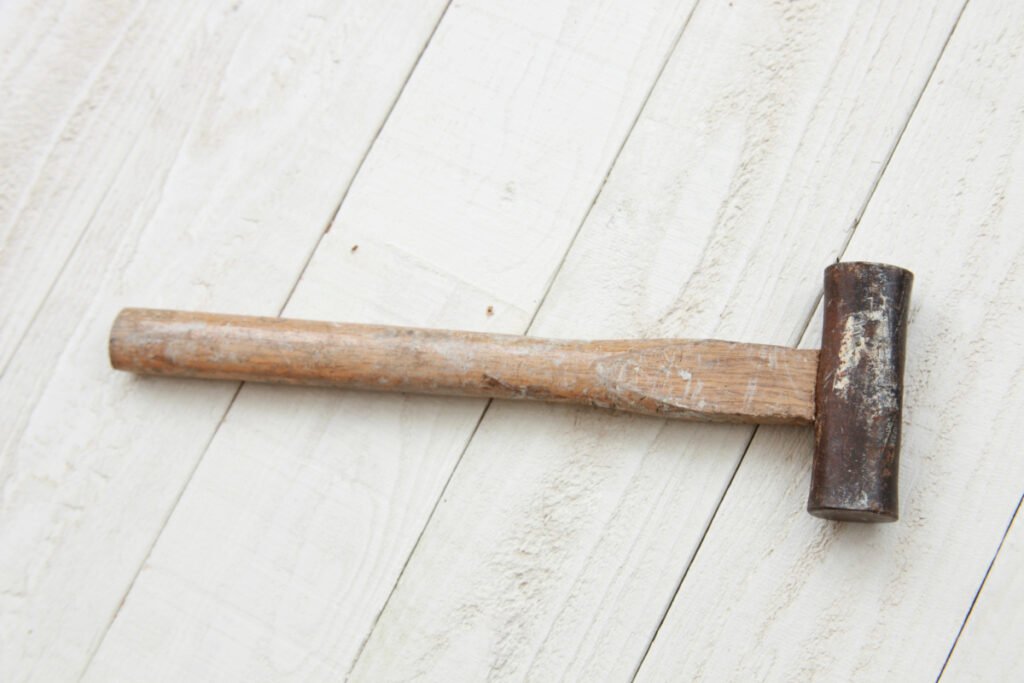
Got an old-looking hammer in a toolbox in your garage? Its real worth might surprise you. You may think of $30, but some vintage hammers have sold for over $300, or even $500, if you know what exactly drives the value.
From maker and age to condition and type, here is a guide to identify a vintage hammer and check its collectability and value, plus a few examples worth knowing.
Does Your Old Hammer Have Value? 5 Checks
Not every old hammer is worth actual money just because it’s old. Time isn’t always the answer here. This means that before you think that you have something valuable, use this test.
If your hammer fits at least three or four of them, it is likely to be worth some money.
How Old Is It & How Is It Made?
Hand-forged tools made prior to about 1880 are worth far more than drop-forged production hammers, even those of the best brands. The hand-forged heads are ever so slightly asymmetrical and have small facets. The drop-forged heads are completely symmetrical and often have a faint parting line down the sides.
Who Made It? (Check the Stamp)
Handy Tip: In case the mark is faint, avoid cleaning the hammer. Instead, shine it with the low beam of a flashlight in raking light. The stamp appears nine out of ten times.
Is The Form or Patent Rare?
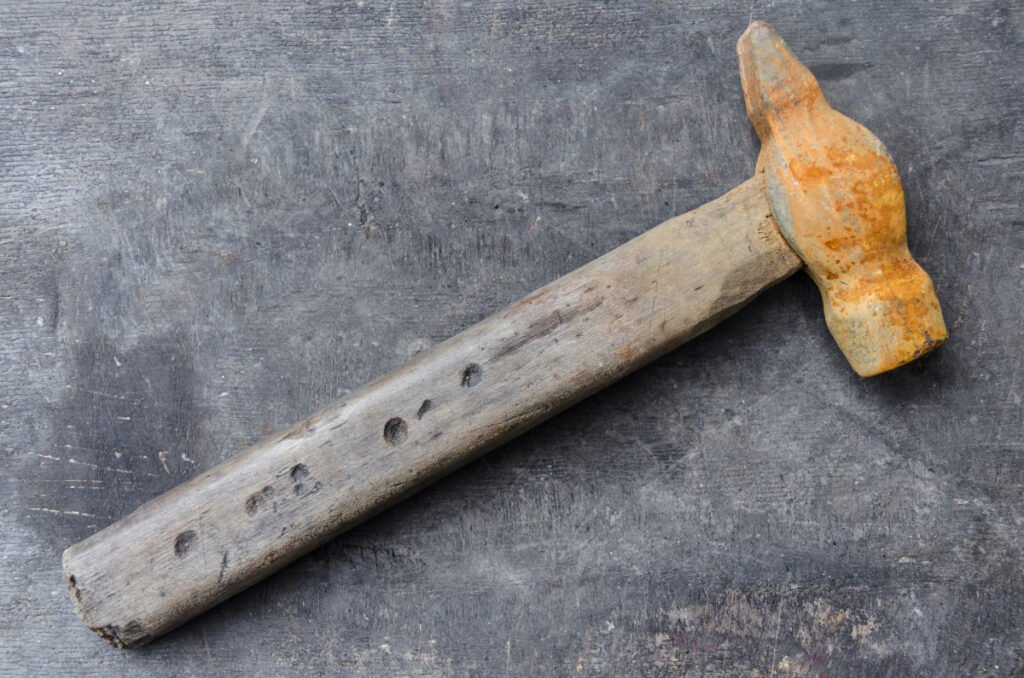
Mechanisms that have been patented, such as the Cheney nail holder, rare production runs, such as the Winchester, and unique trade hammers all rapidly increase value.
Are All the Parts Original?
Original handle (hickory or other wood), snug fit, no cracks in wood, and not much pitting on the face. These are the signs of value; a new hickory handle kills the value faster than you think. Markings of railroad, military, or identified shop origin command a strong premium.
How an Old Hammer Loses Its Value?
Even the finest antique hammers quickly become worthless if not handled or checked properly. So, it’s good to know what actually drops the price.
- 40% to 50% of a hammer’s value is lost from the stripping of the patina by wire-brushing or sanding. Similarly, repainting or oiling reduces its value.
- Replacing the original handle with contemporary wood is another value detractor, easily identifiable by the brighter color of the wood compared to that of the head.
- Rust removal, which pitted the face of the hammer, and grinding, which thins the edge of the head, are other factors.
Steps for Knowing if a Hammer Is Vintage
Identifying an antique or vintage hammer involves checking some obvious features on the hammer itself. Simply hold it in good lighting and then turn it over to examine these elements in order.
Spot the Maker Stamp (on the Cheek)
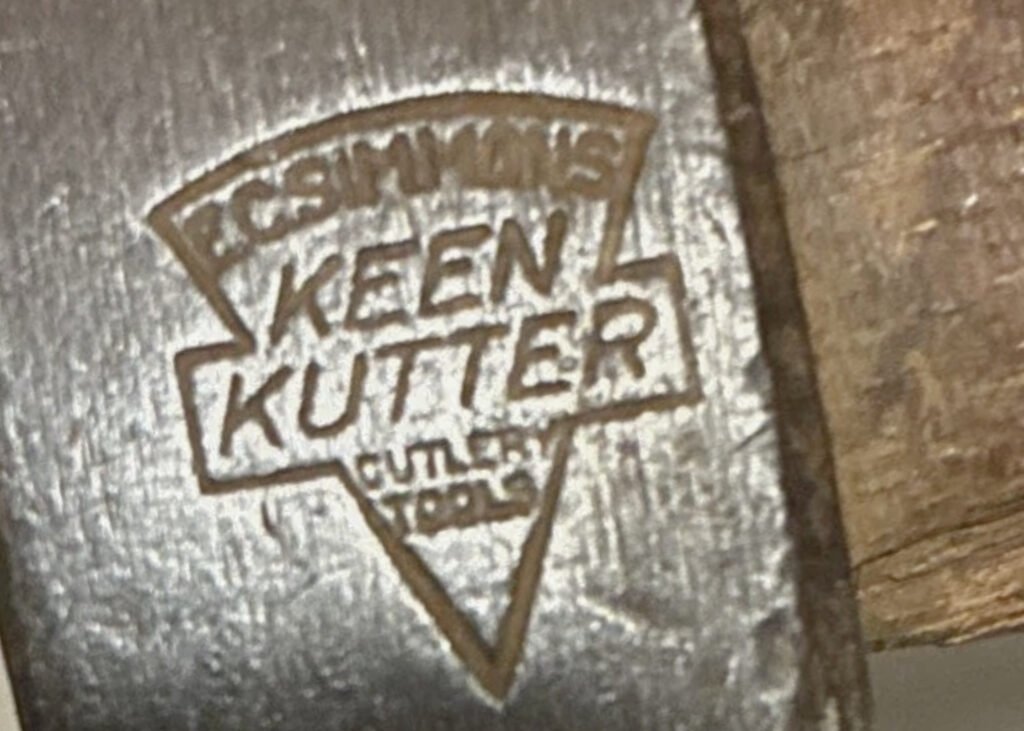
Since the maker’s name was stamped on the cheek, that will be your quickest identification point. Look for marks such as D. MAYDOLE / NORWICH, NY / CAST STEEL, or the diamond-shaped KK mark for Keen Kutter.
There are a handful of names that are always appearing on collectors’ tables. Knowing these names will save you from overlooking a valuable one.
- David Maydole (1845–1939): Largest hammer manufacturer in America. Set the standard for claw hammers with his adze-eye pattern.
- Henry Cheney Hammer Co.: For the patented nail-holding hammer. The “Cheney Nailer” was under the 1927 Taylor patent.
- Winchester (1920–1929): Winchester made hardware and tools for only about nine years. Winchester-marked hammers always hold a premium.
- Keen Kutter (E.C. Simmons Hardware): Diamond-KK markings and red-white-black designs are the favorite of many collectors.
- Plumb (Anchor Brand): A good value tool with much collector appeal, particularly in old embossed models.
- Stanley: Pieces from the Sweetheart period (circa 1920 to 1935) are most valuable in the line.
- C.S. Osborne: Best known for tack hammers used in upholstery and leather manufacturing.
Next, look for the date of any patents near the maker’s mark, such as “PAT’D NOV 25 1924.” This will give you the inventor and the form.
The country of origin markings will also help identify the period, especially mid-century imports.
What is the Type?
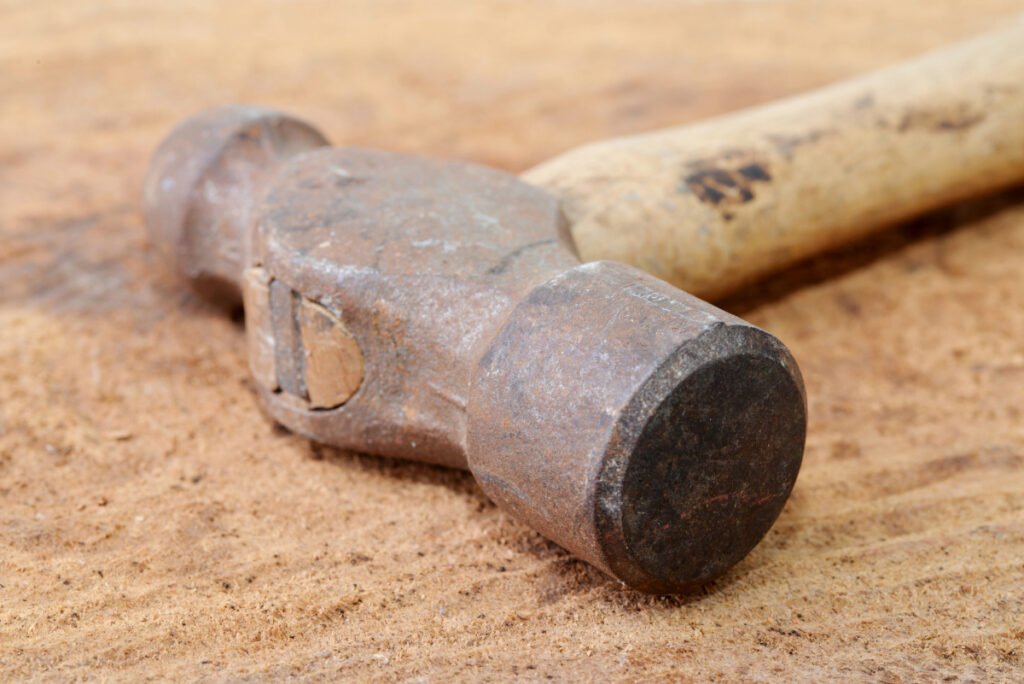
The type tells you about the particular trade for which the hammer was made. Specialty hammers are normally more expensive than the standard claw hammer. Some types of hammers include:
- Claw hammer
- Ball peen hammer: rounded end for metalwork
- Cross peen hammer: wedge-ended hammer for blacksmiths
- Tack hammer: small hammer that is sometimes magnetized for upholstery purposes)
- Cobbler’s hammer: wide hammer with dome face for leather
- Gavel/brick hammer
Date It by Construction
Hand-forged hammers before 1870 are made of wrought iron, show minor forge variations, and have no seam lines. Drop-forged steel hammers were adopted after 1880 and are symmetrical and have a subtle parting line on each side of the hammer head.
The other crucial dating factor is the hammer eye.
David Maydole’s Adze eye was made popular in the 1840s, and it became universal by 1900. It features an extended flared collar. Before that, almost all claw hammers had a strap-like eye design, with two straps on each side of the handle.
Is It the Patina or Just the Rust?
Dark and uniform patina tells the tool’s story and journey written on its metal, which collectors want to see. Active red rust, by contrast, is destructive. So, a hammer with dark patina and light surface rust is acceptable, but one actively flaking and pitted is not.
Valuable Antique & Vintage Hammers That Are Worth Money
Certain old hammer designs and makers are quite popular among collectors today. Let’s take a look at them and what they are worth.
1. Winchester Claw Hammer
- Resale Value: $75 to $250
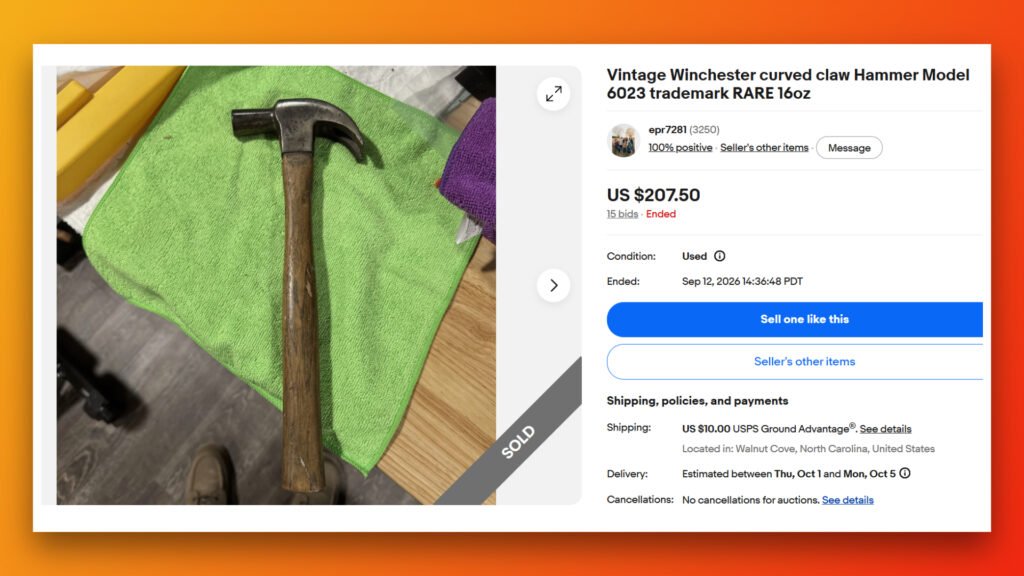
Winchester made tools for only nine years, so anything stamped Winchester is rare. Check for the WINCHESTER name and model number stamping on the cheek of the tool. The graphics and typeface are identical to those used on their gun stamps.
A beat-up Winchester with legible stamping always sells well in the market. An original handle and a clean cheek can add to the value.
2. Keen Kutter Axe Hatcher Hammer
- Resale Value: $80 to $250
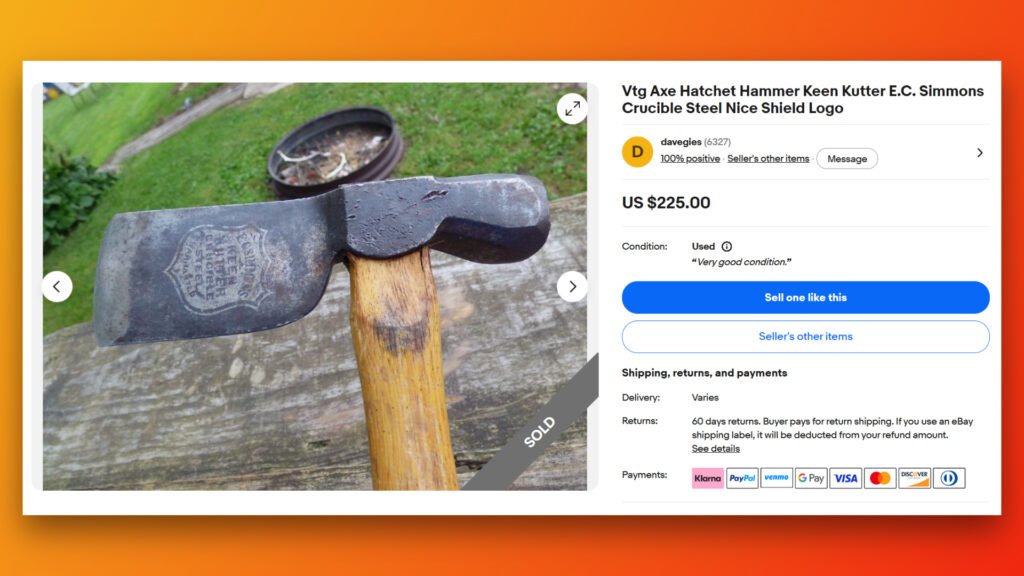
This is the axe-hatchet variant of the Keen Kutter series, featuring a wide blade on one end and a hammer head on the other. This model should have a shield-shaped marking that reads “E.C. SIMMONS / KEEN KUTTER / CRUCIBLE STEEL” etched on the cheek.
A clean, readable shield stamp drives the value of these.
3. Cheney Adze-Claw Hammer
- Resale Value: $50 to $150
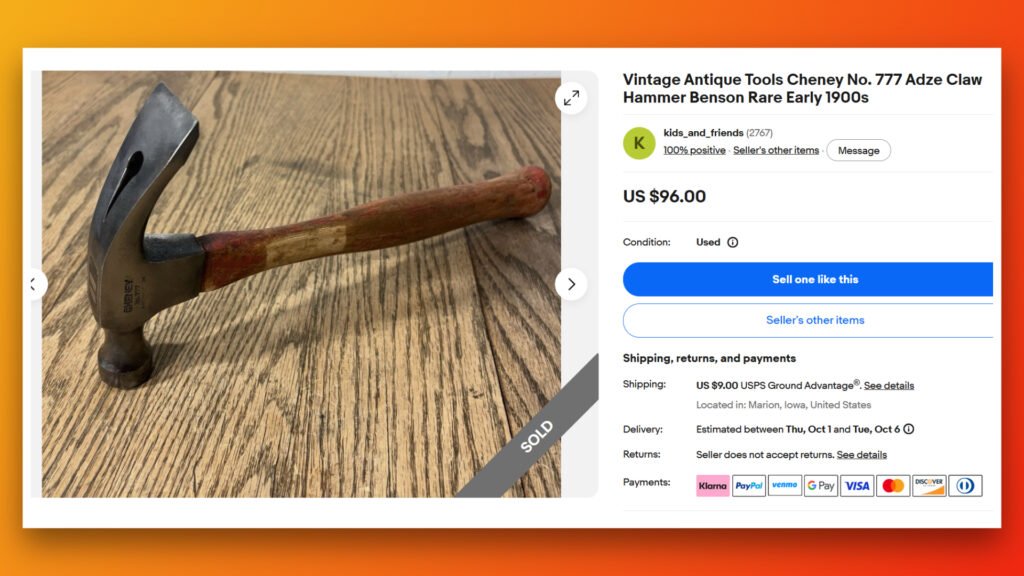
The No. 777 is a rarer Cheney to collect, featuring an adze-headed nail puller rather than the usual claw. This hammer is marked CHENEY / NO. 777 on its cheek and is covered by a 1924 Andrew Benson patent.
The hickory handle painted red, along with a clear stamp, makes these models valuable.
4. Stanley Sweetheart Claw Hammer (Straight & Curved)
- Average Resale Value: $50 to $200
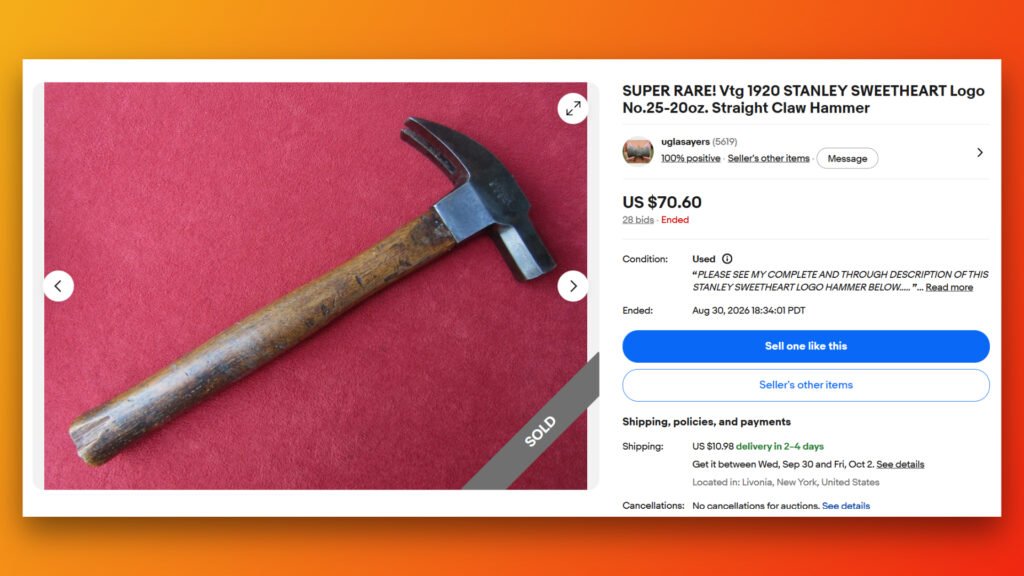
The Sweetheart period extends from about 1920 until 1935. The hammers will be marked by the heart-shaped mark on the “STANLEY” logo and “MADE IN U.S.A.”
While most of the later-period Stanley hammers will go for around $20 to $40, the true Sweetheart period hammer with a clear mark and original handle can fetch more.
The No. 12 claw hammer is among the most collectible models. Post-1935 marks are worth less.
5. Plumb Anchor Brand Hammer
- Resale Value: $30 to $150
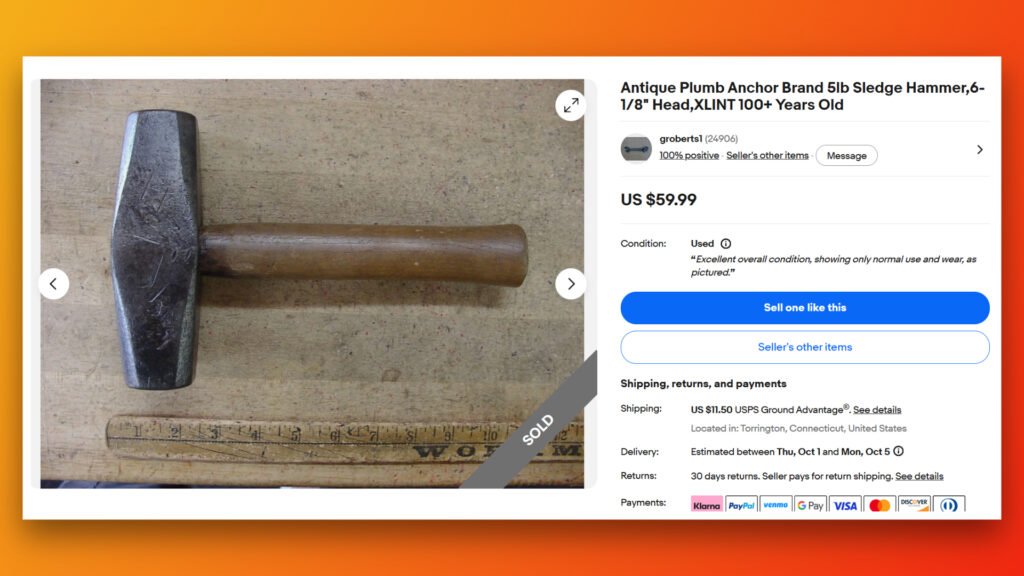
Plumb was among the largest manufacturers of hammers in America. You can identify these by the anchor logo on the cheeks. The 1906 catalog blacksmith sleds are the older pieces to hunt for.
Regular Plumb claw hammers are affordable; however, the embossed and drop-forged hammers in the form of Damascus-looking hatchets really attract attention.
6. Keen Kutter Claw Hammer (Late 1880s to 1930s)
- Estimated Value: $50 to $150
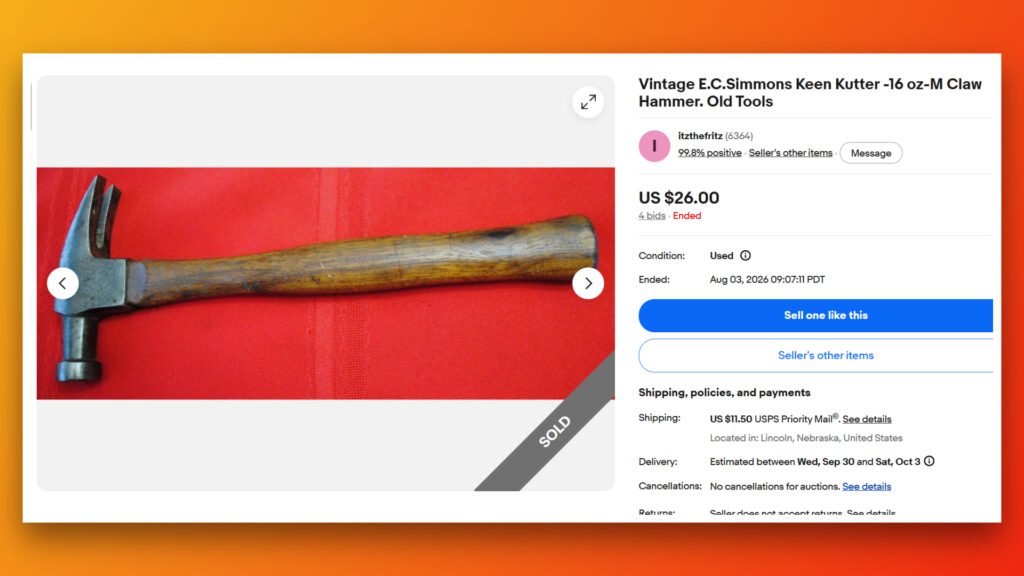
Keen Kutter tools were sold by the E.C. Simmons Hardware Company of St. Louis. The Keen Kutter collection is nearly as popular for its graphics as it is for its tools. The iconic red, white, and black diamond logo is the key identifier.
The build quality on Keen Kutter products is fine, but nothing outstanding, so essentially you are buying the name. Look for the Keen Kutter product with a nice logo and no rust bleeding into the logo.
7. C.S. Osborne Upholstery Tack Hammer
- Resale Value: $30 to $80 (Pre-1950 examples carry a premium)
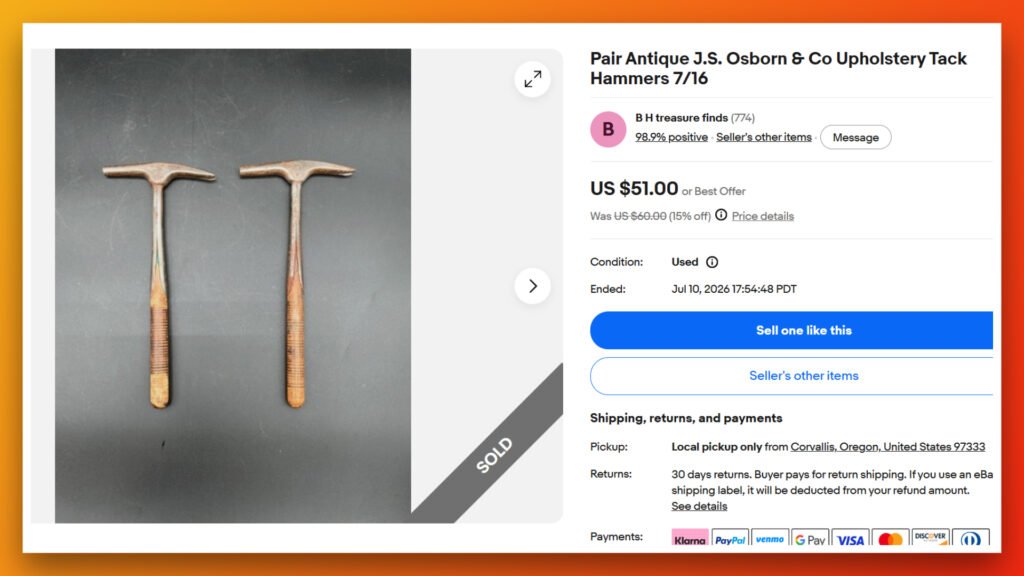
C.S. Osborne is known for their leather and upholstery tools since 1826, including the iconic No. 33 tack hammer. This tool has a split claw plus a magnetized head for driving them with only one hand.
Real C.S. OSBORNE & CO., Newark, N.J. hammers carry the Newark stamp and the model No. 33 designation.
8. Kelly Perfect No. 016 Curved Claw Hammer (1930 to 1949)
- Average Resale Value: $15 to $120
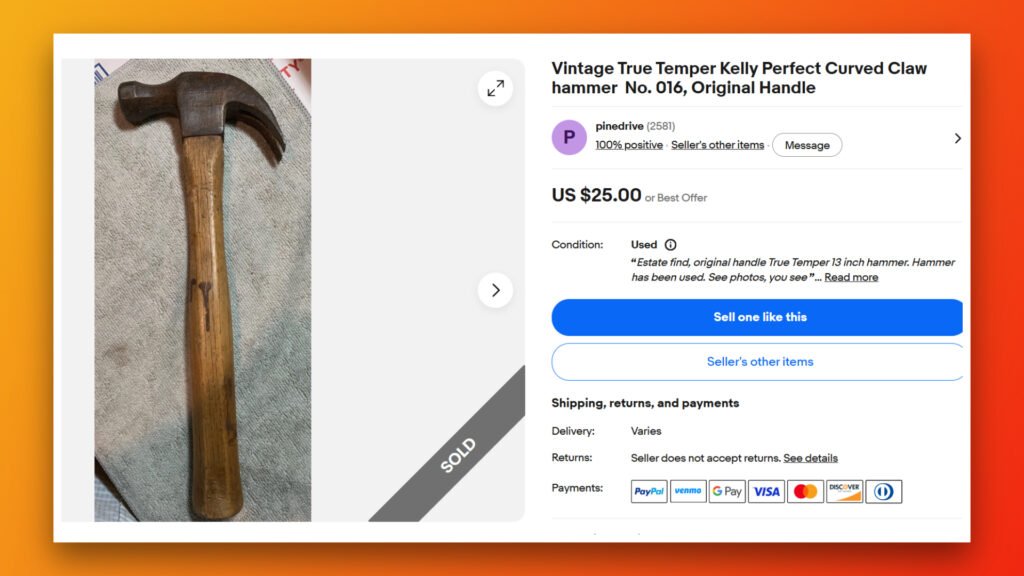
No. 016 is from the Kelly Perfect range, released by Kelly Axe & Tool Works after American Fork & Hoe acquired the brand in 1930. It’s a typical 16-ounce curved-claw hammer and one of the best-balanced production hammers from this time.
True Temper became the name of the division in 1949; thus, an example item with a Kelly Perfect marking will be more valuable than one marked with a True Temper.
Once you’ve identified the hammer’s make, age, and construction, the rest of the identification gets easier. So, the next time you visit a thrift store or flea market, take two minutes to examine the details others ignore to spot a rare find.