Why People Collect Vintage Tea Sets?
Did you ever look at those old, decorated tea sets in an antiques shop and think, “Why don’t they make these exquisite pieces anymore?” That’s exactly why vintage tea sets have become a hot collectible these days. But this is not it!
Vintage tea sets are probably one of the few antiques you can actually use while they maintain their value. But what really makes them worth collecting, and how can you identify valuable styles and patterns? Find all your answers here.
Their Craftsmanship Tells a Story!
Opposite to modern times, tea services were about art more than function back in the day. So, craftsmen focused more on creating increasingly impressive, elaborate tea sets that looked like pieces of art.
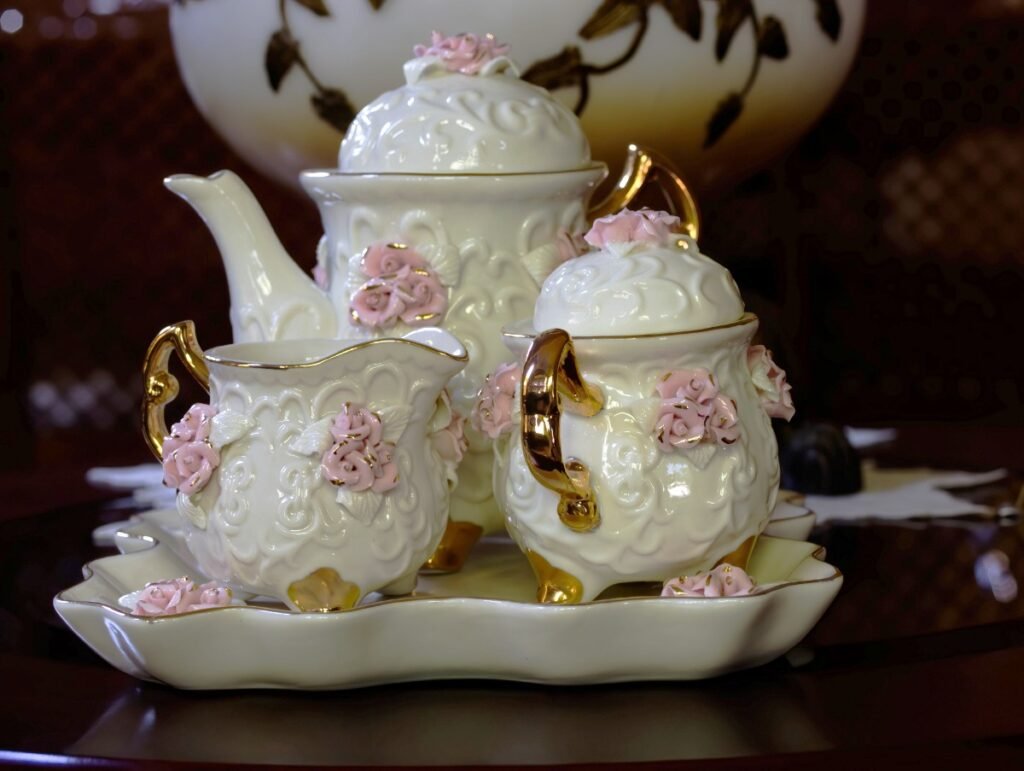
That’s why a vintage tea set is nothing like your ordinary machine-made modern pieces. There is unique artistry and hundreds of hours of careful work. These pieces show impressive craftsmanship, like hand-painted designs to hand-applied gilding.
They are Old and Difficult to Find Today!
A tea set has to be 20 to 100 years old to be vintage. So, clearly, these pieces are super old. And with usage, most pieces were worn out, broken, or lost. Naturally, very few complete services might have survived since the 1920s, making them rare and sought-after.
They Offer Functional Beauty!
Regardless of their age, many high-quality service sets can still do their job. That’s why people with a knack for vintage things love collecting these kitchenware items. Something feels special about pouring tea from a 20+ year-old teapot.
They Have a Strong Hidden Value!
Lastly, thanks to their unmatched artistry, age, functionality, and rarity, vintage tea sets hold monetary value. Depending on how old a set is, what it’s made of, who made it, what style it features, a vintage tea service can fetch as much $3,000 to $5,000! Who wouldn’t want to collect such a valuable piece?
Most Collectible Styles for Tea Sets
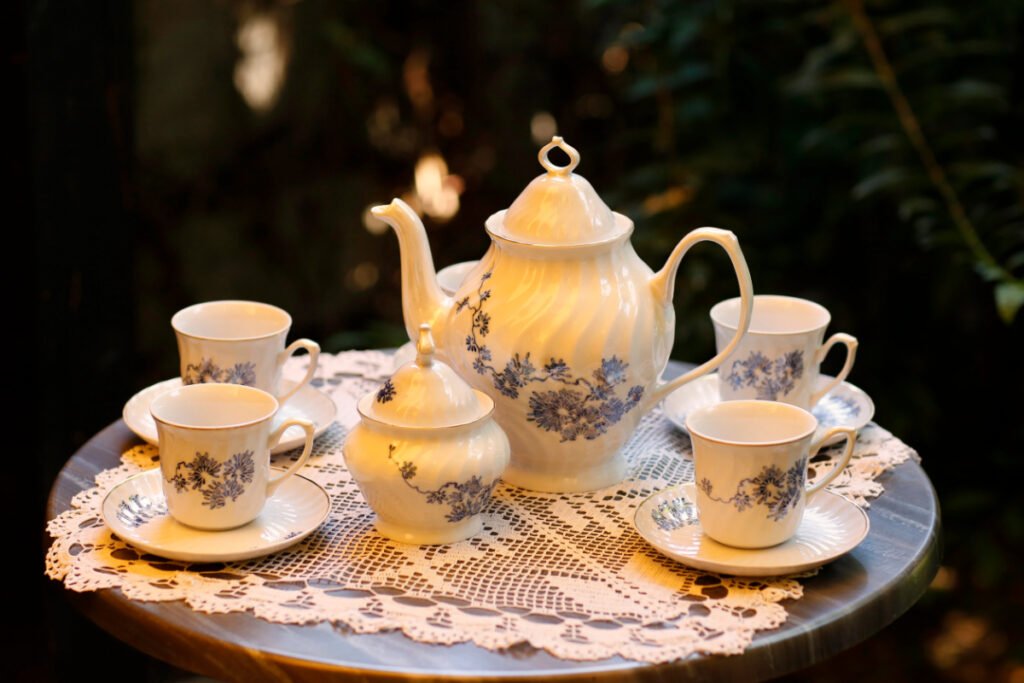
Certain eras and styles come and go, but some stay popular forever. Knowing the popular styles for tea sets will help you easily spot the actually valuable pieces.
1. Victorian & Art Nouveau Style (1837-1910):
Victorian-style tea sets are some of the most desirable pieces, but they’re not vintage. Following major decorative styles, these sets show elaborate flowers, heavy gold work, and romantic country scenes.
Meissen and Sèvres’ Rococo services and Wedgwood’s Neoclassical styles are considered top-notch.
On the other hand, the Art Nouveau period brought flowing lines inspired by nature. Tea sets from these years feature stylized flowers, vines, and feminine figures. The designs are less stiff than Victorian pieces; softer colors & graceful shapes.
2. Art Deco (1920-1935):
The earliest real vintage tea sets show the Art Deco style: lots of geometric patterns, bold colors, angular handles, and streamlined forms. Art Deco sets often use ivory-tone bone china. Shelley’s tea sets are one of the most popular from this era.
3. Chintz Patterns (1930s-1950s):
Vintage tea sets with floral chintz designs and gold details are in high demand right now, especially rare 1930s sets with artists’ signatures. Shelley chintz cups and saucers in patterns like Marguerite can sell for hundreds of dollars! These all-over flower patterns in bright colors look like an English country garden.
4. Mid-Century Modern (1950s-1960s):
MCM tea sets with clean lines, atomic age patterns, and bold colors are quite popular among collectors. These pieces are also known for showing playful motifs, especially the Susie Cooper and Melton examples.
Rare and Collectible Tea Sets: 14 Valuable Designs
From hand-painted bone china designs to geometric Art Deco porcelain styles, these are some of the most popular tea set designs to look for!
1. “Brambly Hedge” Tea Service by Royal Doulton
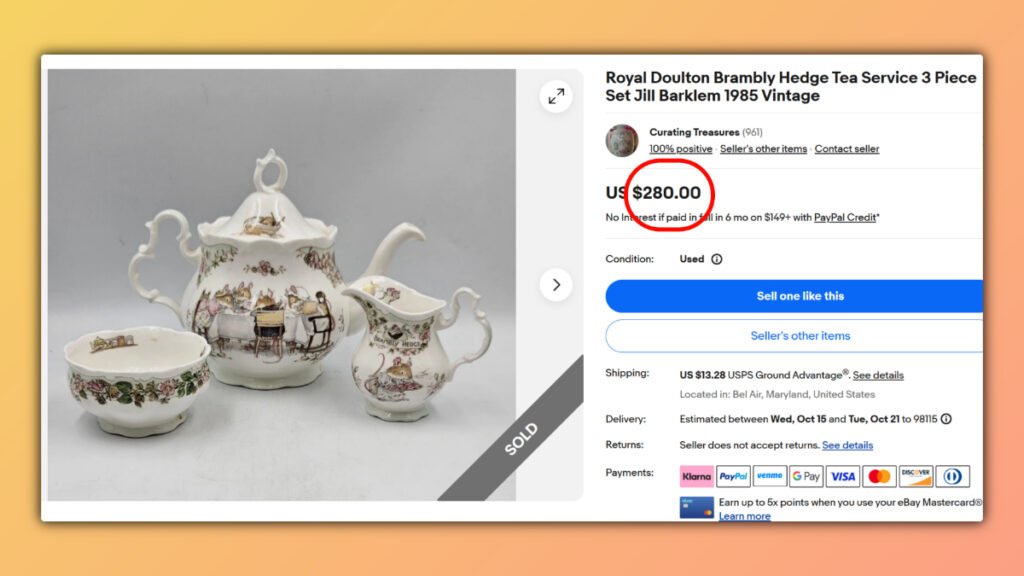
Royal Doulton created this charming series based on Jill Barklem’s beloved children’s books about mice living in the hedgerows. The original books were released in 1980, and this series came out in 1985. This Tea Service shows mice enjoying a tea party!
If you flip the pieces over, many of them have actual quotes from the stories written underneath. Collectors around the world absolutely love these pieces, so they can be tough to find in good condition.
2. “Chinese Bouquet/Apponyi” Tea Set by Herend
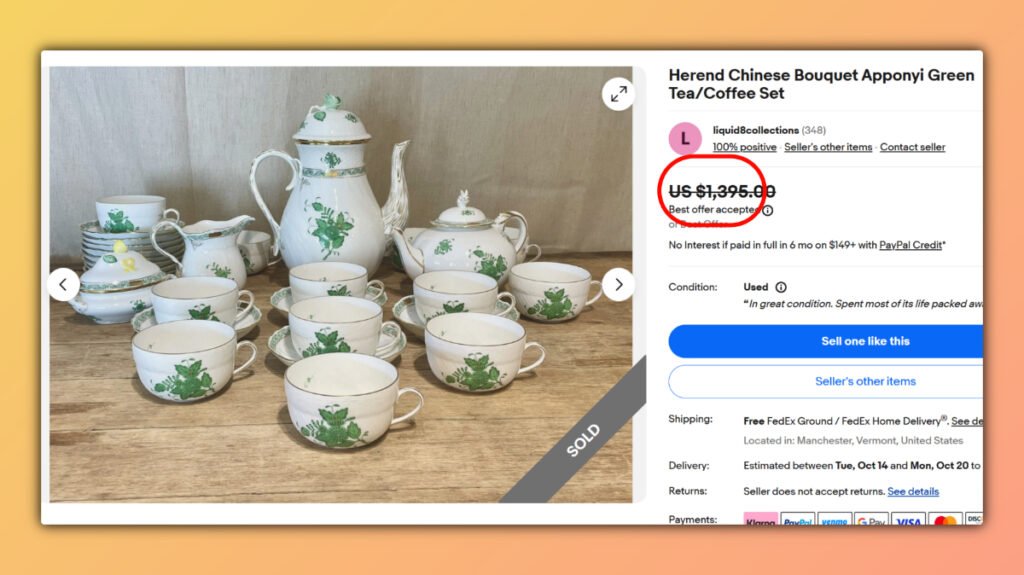
Hungary’s Herend porcelain is some of the finest hand-painted china in the world, with over 180 years of history. Their Chinese Bouquet (also called Apponyi) pattern from the 1930s features oriental-inspired peonies, leaves, stylized leaf garlands, and carved gilded rosettes, plus the rose-shaped finials on the lids.
The green version (marked AV) is one of the most famous colors, along with rust. These pieces were hand-painted by skilled Hungarian artisans. Today, people love collecting different Apponyi colors for tea service.
3. Cubist Vogue “Green Blocks” Tea Set by Shelley
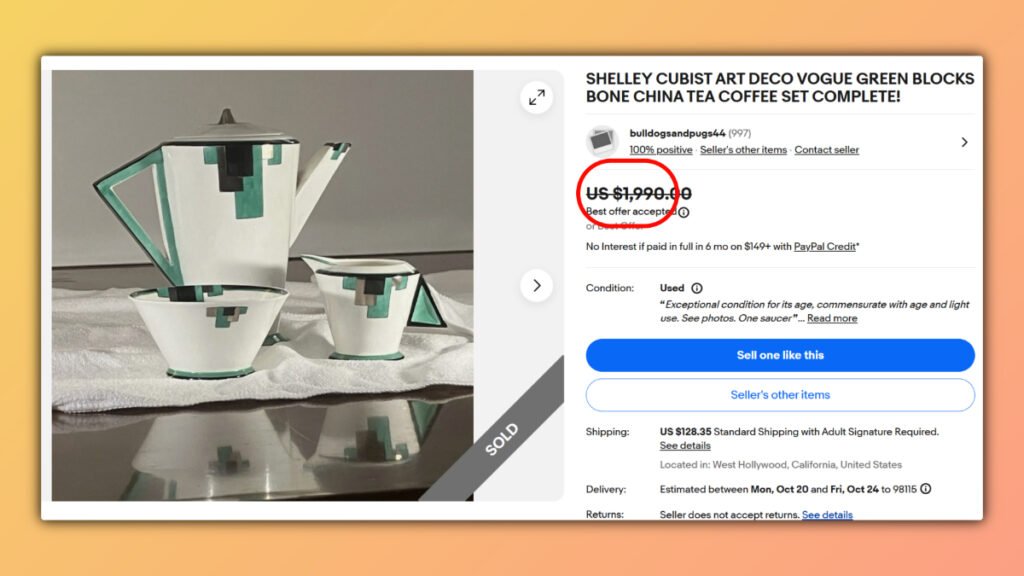
Shelley’s Vogue shape with the Green Blocks tea set is a must-have for Art Deco collectors. Eric Slater designed this masterpiece around 1930 with angular shapes, inspired by 1920s skyscrapers and the Bauhaus movement. This pattern ran for only three years, so it’s rare and generally valued at $500 to $2,500.
4. “Florentine Turquoise” Set by Wedgewood
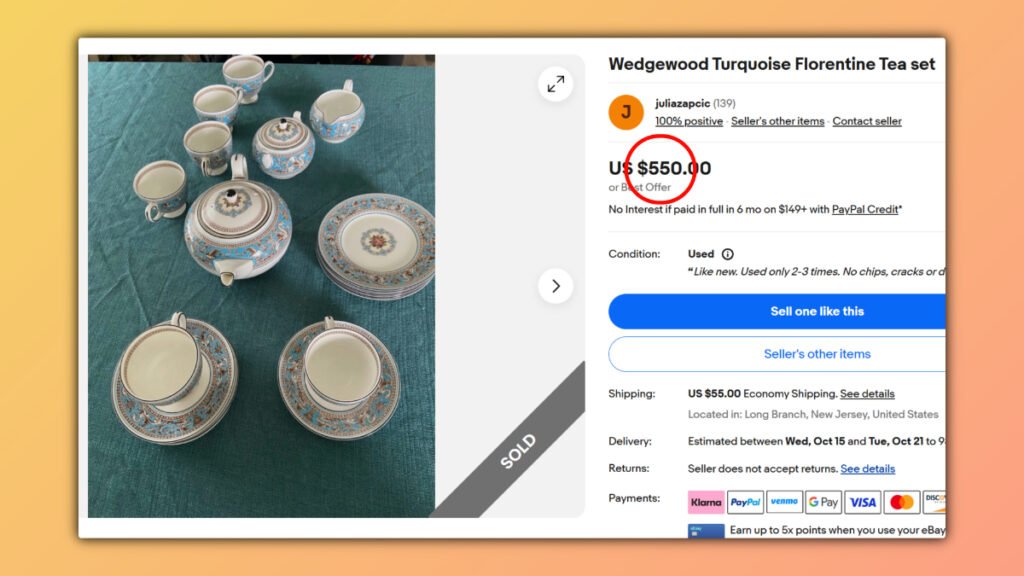
Wedgwood first introduced the Florentine pattern in 1874, but the Turquoise version came out in 1931. Inspired by Italian Renaissance pottery, the pattern features intricate details like mythical eagle-headed and lion-tailed griffins, fantastical flora, and other hand-rendered motifs.
The main attraction is the rare turquoise color paired with distinctive black enamel banding. Since these sets are still made in England today by expert craftsmen in Stoke-on-Trent, the early pieces hold the most value.
5. “Old Country Roses” Service – Royal Albert
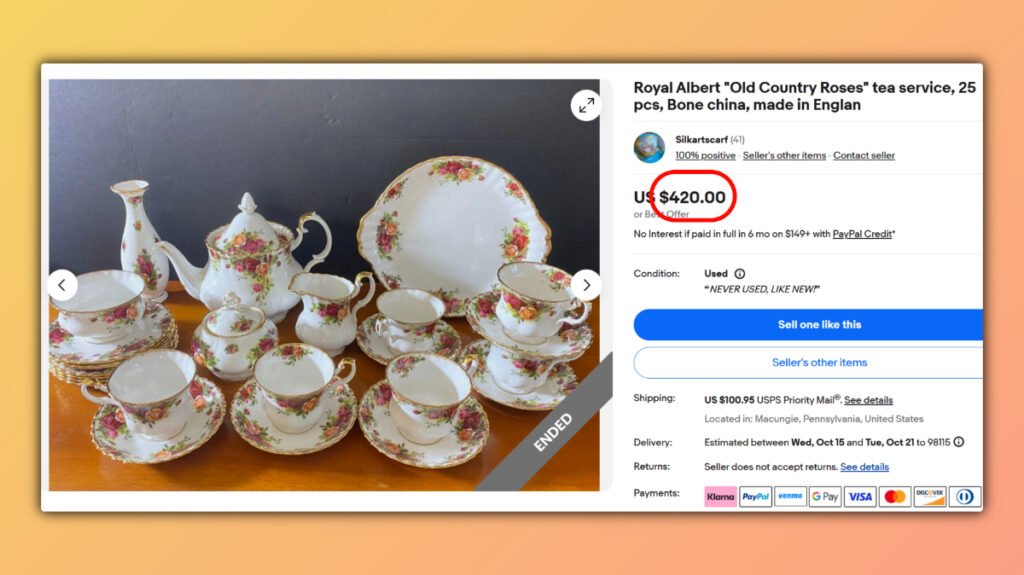
Royal Albert’s Old Country Roses line launched in 1962 and became the best-selling tea pattern in the world. It literally looks like an English country garden in full summer bloom, with burgundy, pink, and yellow roses accented by gorgeous 22-carat gold trim.
The tea sets feature their Montrose shape with its unique bulbous lower moldings. Original pieces marked “Made in England,” particularly full sets, can be worth $200 to $500 or more today.
6. “Royal Danish” Tea Set – International Silver
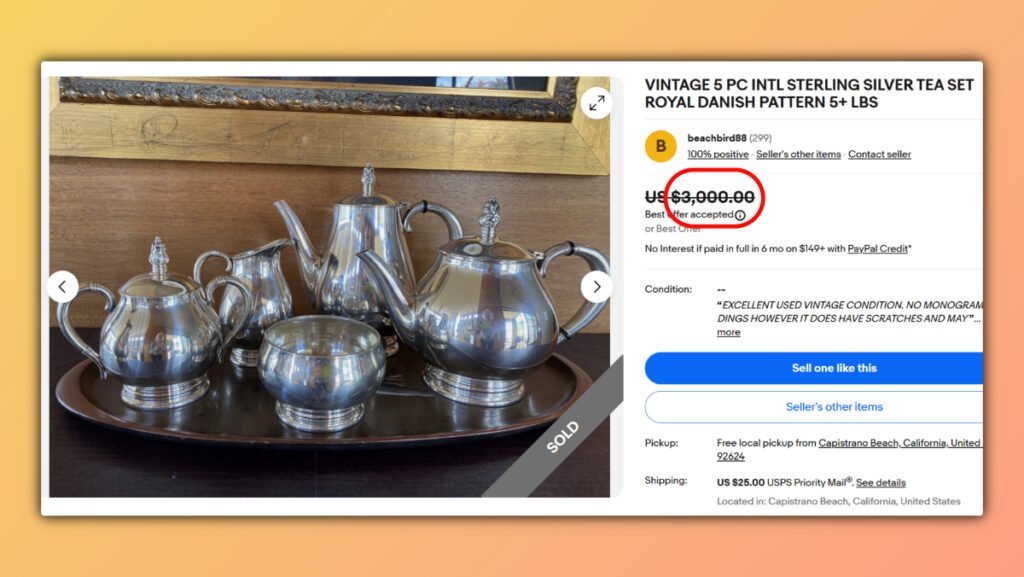
This five-piece tea set from International Silver features their classic “Royal Danish” pattern introduced in 1939. This pattern shows off that elegant Scandinavian vibe with bold openwork, fluted columns, and clean lines.
Vintage Sterling tea sets, especially from popular brands like this, are some of the most expensive pieces today, as you can see in this listing for a whopping $3,000!
7. “Azalea” Set by Noritake
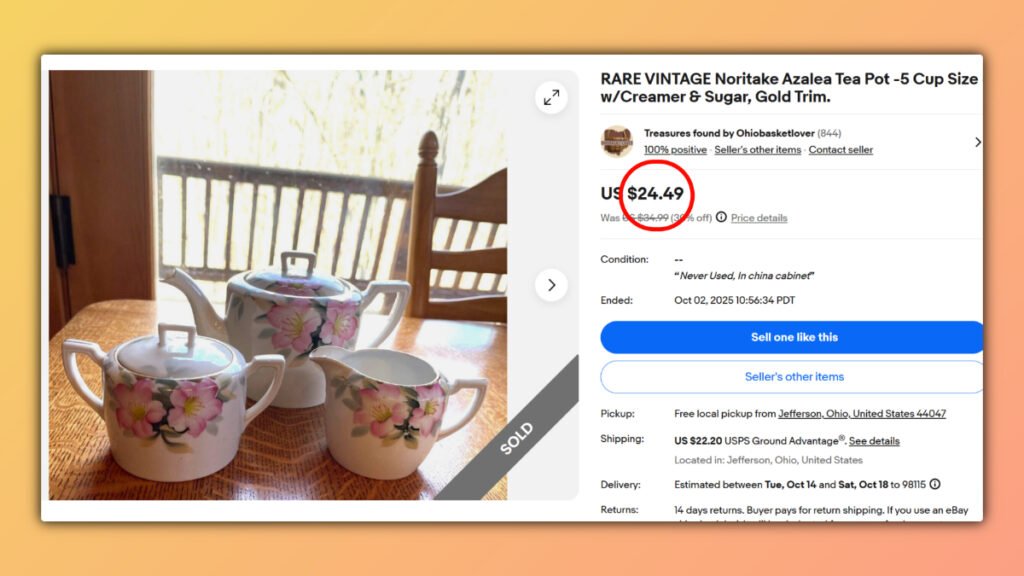
Azalea is the most famous pattern Noritake ever made, and people still collect it like crazy today. Made between 1915 and the early 1930s, the pattern shows hand-painted pink azalea flowers on white china with pretty gold accents.
Since this was an exclusive club line you could only get through the Larkin Company catalog out of Buffalo, New York, it’s quite rare today. Look for the “Noritake / Azalea / Hand Painted Japan” stamped on the bottom.
8. “Pembroke” Tea Set from Aynsley
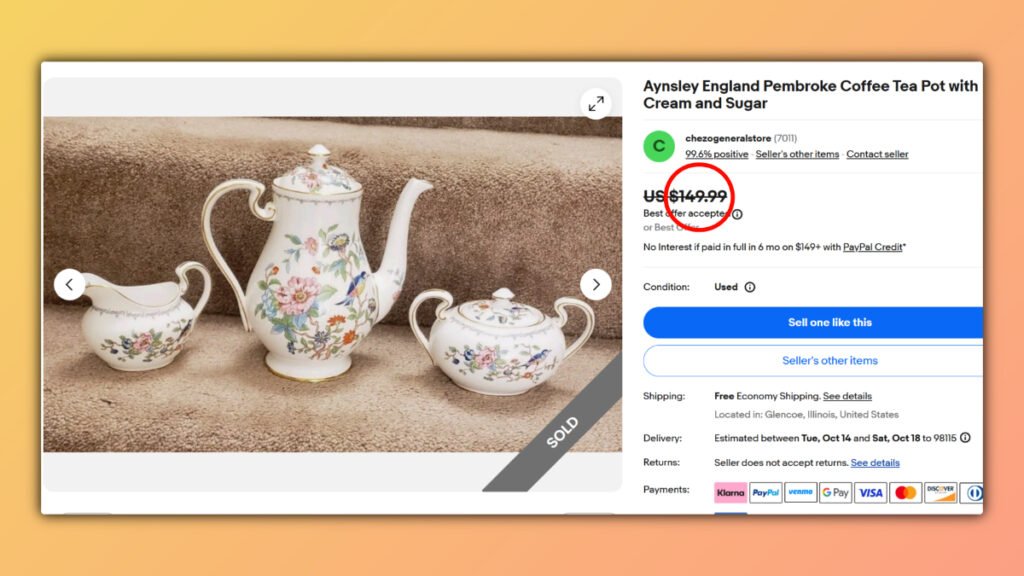
This small tea service features Aynsley’s Pembroke pattern, which is likely a reproduction of an 18th-century design. You’ll see a stunning Asian-inspired design, with delicate oriental birds (parakeets) perched on branches and vibrant blossoms and foliage.
These pieces show beautiful and luxurious Chinoiserie art with hand-painted gold rims. To spot authentic pieces, look for the Aynsley backstamp on the bottom.
9. “Evesham” Set by Royal Worcester
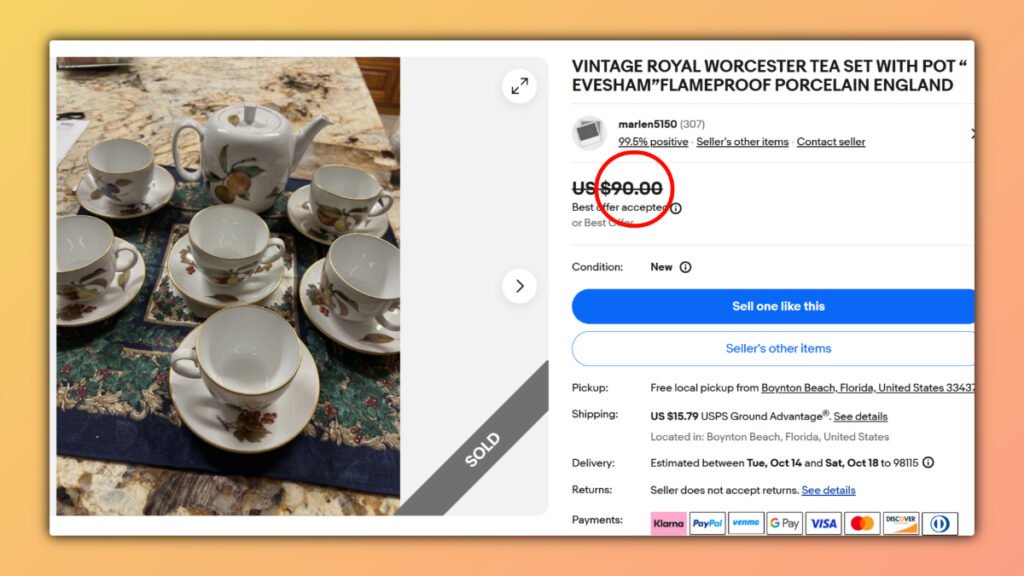
Royal Worcester released “Evesham” in 1961, which became their best-selling pattern of the late 20th century. The design features hand-painted fruit from the Vale of Evesham—apples, pears, blackberries, cherries—with signature gold trim on the edges.
Besides, Evesham was made for “oven to table” use, making the pieces flameproof and freezer-safe. Lastly, the fruit designs were printed using an old lithograph method from the 1700s, which makes these sets even more desirable.
10. “Haddon Hall” Tea Set by Minton
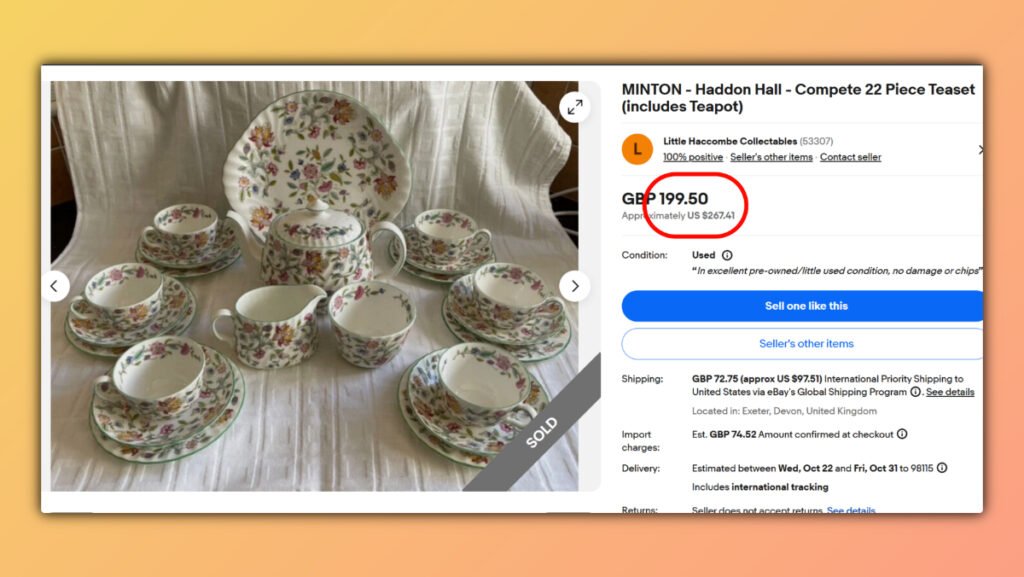
This large 22-piece Minton tea service features the iconic “Haddon Hall” from 1949. The colorful floral design takes inspiration from the 15th-century frescoes found on the walls of the Medieval Chapel at Haddon Hall, a beautiful manor in England.
However, the company produced Haddon Hall for over 60 years, so pieces are fairly available for collectors. Nonetheless, complete sets like this can still fetch a few hundred dollars in good condition.
11. “Colby Blue” Service from Noritake
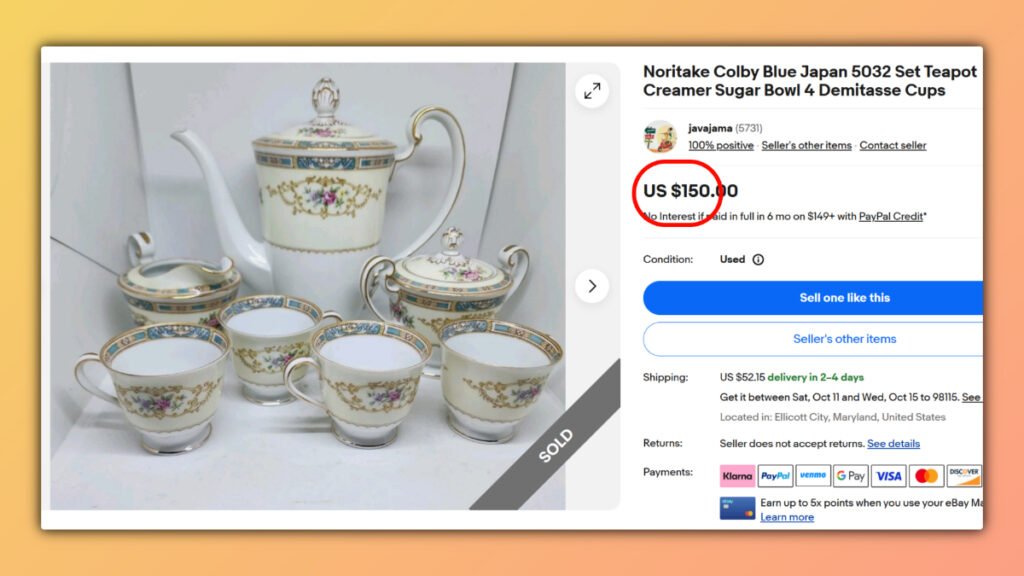
The Colby pattern is pretty collectible because Noritake only made it for three years, from 1950 to 1953. Short run means harder to find. It features a lovely blue band around the edges and gold trim with floral accents.
Just so you know, that gold trim means you can’t pop these in the microwave, but they’re stunning for display and special gatherings. Finding a complete set can easily fetch a few hundred dollars. When looking at Colby pieces, check that the blue edge is nice and crisp!
12. “Dainy Blue” 3-Piece Set by Shelley
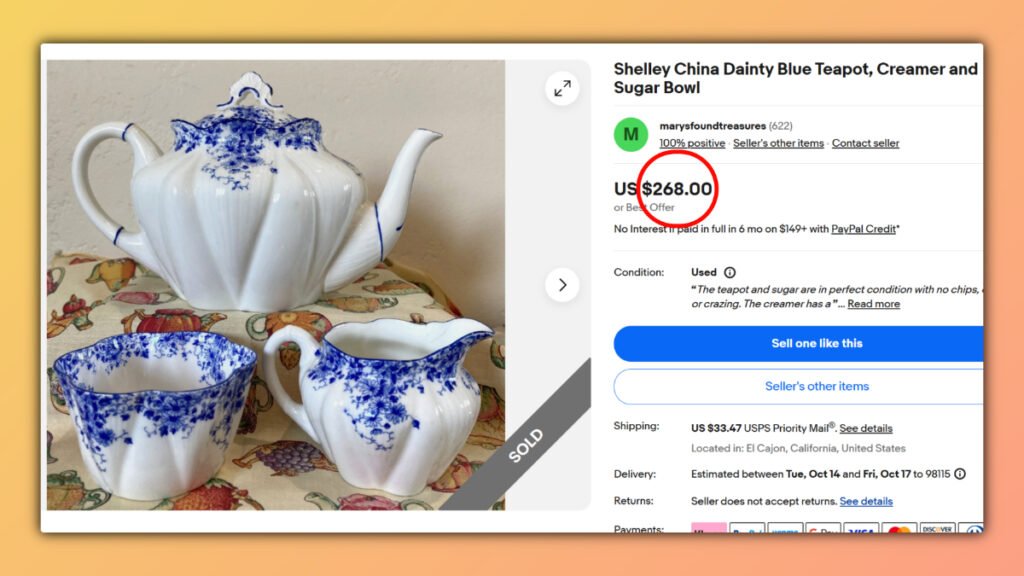
Shelley’s iconic “Dainty” shape shows six fluted panels and pattern with delicate blue flowers on the edges (number 051/28). These pieces are generally made from Staffordshire’s ultra-thin yet strong bone china. Although common, authentic sets with the “Shelley England” stamp can be worth hundreds.
13. Gray “England Queensware” Tea Set by Wedgwood
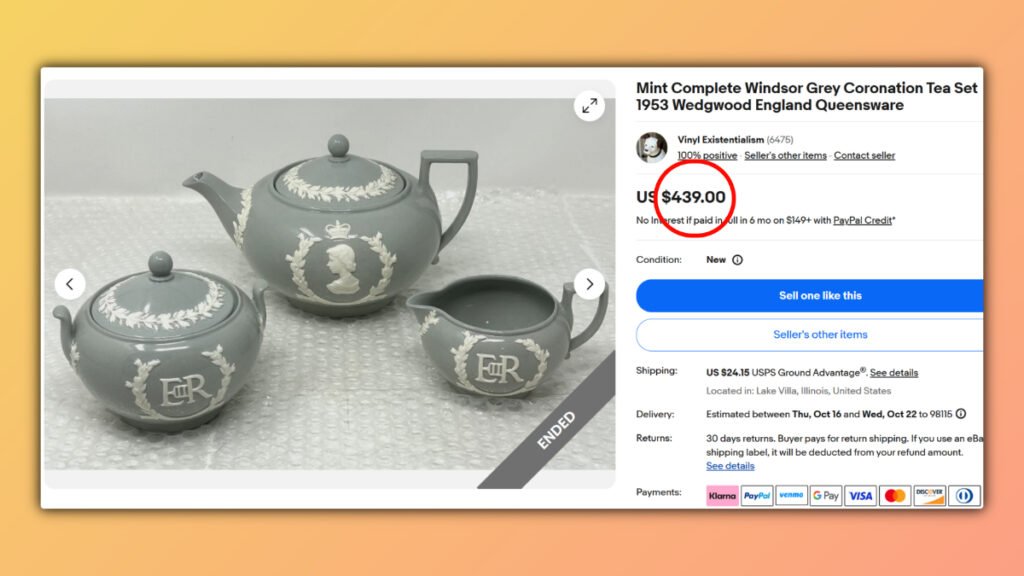
This complete Wedgwood set honors Queen Elizabeth II’s 1953 coronation. It’s made in England’s famous Queensware and shows embossed white cameos of Elizabeth and Philip on grey jasperware and the “ER” royal cypher. Their historical significance and unique look are the reasons these sets can fetch $300 to $600!
14. “Black Yellow Cabbage Rose” Set – Noritake Toki Kaisha
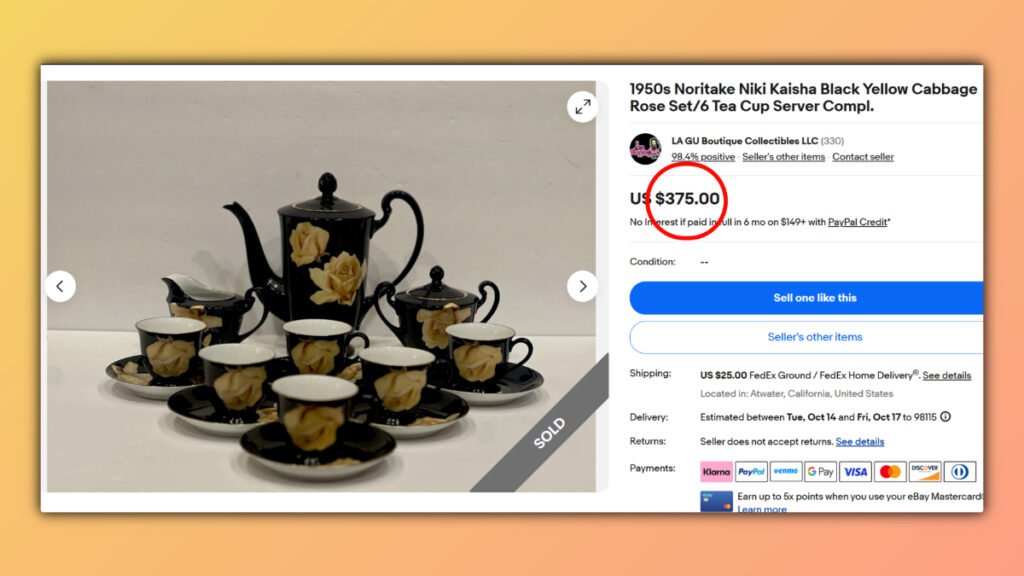
These 1950s Noritake vintage tea sets give a total Art Deco vibe! They are made of Japanese porcelain with a sleek design of bold yellow cabbage roses on glossy black, with light gilt work.
Noritake had become Nippon Toki Kaisha by this time, so these pieces likely show the “Noritake/Nippon Toki Kaisha” stamp on the bottom.
Expert Tips to Identify a Valuable Vintage Tea Set
To find an authentic and valuable vintage tea set, your need to assess the materials, quality, condition, and rarity! Here’s a quick walkthrough:
Track the Age (Antique vs. Vintage)
Antique tea sets are over 100 years old, while vintage ones are between 20 and 100 years old. Understanding this difference matters a lot for value.
Usually, older sets are worth more, but vintage examples of Art Deco and early Mid-Century styles can also be highly valuable, like the Shelley designs.
Apart from the style clues (discussed above), you can use the following hints to find the age of your tea service set:
- Maker’s Markings: Most renowned makers marked their tea sets, and the markings changed over time. For instance, Wedgwood marks progressed from simple impressed marks in 1759-1769 to fancier backstamps.
- Registration Numbers: British pieces may show “Rd No.” or “Reg No.” with numbers. This means registry with the British Patent Office between 1842 and 1883 (diamond marks) or 1884 onward (registration numbers).
- Marking Colors: Pay attention to the marking colors. Blue dominated before 1850, while handwritten marks show 1800s manufacture before stamps existed. Many newer pieces may have paper labels.
Check the Material
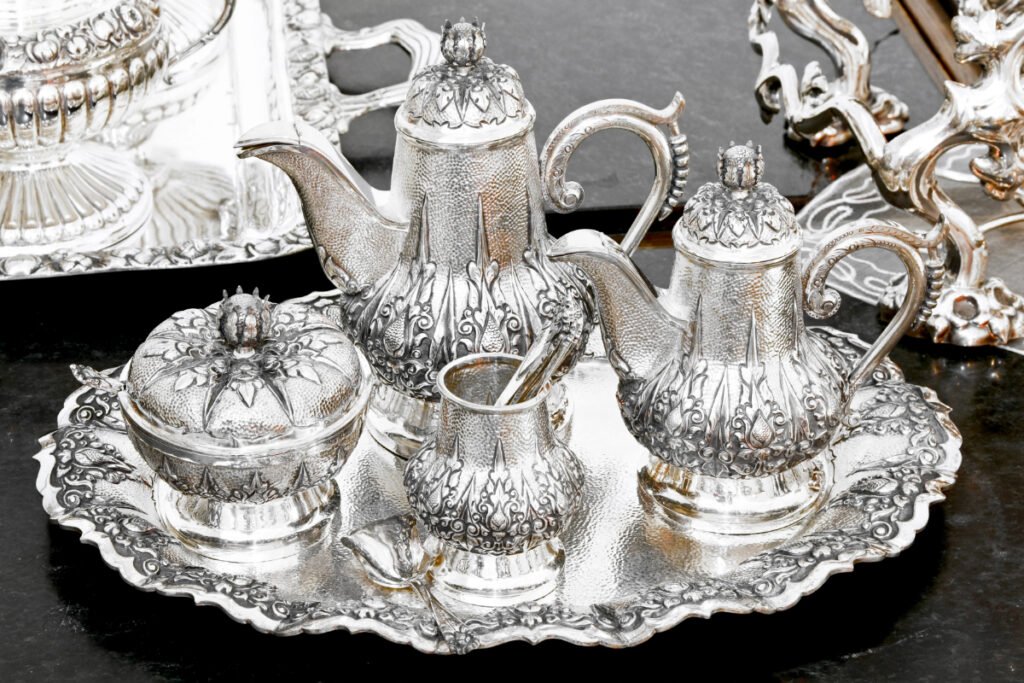
For vintage tea sets, the material can range from bone china and porcelain (both hard and soft) to Sterling silver and silver plate. The majority was bone china.
Bone china sets are light but strong and durable. Porcelain is denser and heavier, but more delicate than china, which makes intact tea sets incredibly rare and valuable, like early Worcester.
As for Sterling pieces, they are highly valued because of the metal value and exceptional metal work, like repousse. Silver-plated sets, on the other hand, are much less valuable than sterling ones.
Note: Look for purity marks of “sterling,” “.995,” or “925/1000” to check the authenticity of silver sets.
Spot the Maker’s Marks & Origin
Markings, be it a logo, brand name, model name, or pattern number, are excellent authenticity signs. That’s why old tea sets with clear markings hold more value than unmarked pieces.
You’ll normally find the marks on the bottom of each item from the service set. In very rare cases, you may see them on the underside of the lids.
These marks will let you identify the maker, which is crucial as pieces from renowned makers like Meissen, Wedgwood, Tiffany, and Spode can be worth thousands. A quick research via guides, online resources, and databases can help you identify the maker.
Some marks also help you in identifying your set’s origin, as pieces from different countries follow a distinctive marking system.
Examine the Condition & Completeness
Condition directly impacts the value dramatically, sometimes cutting the worth by 50-90% for damaged pieces. Collectors mostly use grades to assess the condition: Mint (perfect, no wear), Excellent (minimal wear signs), Good (minor flaws but display-worthy), and Fair (noticeable damage).
Needless to say, mint and excellent pieces are worth the most. Pieces with minor flaws can also be worth a decent value if you’re looking at a rare pattern or maker.
Completeness also plays a major role in value, as a full set with all original pieces brings higher prices than incomplete or mismatched sets. For example, a complete set with teapot, sugar bowl, creamer, and 6-12 cups and saucers might sell for 10 times the sum of individual cups.
Check How Rare the Set Is
Rarity for vintage tea sets is a major value factor, but it includes several things beyond just age:
- Limited Production: Service sets made in small batches or for short periods are rarer than mass-produced patterns made for decades. Limited edition pieces or one-offs made as exhibition samples can be especially valuable.
- Discontinued Patterns: Examples featuring patterns that are no longer made are rarer. For example, older Royal Albert Old Country Roses pieces produced in England.
- Historical Significance: Where the tea set came from matters a lot. Especially sets with royal connections, exhibition pieces, or documented ownership by notable historical figures command huge prices.
Collecting vintage teaware or wanting to sell yours, this guide will come in all cases. Learn about the styles and features that matter, and look for the right things to spot pieces that actually hold some value.