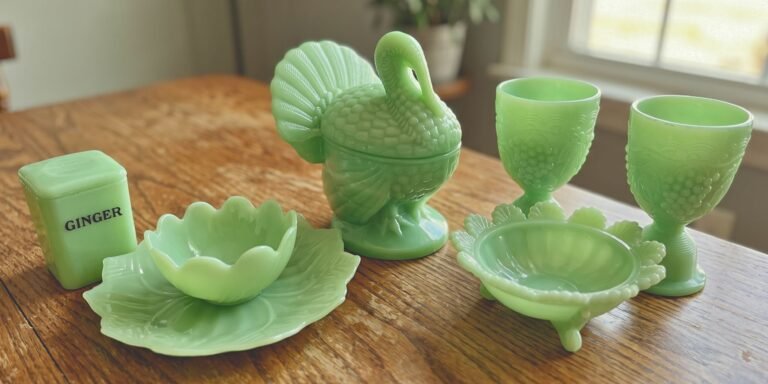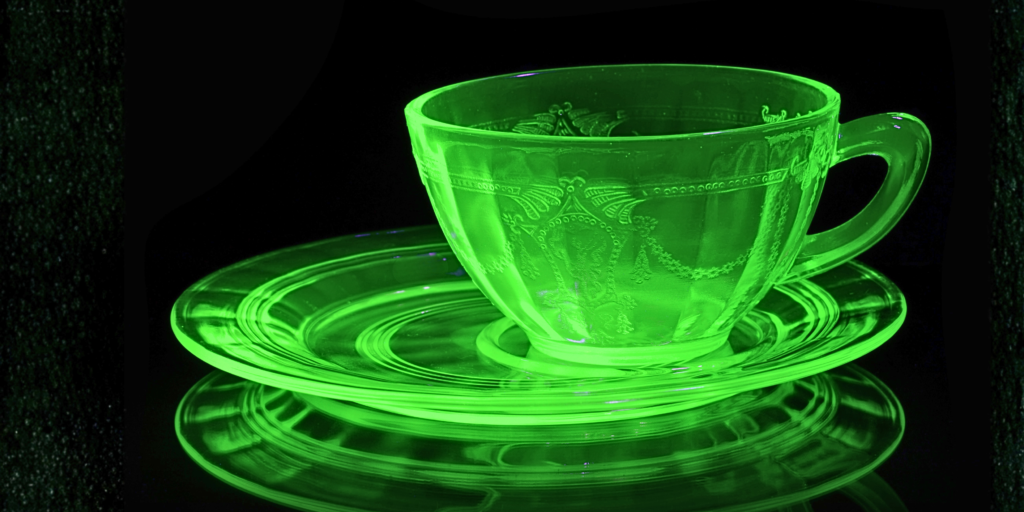
Thanks to the glow from a small amount of uranium in the mix, this pale yellow-green glass adorned Victorian parlors and Depression-era kitchens for over a hundred years. And that vintage glass continues to glow bright green under a black light even today, which fascinates collectors. So, before that old candy dish lands in the yard sale box, check what you really have.
- First made: 1830s, in Bohemia
- Peak years: 1880s to 1920s
- Key test: A bright green glow under UV light
- Also called: Vaseline glass, canary glass
- Notable makers: Mount Washington, Fenton, Cambridge, Hazel-Atlas, Anchor Hocking
Interesting History of Uranium Glass
This unique glass contains some uranium that gives regular glass a unique yellow-green tint. It usually looks either soft yellow or yellowish green, depending on the lighting.
Its history goes back to Bohemia, where it first appeared in 1830. During the heyday between the late 1880s and the early 1920s, people even called it Bohemian glass. But production ceased during the war due to a lack of uranium until 1958.
Fun Fact: Collectors also nicknamed it vaseline glass sometime around the mid-1930s since the yellow tint reminded them of petroleum jelly. It’s a unique designation that applies exclusively to yellowish uranium glass.
Is Uranium Glass and Vaseline Glass the Same?
In a nutshell, they are not the same for a few reasons. First of all, vaseline glass is the yellow or bright yellow-green glass, while Uranium glass can range from green and yellow-green to blue, cream, white, pink, and even red.
So, vaseline glass is always uranium glass, but uranium glass is not always vaseline glass.
Secondly, the term “Vaseline Glass” became popular in the 1950s, but uranium glass has been around since it was made. So, the two terms are not synonyms.
5 Easy Steps to Identify Vintage Uranium Glass
Telling uranium glass apart isn’t as difficult as it sounds. You just need some knowledge and a few seconds per piece.
Step 1. Start With a Black Light
Black lights give the most reliable proof of a vintage uranium glass piece. Place the longwave UV flashlight (about 365nm) near the piece in a dark setting.
A genuine uranium piece will immediately light up with a strong, even green glow. Yellow-colored glass containing manganese usually gives a weak peach or orange glow.
Just remember one thing. The glow only proves the presence of uranium, nothing else about age. Modern uranium pieces can glow just fine as well.
Step 2. Check the Color in Daylight
If you don’t have a light, you can still identify the piece by its original color. Hold the piece up to a window. Vaseline glass has a soft yellow-green color with a slightly oily look, and the color often deepens in thicker spots like the base.
Myth: Uranium glass glows in the dark. Fact: It doesn’t. It only glows under ultraviolet light. Turn off the lights without a UV source, and it looks pretty ordinary.
Step 3. Learn about Other Uranium Glass Types
Yellow uranium glass gets the most attention, but uranium also appears in other colors, including green Depression glass, creamy custard glass, milky jadeite, and Burmese glass, which ranges from soft pink to pale yellow.
The common feature? All these glass types glow under UV light.
Uranium Glass vs. Vaseline, Depression, and Custard Glass
Many people mix up names all the time, even sellers. So, here’s an easy rule to remember. Vaseline glass is always uranium glass, but not every piece of uranium glass is vaseline glass.
| Type | Daylight Look | Under UV Light | Uranium? |
| Vaseline glass | Clear yellow to yellow-green | Bright green | Always |
| Green Depression glass | Clear, deeper green | Green, if uranium was used | Sometimes |
| Custard glass | Opaque, creamy yellow | Green | Often |
| Jadeite | Opaque, milky green | Green on some pieces | Sometimes |
Step 4. Check for Maker Clues
Once you’ve confirmed the uranium glass type, check the pattern, backstamp, and shape. If the piece is marked at the base, you know who made it.
But pattern and form also tell you as much as a mark does. Fenton, Cambridge, Hazel-Atlas, and Anchor Hocking all made uranium glass. So, a good reference book or documented catalog can help you match patterns quickly.
Step 5. Rule Out Modern Glass
This last step will save you from spending money on the wrong pieces as a collector. As I told you before, uranium glass came back after 1958, and some companies still make it.
So, you must look out for honest wear on the base, edges, and pressed designs, and confirm whether the shapes match known old patterns. A Geiger counter confirms uranium, but not age.
How Much Is Vintage Uranium Glass Worth?
Depending on age and condition, the prices of old uranium glassware vary a lot. A green sherbet dish might bring only $20, while a decorated Victorian vase can sell for thousands at auction (of course, once it passes the glow test).
What Makes Uranium Glass Valuable?
While age and condition are the key value drivers, there are other things as well. Let’s see them all:
- First off, the age is very important. Pieces from the Victorian Age always fetch higher prices compared to the Depression era tableware.
- Next, verified attribution to some notable brands, such as Mount Washington and Fenton, instantly increases a piece’s value.
- Then, the condition plays its role. Any cracks, chips, and cloudiness will sharply drop the price.
- Additional features, like any opalescence along the rim, original hand-painting, or frosted glass work, boost the value significantly.
- Lastly, single pieces that originally belonged to a set are worth a fraction individually. Complete sets of glasses, plates, etc. hold value.
For a quick reference, here’s how you can categorize your uranium glass pieces:
| Category | Big-ticket pieces | Typical Pieces |
| Everyday finds | $10 to $40 | Depression-era glasses, cordials, small plates |
| Unique finds | $75 to $250 | Fenton Topaz Opalescent hobnail, fairy lamps |
| High-end finds | $250 to $2,000+ | Victorian epergnes, MW Burmese, swung glass |
8 Rare Top-Selling Vintage Uranium Glassware Pieces
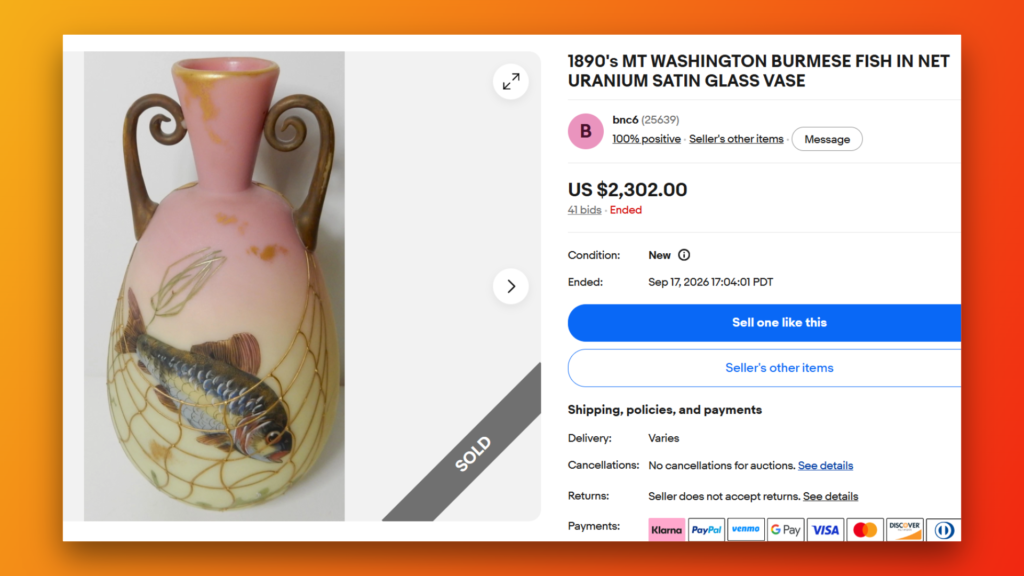
- Mount Washington Burmese Glass: Burmese glass is a Mount Washington patent type. Uranium gives it the yellow base, and gold adds the pink blush. Plain pieces can sell for a few hundred dollars, but rare satin finish pieces can fetch thousands. One fish-in-net example sold for over $2,300 on eBay.
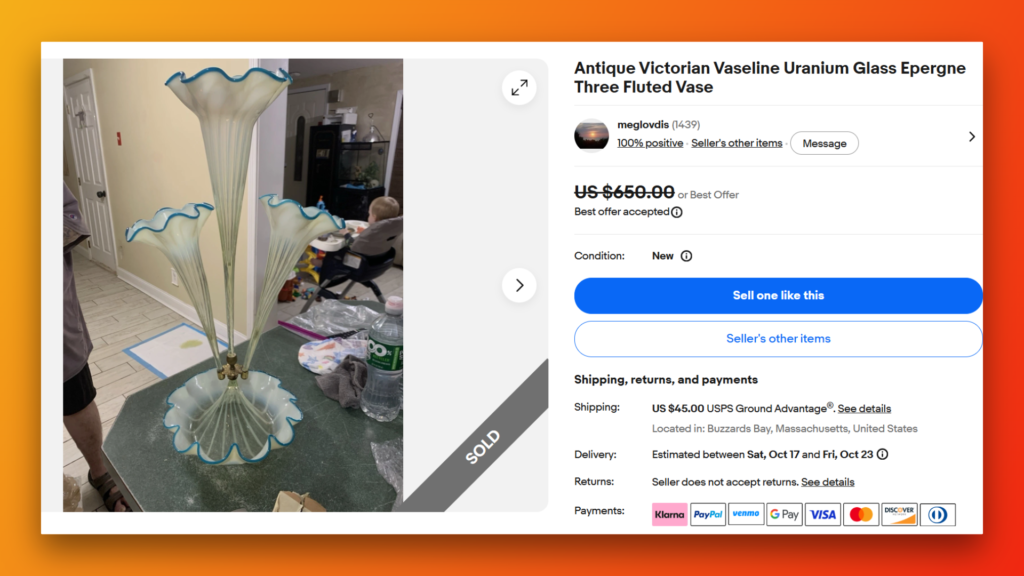
- Victorian Vaseline Glass Epergnes: Victorian epergnes are tall centerpieces that hold the flowers in different frilly trumpets. The large size gives them a low survival rate and a high demand. Value can range from $200 to over $1,000 easily.
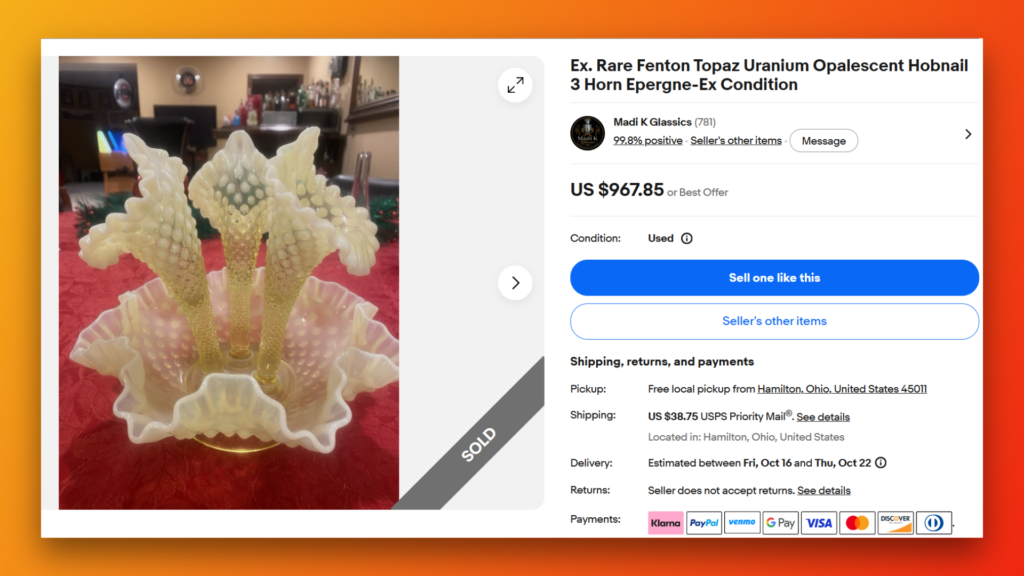
- Fenton Topaz Opalescent Hobnail: Fenton’s yellow hobnail glass, especially epergnes, with milky opalescent edges is one of the collectors’ favorites. Old pre-logo pieces are even better. A Fenton Opalescent Topaz epergne constantly goes for $600 to $1,000 on eBay today.
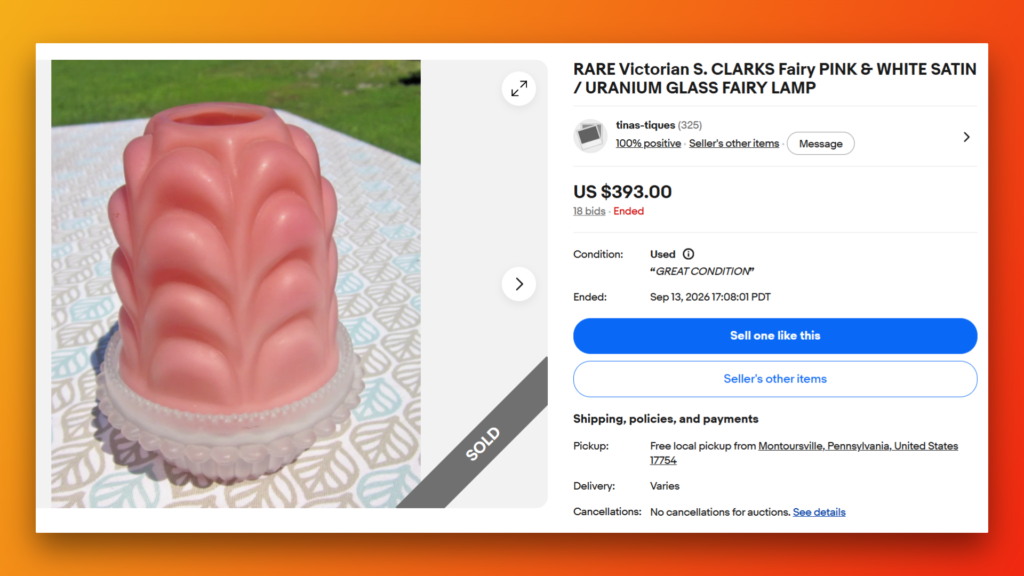
- Victorian Fairy Lamps: The little candle lamps were popular in the late Victorian era. When made from uranium glass, they shine twice as bright. The antique versions are the rarest to find in one piece. Later hand-painted Burmese ones from Fenton usually sell for about $200.
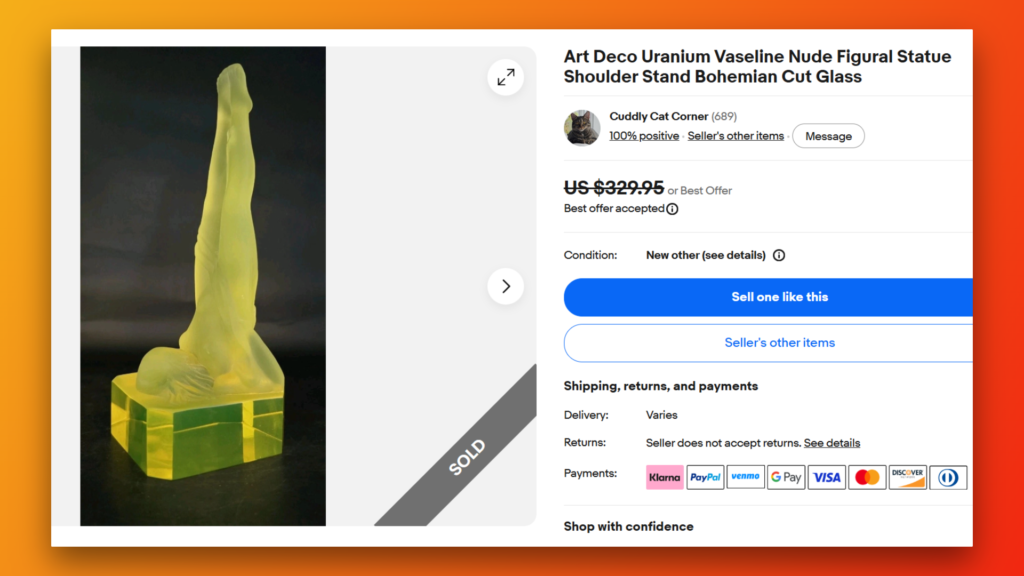
- Art Deco Czech Uranium Glass: Bohemia is where uranium glass began, and it kept making it into the Art Deco years. These pieces are highly collectible today. Look for geometric bowls, vases, and vanity sets with bold, angular shapes. A nude Vaseline cut-glass figurine recently sold for $330 on eBay.
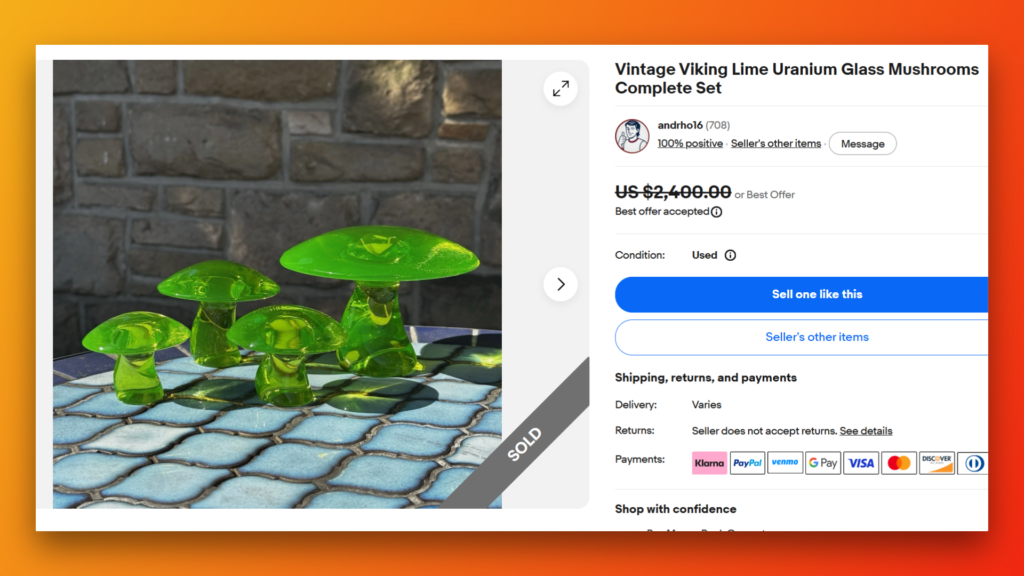
- Viking Lime Uranium Glass Mushrooms: Viking Glass (West Virginia) launched these chunky mushroom paperweights in the mid-century years. The lime variant was made in limited numbers, making these super rare. A complete set of four can fetch up to $2,500 when free from damage.
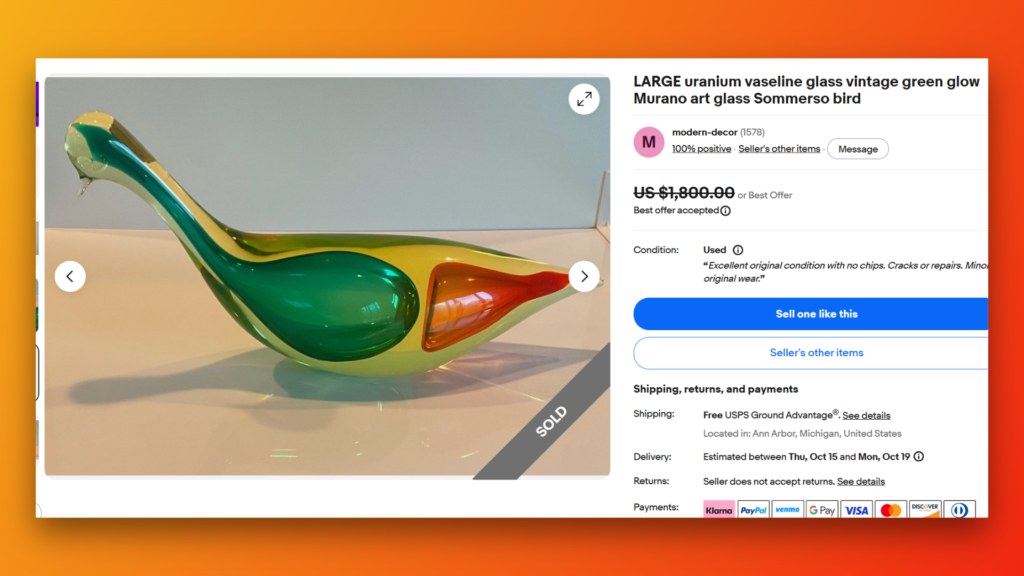
- Murano Sommerso Uranium Art Glass: Murano’s sommerso method involves sealing layers of colored glass inside clear glass. When one of those layers has uranium, the whole piece lights up. The combination of a unique glassmaking technique and the glow makes these pieces valuable. One large Sommerso bird recently sold for $1,800.
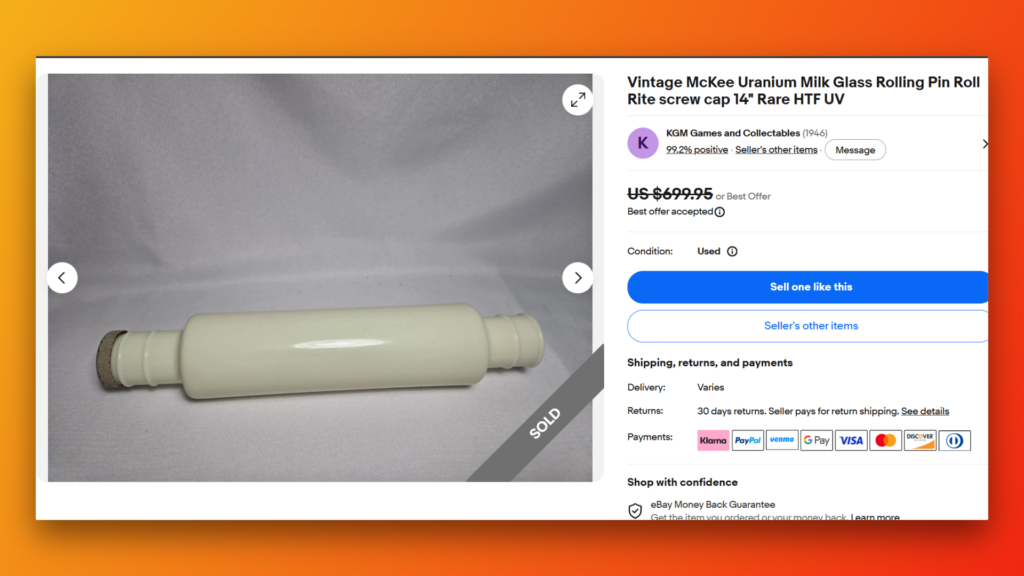
- McKee Milk Glass Rolling Pin: Glass rolling pins were common kitchen tools, but not many survived. So, they sell for premiums, especially when made of uranium-containing clear or milk glass and have the original cap. A 14-inch McKee milk glass example fetched almost $700.
Is Vintage Uranium Glass Safe?
This issue concerns many uranium glass collectors, so let’s talk about it. The Health Physics Society says that the amount of radiation emitted by uranium glass on shelves or in hands is quite low and insignificant. So, you can collect and display them without worry.
But eating out of uranium glass is a different thing. One should not eat out of such glasses, as chips of this product can be present in your food. So, it’s best to keep uranium glass for show purposes only.
Uranium glass is one of the few antiques that gives itself away. All you need is a ten-dollar flashlight. So, keep that light in your bag when you go thrifting, because the glow rarely shows up where you expect it.