Because of their soft jade color and sturdy build, jadeite glass dishes adorned American kitchens and dining tables from the 1930s to the 1970s. And today, collectors hunt these pieces as eagerly. So, before displaying your green bowls at your next yard sale, it’s good to know what you actually have.
- Made: Early 1930s to 1976
- Main makers: McKee, Jeannette, and Anchor Hocking (Fire-King)
- Value: $10 to $200 or more
What Is Jadeite Glass?
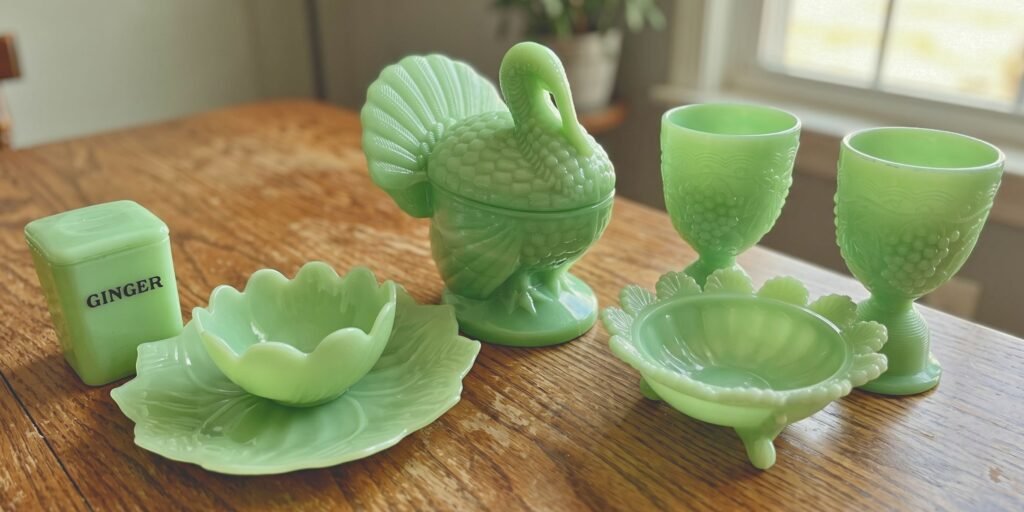
First things first. Jadeite glass is basically milk glass but colored green. Manufacturers took their white glass formula and just added green to get that lovely creamy color of jade.
Jadeite glass has nothing to do with jade, the gemstone used in jewelry. So, if someone asks whether Fire-King jadeite is real jade, it’s not; it’s just colored glass.
The production of Jadeite glass started at the McKee Glass Company in the early 1930s. Jeannette Glass followed shortly after, and then in 1945, Anchor Hocking put it in their Fire-King range, where it stayed till 1976.
Spelling Differences or Mistakes?
You may find different spellings in online listings, but not every difference is a mistake. Jeannette produced its line under the name “Jadite,” and Fire-King called theirs “Jade-ite.” It’s still the same green glassware.
What Is Vintage Jadeite Glassware Worth?
Once you’ve identified a piece, the next step is knowing if it’s worth anything and what it’s really worth. Honestly, vintage jadeite dish values can swing wildly.
Two green bowls could look almost identical, but price-wise, one is worth $10, and the other sells for $200. A few key things make that difference.
Factors That Affect Value
- The maker and pattern can make or break a piece’s worth. Fire-King and McKee are the most sought-after names.
- Usage is another driver. Pieces meant for service or storage command higher prices than the basic plates.
- Complete sets are worth more than individual pieces. Complete sets include lids because they often crack or break first. The smallest refrigeration dish has added value when it comes with its lid intact.
- Condition determines the final value. Cracks, chipping, and cloudiness from dishwashers lower value significantly.
| Tier | Typical Pieces | Rough Value |
| Common finds | Jane Ray plates, cups, saucers | $5 to $45 |
| Collector favorites | C-handle mugs, lidded butter dish, refrigerator sets | $75 to $160 |
| High-end pieces | Ball pitcher, McKee canisters | $200 to $800+ |
Rare Jadeite Dishes Collectors Hunt Today
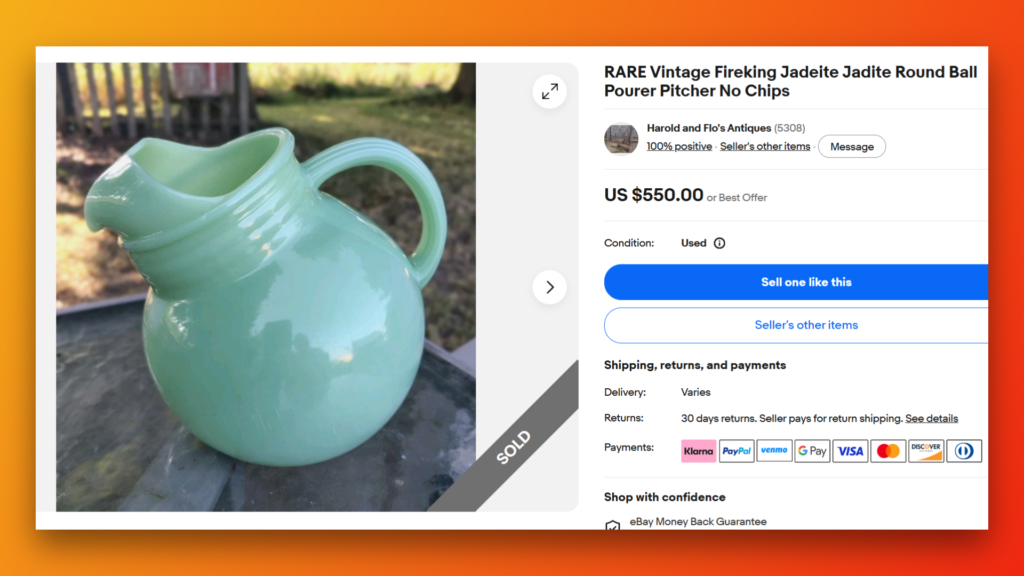
- Fire-King Restaurant Ware Ball Pitcher: Collectors refer to this round jug as one of Fire-King’s most unique pieces. It was built for diners, so pristine examples are really rare and valuable, and can fetch a few hundred dollars.
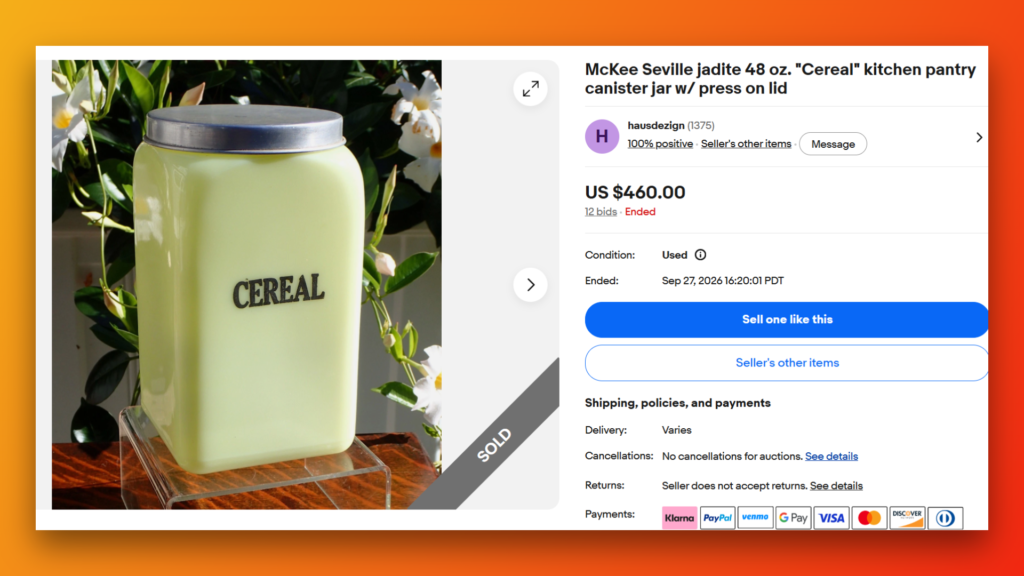
- McKee Canister Sets: These older McKee sets from the 1930s era are highly collectible, especially the bigger-sized 48 oz canister sets. An entire set could sell for close to $800; an individual 28 oz cereal canister alone just sold for $460.
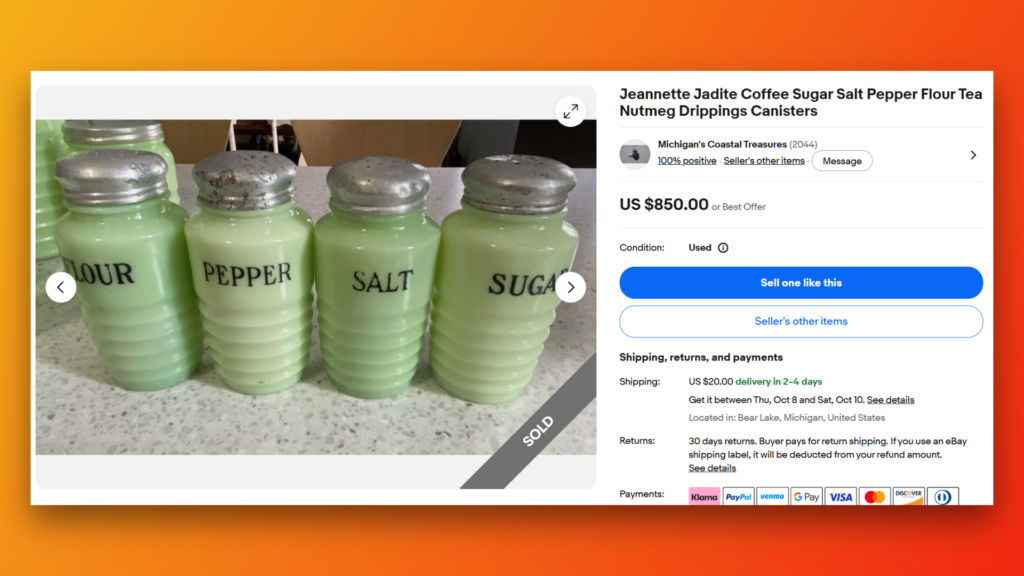
- Jeannette Spice Canisters: The tiny labeled spice jars used for storage of spices such as cloves and allspice prove very hard to collect in sets. A set of four spice canisters along with a coffee and nutmeg canister sold for $850.
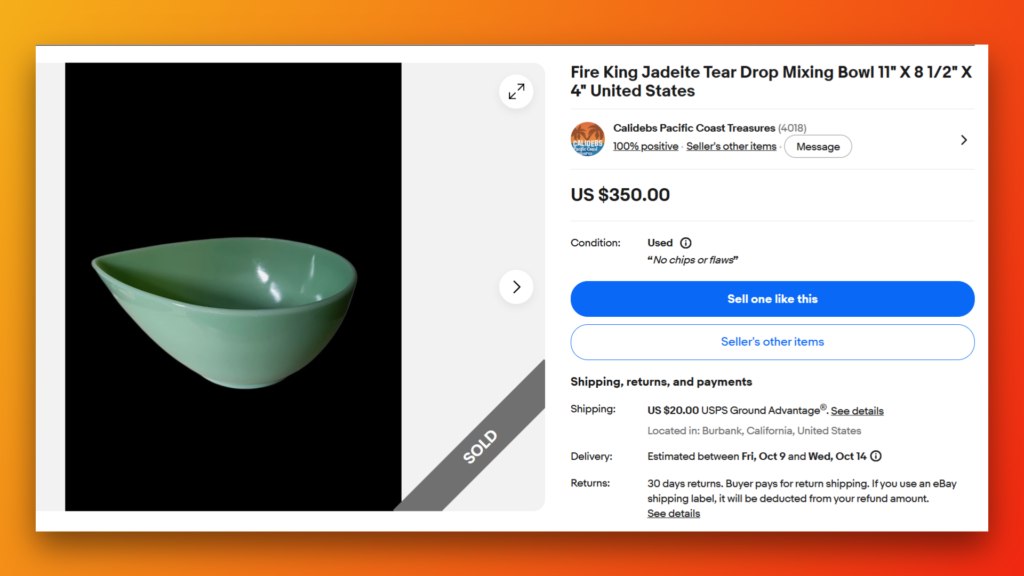
- Fire-King Teardrop Bowls: These bowls are quite easy to spot by their pointed teardrop shape. A large 11-inch Fire-King jadeite teardrop bowl with no chips or flaws sold for $350 on eBay. Smaller sizes exist too, which are worth less.
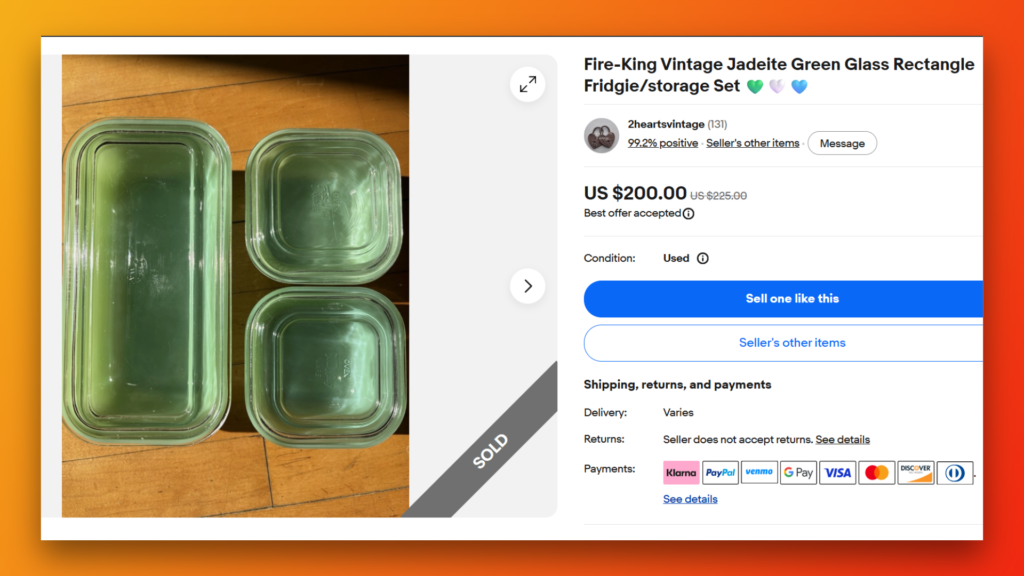
- Refrigerator Dish Sets: These dishes are common, but obviously, lids broke all the time. So, a full jadeite refrigerator dish set with every lid is a real find. One 3-piece Jeannette and McKee set with original lids can fetch a few hundred dollars.
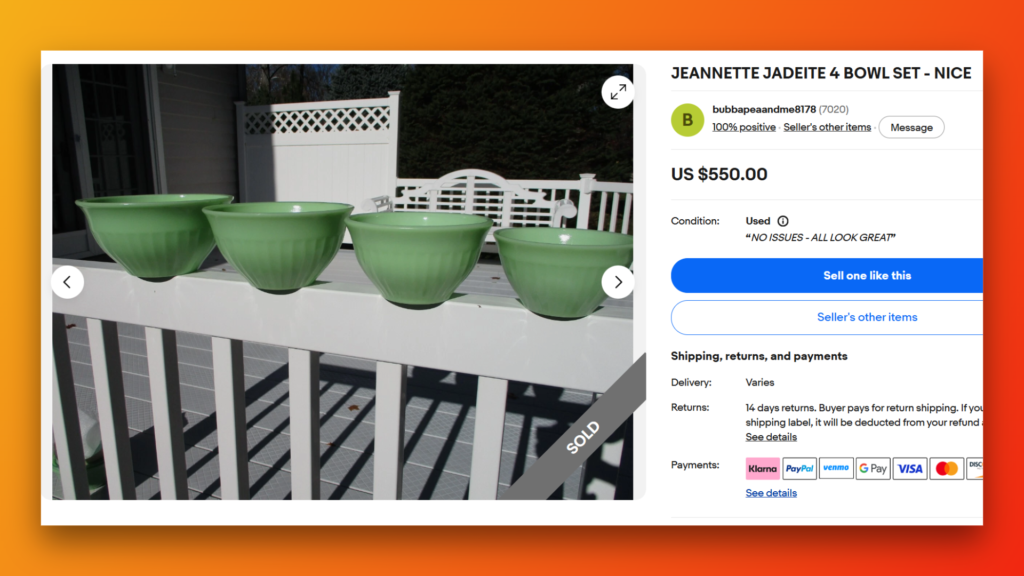
- Jeannette Ribbed Bowls: Nested bowl sets are hard to find together, because one size always seems to break. A four-bowl Jeannette jadeite set in clean condition recently sold for $550. McKee’s splash-proof bowls are also quite collectible.
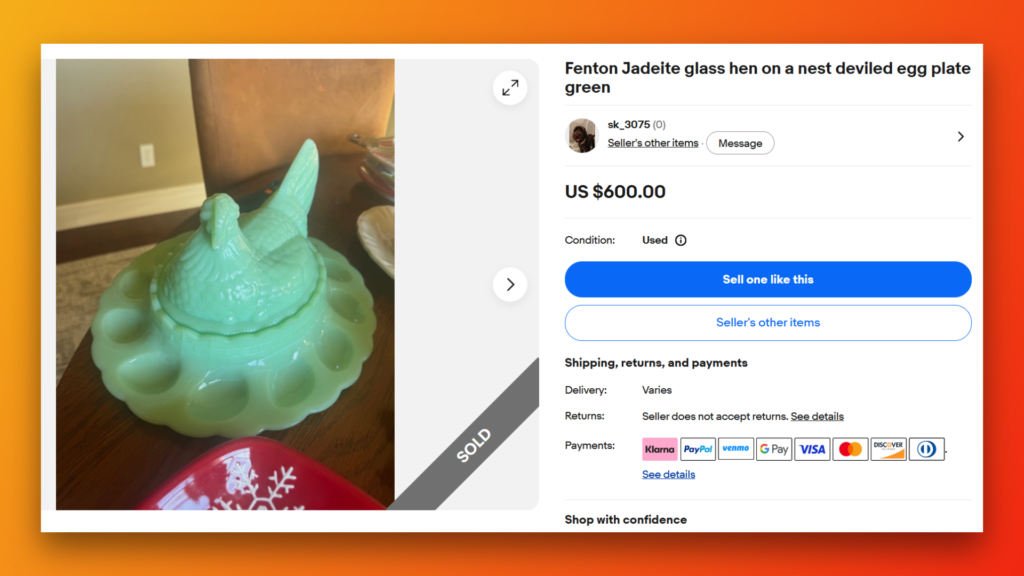
- Fenton Hen-on-nest Deviled Egg Plate: Most jadeite hen-on-nest dishes have mid-tier values. But this rare Fenton version pairs a sitting hen with a ring of egg wells, making it rare. One recently sold for $600. So, always check who made your hen.
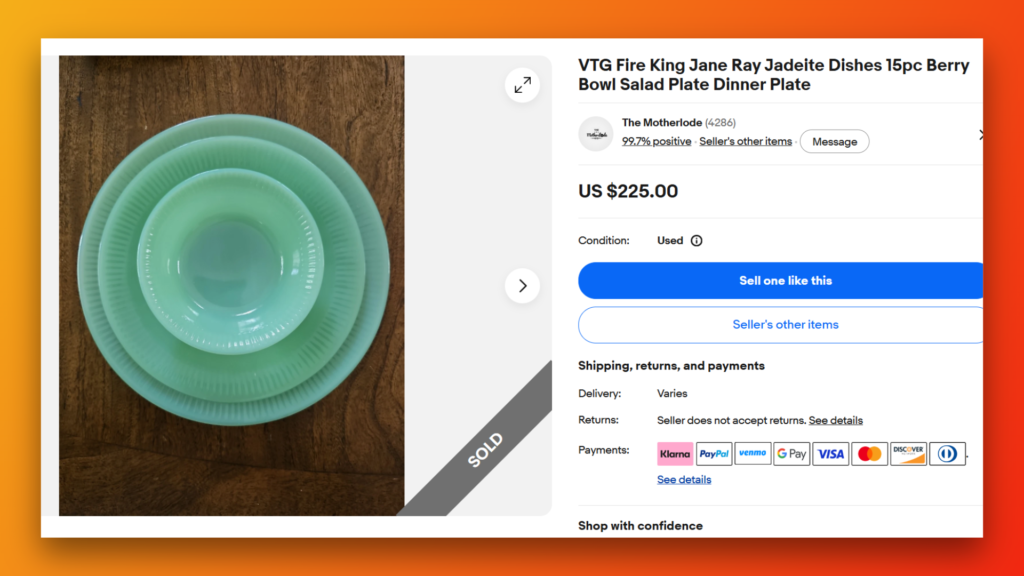
- Complete Jane Ray Sets: Fire-King made Jane Ray from 1946 to 1965, so single dishes are common. But a full matching set is a real deal. A 15-piece Fire-King Jane Ray lot of berry bowls, salad plates, and dinner plates fetched $225 recently.
Vintage Jadeite Glass – How to Identify in 5 Steps
Knowing the glass color is one thing, and identifying a genuine Jadeite glass is another. Many people simply look at the color and end up paying hefty prices for a reproduction. There is much more to it.
1. The Maker & The Marks
If you spot a raised or incised logo or maker’s name on the base, the identification gets easy.
- McKee pieces usually carry a small “McK” mark.
- Some Jeannette pieces show a J enclosed in a triangle.
- Fire-King marks changed over the years. Earlier pieces often read “Fire-King Oven Glass,” while later ones usually say “Oven Fire-King Ware.” The difference helps with dating.
- Westmoreland used a “W inside a keystone” mark until the mid-1940s, then changed to an overlapping WG.
- Most Fenton jadeite dishes from 1970 onward have “Fenton” in an oval.
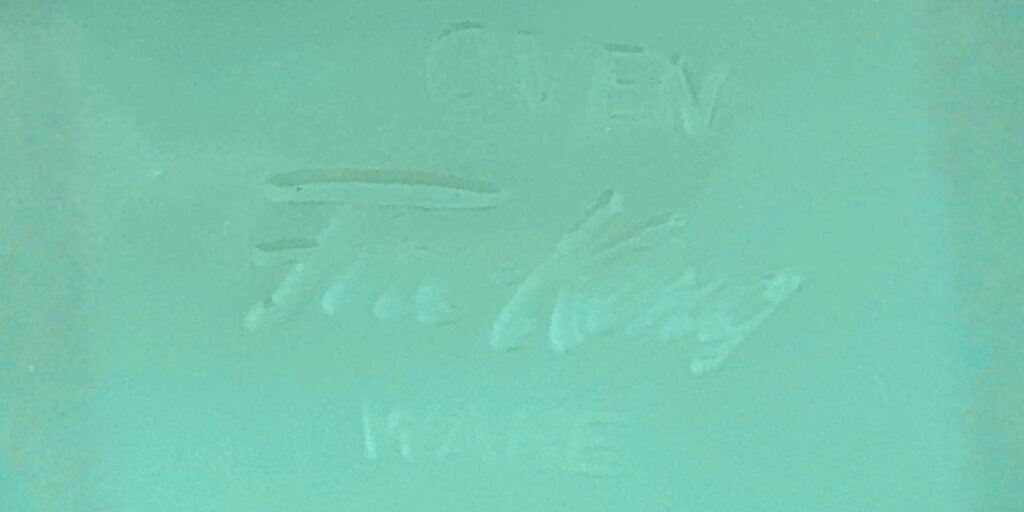
But markings only help with the brands that actually marked their pieces. For example, lots of Jeannette jadite was never marked. So, an unmarked piece isn’t automatically a fake. But identification depends on its color, pattern, or shape.
2. The Color (Original)
Always observe the glass color in good, bright light. It should be smooth and have an even, solid color if it is authentic jadeite. Next, put the dish near a window. If you see streaks and a lot of light passing through it easily, it needs more observation.
3. The Weight & Feel
Picking up the Jadeite piece in your hand can help you decide whether it’s genuine or not. Older dishes generally feel heavier than modern ones. And you may also see faint mold seams or cooling lines, which are perfectly normal on genuine pieces.
4. The Black-Light Test
This is a common trick many experts use to spot Jadeite pieces. All you need to do is grab a small UV flashlight and flash it on the piece.
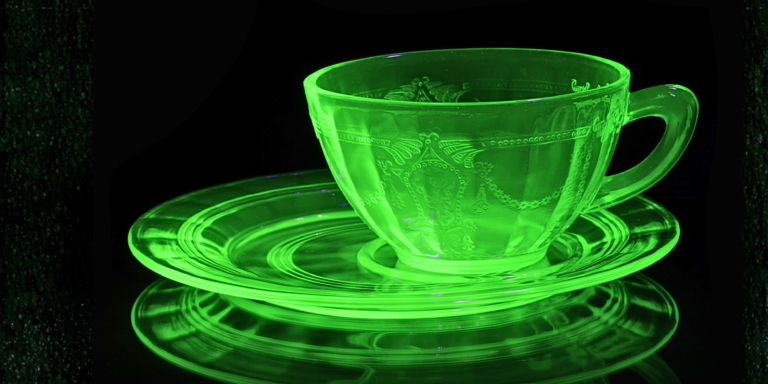
Many McKee and Jeannette pieces glow bright green under the light because uranium was part of their glass recipe. Fire-King jadeite, by contrast, doesn’t glow at all.
But this test is a clue, not proof, because not every McKee or Jeannette piece lights up, while some newer glass can glow, too. So, it’s best used alongside other checks.
Myth: All jadeite glows. Fact: Fire-King jade-ite never does.
5. Modern Reproduction or Tributes?
Jadeite became hugely popular again in the late 1990s. Some are tribute lines, but others are passed off as old.
- The first name to know is Martha Stewart. She released her own jadeite line through Martha by Mail in the late 1990s.
- Next is Anchor Hocking, which also revived its Fire-King jadeite in 2000. These pieces show the “2000” backstamp.
- Mosser Glass, Tablecraft, and Target’s Hearth & Hand also made newer versions.
In addition to these, there are “fantasy” pieces, shapes the companies never made. So, if a Fire-King jadeite dish looks unfamiliar, simply compare it with known Fire-King patterns like the popular Jane Ray, Charm, Swirl, Alice, and Restaurant Ware.
So, the next time you spot a soft green bowl at a garage sale or thrift store, grab it and observe it properly to find out whether it’s a common Jadeite piece or an actually rare find.